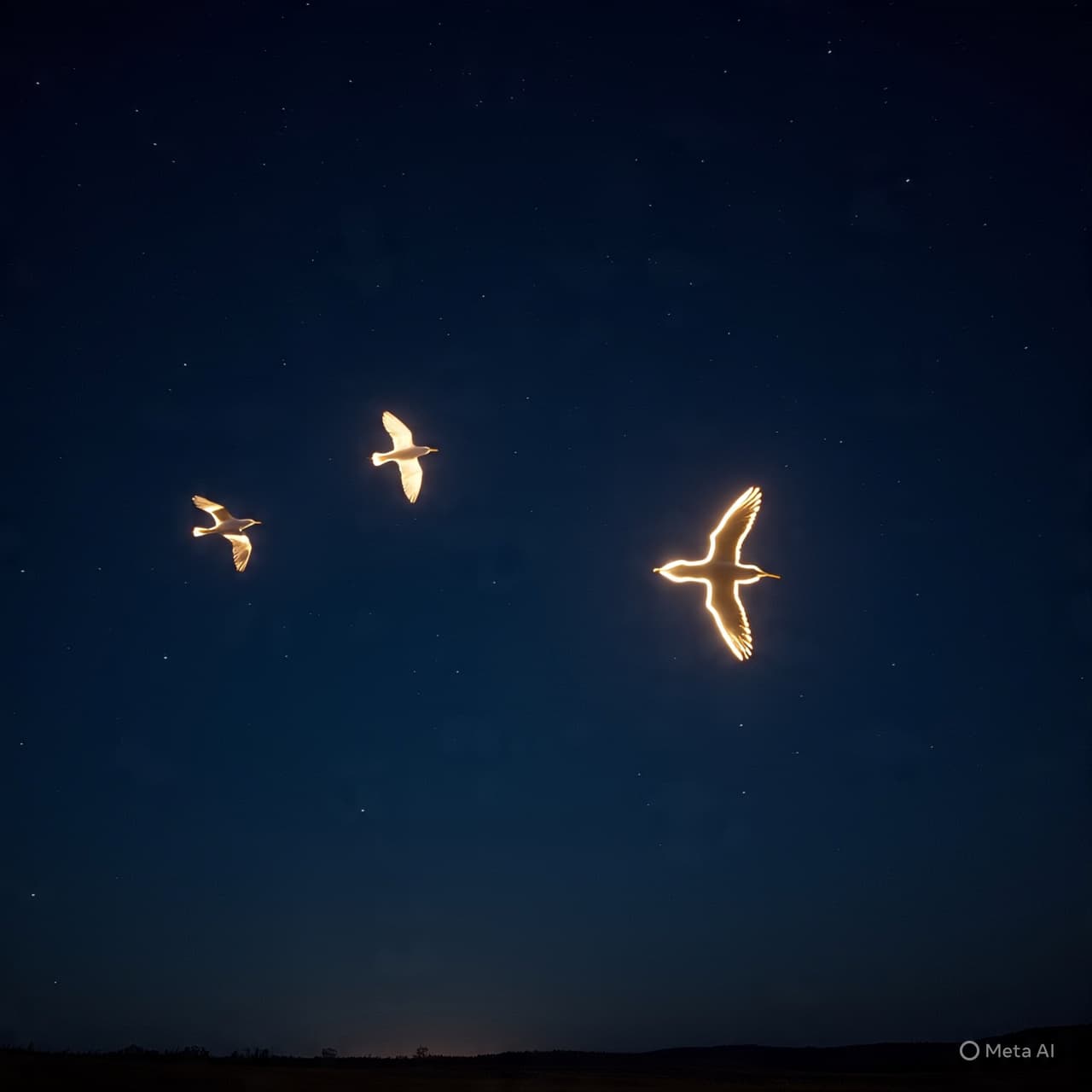
On an autumn evening when most of the land slumbers and the stars hang like lanterns in a cool sky, there is another world in motion just beyond our senses. Millions of birds, suspended between the fading heat of one hemisphere and the promise of another, slip through the night in silent migration — invisible travelers on whispered winds. For centuries, this great movement has been glimpsed only as ripples on radar screens or inferred by distant calls picked up in the rustle of leaves. But now, through a delicate marriage of technology and patience, scientists have found a way to see these nocturnal journeys in ways once thought impossible.
Until recently, researchers relied on broad‑brush techniques like weather radar or listening for the occasional call to gather clues about night migration. Radar can outline the grand patterns of mass movement but cannot tell one species from another, and acoustic monitoring captures only those birds that happen to vocalize in flight. The silent majority — species that neither sing nor call as they drift through the darkness — remained like phantoms, their stories untold.
The breakthrough came from an elegant blending of thermal imaging and high‑speed photography. Because birds are warm‑blooded, they radiate heat even against a cool nighttime sky. Researchers scanning the heavens with handheld thermal optics have learned to spot these bright signatures, to flash them briefly with intense light and to capture rapid bursts of imagery with powerful telephoto lenses. In team collaborations that feel almost like a nocturnal dance, one observer tracks the heat silhouette while another captures its fleeting flight in detail — a method that has now identified thousands of individual birds that would otherwise have vanished into the night.
This is not merely a technological novelty; it is a window into rhythms of life and motion that have long gone unseen. Among the species documented are those that do not typically announce their passage — woodpeckers, cardinals, and other birds once thought to ride chiefly by day — suggesting that the tapestry of nocturnal migration is richer and more varied than assumed. What had seemed like a simple migration of well‑known migrants now reveals itself as a symphony of paths intersecting in darkness, each wingbeat a note in a grand natural score.
In these quiet hours, when the land below lies in rest and the night feels absolute, there are stories etched in flight that only now come into focus. The new technique does more than illuminate bird silhouettes; it draws us closer to the lived experience of migration — the rhythms of heart and wing, the choices made beneath the stars. It reminds us that the natural world often unfolds its deepest secrets not in the bright glare of day, but in the soft, disappearing light where shadow and motion entwine.
As ornithologists continue to refine this approach and broaden its application, we may discover that the night sky is not a void but a corridor of life, carrying countless individuals on journeys that span continents and lifetimes. In seeing these birds more clearly, we honor both the subtle genius of their migration and the curiosity that drives us to look ever more deeply into the world’s hidden motions.
AI Image Disclaimer
Visuals are AI-generated and serve as conceptual representations.
Sources (News Outlets Only)
Phys.org Cornell University press materials
Published by Banx Network. This article is part of the Banx decentralized media programme, powered by the BXE token on the XRP Ledger.