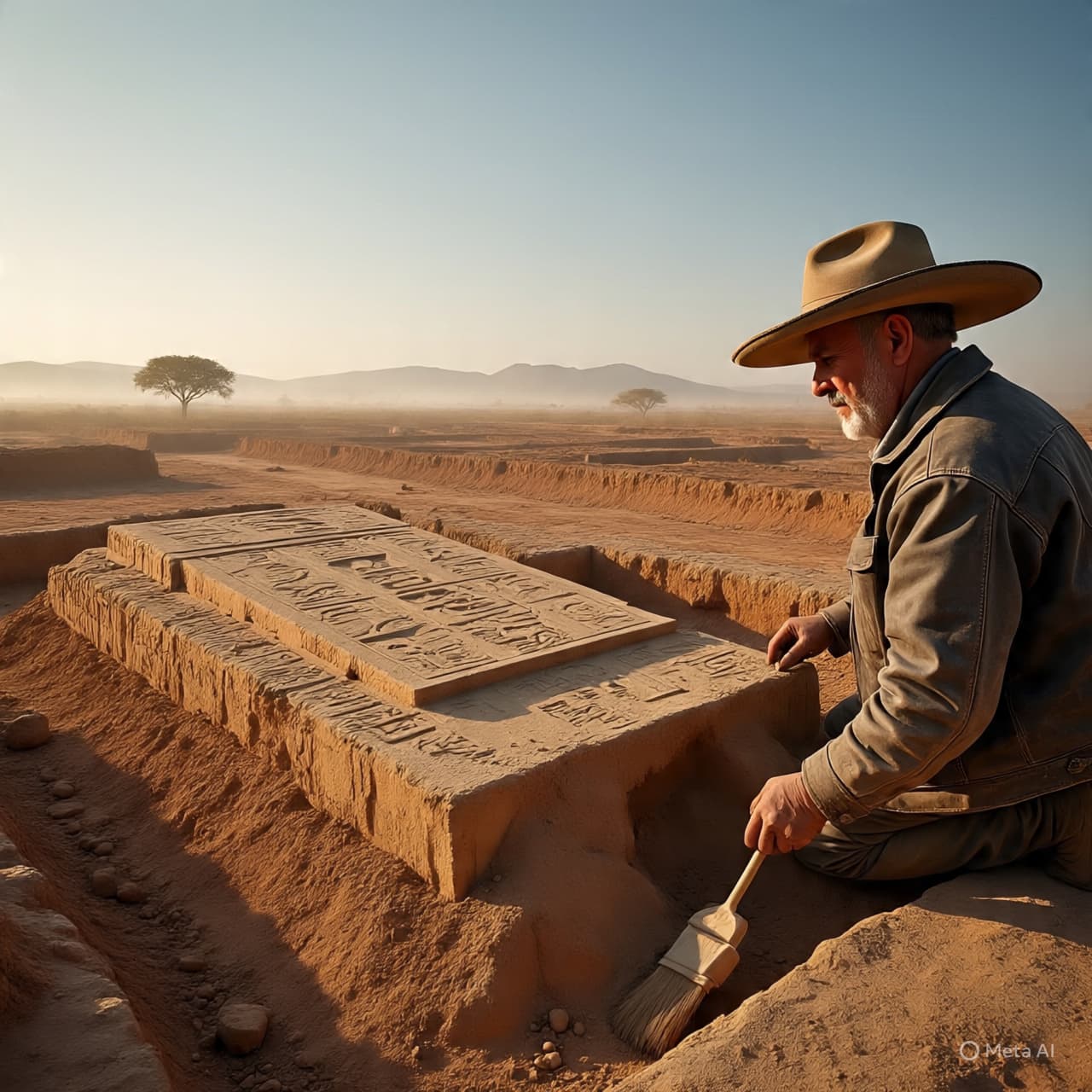
The earth does not give up its stories easily. When it does, the revelations arrive without spectacle—dust settling, stone emerging, silence breaking only in the minds of those who recognize what they are seeing. In central Mexico, that moment came with the unearthing of a tomb more than 1,400 years old, guarded by a sculpture unlike any found before.
At the heart of the burial stood a giant owl, carved with deliberate care and placed as if to watch over the dead. Its presence was not decorative. In ancient Mesoamerican belief systems, owls often occupied the border between worlds, associated with night, death, and passage rather than simple symbolism. This owl was not an ornament. It was a statement.
Archaeologists date the tomb to the late Classic period, a time of complex societies, ritual precision, and evolving religious expression. The structure itself suggests high status—carefully constructed, deliberately sealed, and layered with offerings that speak to power and reverence. Yet it is the owl that reshapes interpretation, hinting at beliefs rarely captured so clearly in stone.
The sculpture’s size and placement suggest guardianship. Owls were seen as messengers, guides, or watchers capable of navigating darkness safely. In a funerary context, the figure may have been intended to protect the deceased on their journey beyond life, or to mark the tomb as a liminal space where worlds briefly touch.
Few comparable examples exist. While owl imagery appears in murals, ceramics, and codices, a monumental sculptural presence within a tomb is unprecedented. This has led researchers to reconsider how widespread and literal such beliefs may have been, especially among elite or ritual specialists.
The discovery also expands understanding of artistic ambition during the period. The owl’s features—exaggerated eyes, pronounced beak, and imposing posture—suggest not realism, but authority. It was meant to be seen, even in darkness, and to be felt rather than admired.
As analysis continues, scientists are cautious about drawing definitive conclusions. Tombs carry layered meanings, shaped by personal identity, local tradition, and broader cosmology. But the owl remains unambiguous in one respect: it was placed with intention, meant to endure.
For centuries, soil pressed down and time erased memory above ground. Below, the owl waited. Now exposed once more, it does not speak, but it does not need to. Its presence alone reminds us that ancient people understood death not as an end, but as a crossing—one that deserved guardians capable of seeing in the dark
AI Image Disclaimer Illustrations were created using AI tools and serve as conceptual representations.
Sources National Institute of Anthropology and History Universidad Nacional Autónoma de México Journal of Anthropological Archaeology Latin American Antiquity
Published by Banx Network. This article is part of the Banx decentralized media programme, powered by the BXE token on the XRP Ledger.