There are gatherings shaped not by celebration but by remembrance. In places marked by prolonged conflict, even the quiet act of walking together behind a funeral procession becomes an expression of shared grief. The streets fill not with the promise of tomorrow, but with the weight of names, memories, and lives interrupted before their time. In such moments, mourning itself becomes part of the landscape.
That landscape was shaken once again in central Gaza, where an Israeli strike hit a funeral gathering in Deir al-Balah, according to Al-Awda Hospital in the nearby Nuseirat refugee camp. The hospital said at least seven people were killed and 22 others were wounded. The funeral was being held for a Palestinian who had reportedly been killed in an earlier strike the same day.
The Israeli military said it had targeted members of a Palestinian Islamic Jihad cell operating in the area and acknowledged that reports of civilian casualties were under review. As in many incidents throughout the conflict, differing accounts emerged regarding the circumstances surrounding the strike, while the full sequence of events continued to be examined.
The attack unfolded against the backdrop of a ceasefire agreement reached months earlier between Israel and Hamas, an agreement that significantly reduced the scale of fighting but has not ended violence entirely. Since the ceasefire took effect, intermittent exchanges, targeted strikes, and other incidents have continued, leaving civilians on both sides living with persistent uncertainty.
For families gathered to mourn, the distinction between one tragedy and the next can become increasingly difficult to separate. A funeral is traditionally a pause in the movement of life—a moment to remember those who have gone before. When violence reaches such gatherings, grief expands beyond a single family, touching neighbors, communities, and future generations who inherit memories alongside loss.
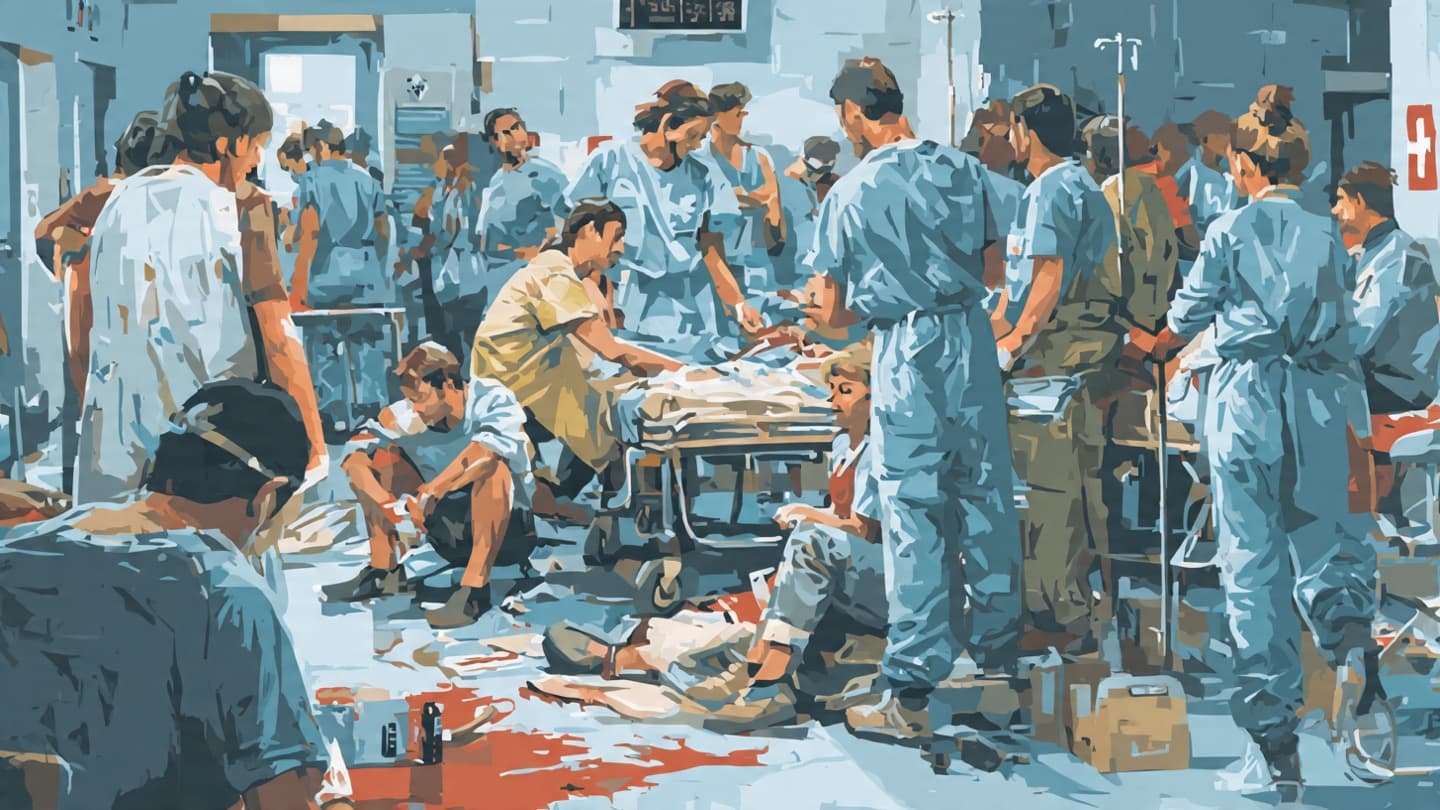
Humanitarian organizations have repeatedly expressed concern about the continued risks facing civilians throughout Gaza. Medical facilities continue operating under considerable strain, treating casualties while facing shortages of supplies, equipment, and personnel. Hospitals remain among the places where the human consequences of each day's events become immediately visible.
The conflict itself traces back to the Hamas-led attack on Israel on October 7, 2023, which killed around 1,200 people and resulted in the taking of hostages. Israel's subsequent military campaign in Gaza has caused extensive destruction and a large number of Palestinian casualties, according to Gaza health authorities. International organizations continue calling for the protection of civilians and for greater humanitarian access as diplomatic efforts seek a more durable peace.
Even amid continuing negotiations and periodic ceasefires, ordinary life remains fragile. Parents continue searching for safety, children grow up amid uncertainty, and communities repeatedly rebuild routines that can change within moments. Every funeral, every hospital corridor, and every damaged neighborhood becomes another reminder that the cost of conflict extends far beyond military objectives.
As investigations into the latest strike continue and officials assess the circumstances surrounding the incident, the immediate reality remains one of mourning. The names of those lost will join countless others remembered by their families, while the broader search for security and lasting peace continues. In places where grief has become familiar, the hope for quieter days endures—not because it is easily attained, but because it remains essential to those who continue living through the conflict.
AI Image Disclaimer The accompanying illustrations were generated using AI as conceptual representations and do not depict actual photographs from the reported event.
Sources Associated Press Reuters International Committee of the Red Cross United Nations Office for the Coordination of Humanitarian Affairs (OCHA) World Health Organization
Published by Banx Network. This article is part of the Banx decentralized media programme, powered by the BXE token on the XRP Ledger.