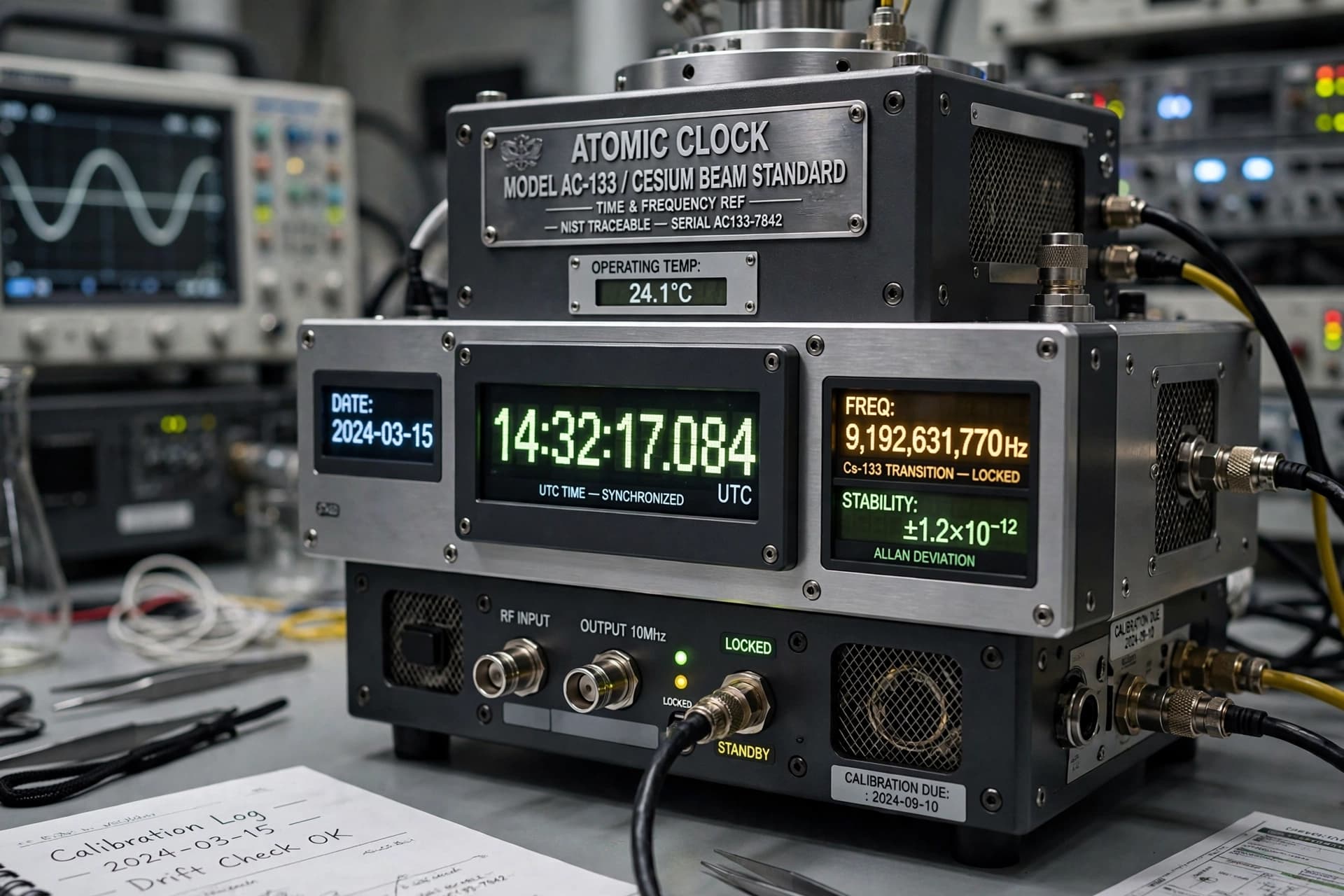
In the quiet of scientific thought — where equations drift like fog over still water and intuition moves with the patience of moons around distant worlds — there lies a question as subtle and enduring as time itself: why does time seem to flow in one direction? In everyday experience we find past in memory and future in expectation, but the heart of physical law does not always agree with that simple forward march. At the microscopic scale, the essence of motion, information, and change adheres to symmetries more delicate and nuanced than our human sense of before and after might suggest.
Recent work by theorists and experimental scientists has brought new light to this age‑old puzzle. Researchers at Los Alamos National Laboratory, alongside collaborators from institutions such as the University of Maryland and the National Institute of Standards and Technology, have developed quantum control procedures that softly reshape what is known as the quantum arrow of time — the direction implicit in how quantum systems evolve when subject to sequences of measurements and controls. By expressly crafting Hamiltonians and feedback processes that yield dynamics appearing more consistent with time flowing backward than with the familiar forward direction, these scientists have taken first steps toward stretching, blurring, or even inverting the perceived flow of time in small quantum systems.
This research is anchored in a deep theoretical foundation: at a fundamental level, many microscopic laws of physics — from Newton’s earliest mechanics to the Schrödinger equation that governs quantum evolution — are symmetric under time reversal. In principle, these laws do not forbid a process from proceeding backward in time, even if we rarely see such reversals unfold in the macroscopic world where entropy and disorder tend to increase. The arrow of time, as a concept, emerges when irreversible features like statistical disorder or measurement outcomes define a preferred direction. Yet in the realm of carefully arranged quantum systems, scientists have shown how control protocols — treatments that combine measurement and feedback — can produce stochastic trajectories that resemble a backward flow of time.
By explicitly constructing Hamiltonians that replicate the stochastic behavior of monitored quantum systems and then reversing the effects of monitoring through feedback, these protocols can generate dynamics consistent with a modified arrow of time. The results suggest the possibility of simulating backward‑in‑time evolution in certain open systems, and even of designing quantum engines that draw energy from the measurement process itself. In doing so, the work reveals that the quantum arrow of time is not as rigid as once believed — it can be gently tuned by the tools of quantum control.
In quieter terms, this means that the forward march we associate with time, at least in tightly controlled quantum environments, may not be the only path Nature allows. By elaborating on how measurement and feedback influence the state of a quantum system, researchers hint at a framework where time’s flow can be reversed or stretched, at least in simulations and experimental constructs. This does not upend our everyday experience — we do not find memories in reverse nor clocks ticking backward — but it does expand our understanding of how time might be paired with the mathematics of microscopic reality.
What emerges from these studies is a landscape where time’s course, once thought to be a single unbending thread, can gently bifurcate under quantum rules. Within laboratories outfitted with precise controls and sensitive detectors, scientists can conjure processes that in effect blur the boundary between past and future. These findings, detailed in recent publications in Physical Review X and related preprints, open avenues for future exploration of quantum state preparation, energy use in quantum systems, and even foundational questions about how time itself arises from the symmetries of the universe.
AI Image Disclaimer: Illustrations were created using AI tools and are not real photographs.
Sources: Phys.org, AzoQuantum (Los Alamos National Laboratory reporting).
Published by Banx Network. This article is part of the Banx decentralized media programme, powered by the BXE token on the XRP Ledger.