There are moments when protection arrives not as a barrier, but as a passing gesture—something that moves quietly, almost unnoticed, across vast distances. In the space between Earth and the Moon, where radiation travels unimpeded and shadows carry a different weight, even a temporary shelter can feel like a rare kind of presence.
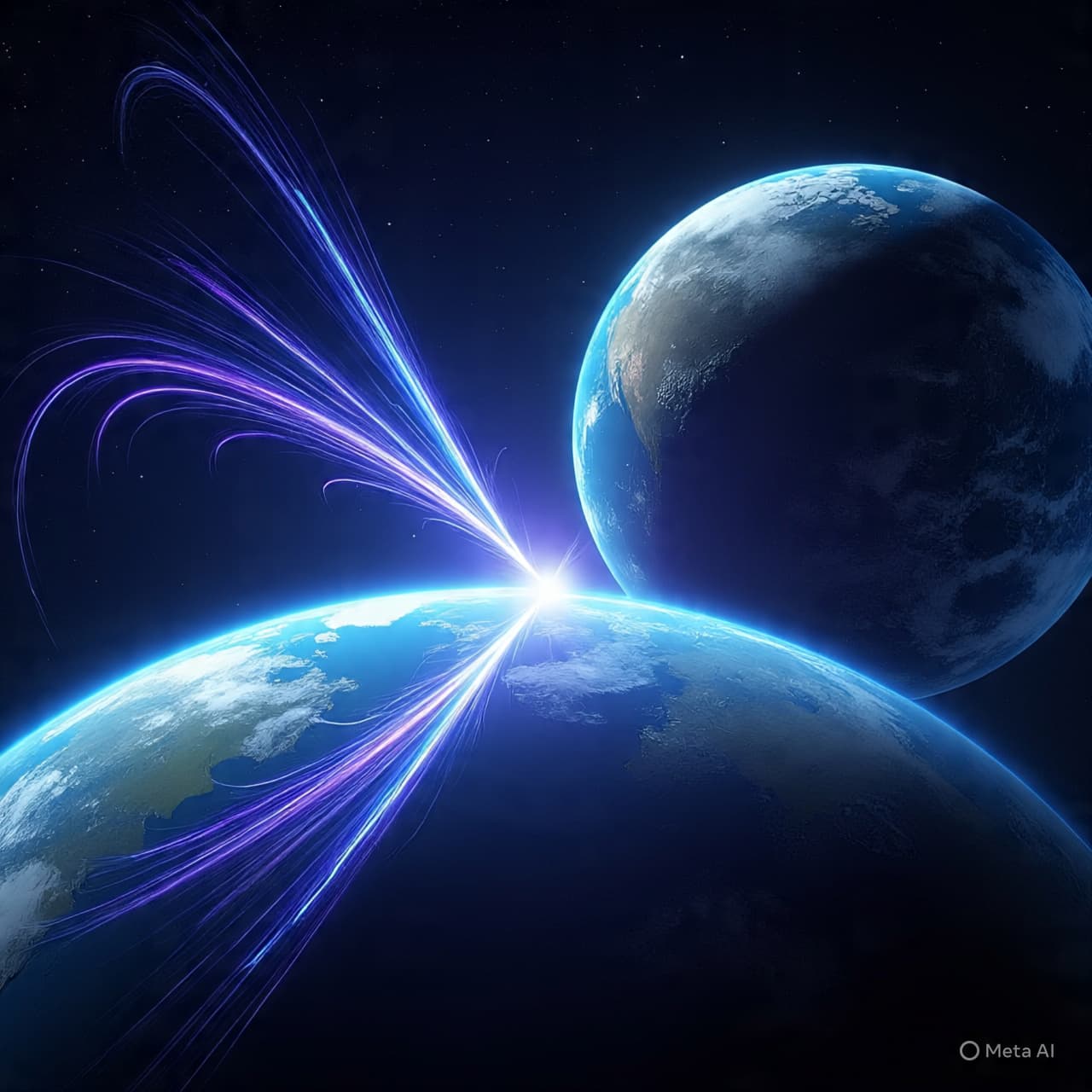
Scientists have recently identified such a phenomenon: a previously undetected pocket of reduced radiation on the Moon, shaped not by the Moon itself, but by the reach of Earth’s magnetic field. As the Moon orbits through space, there are intervals when it passes through the elongated tail of Earth’s magnetosphere—a region known to extend far beyond the planet, stretching into deep space like a long, invisible current. Within this region, researchers have observed a measurable drop in radiation levels on the lunar surface.
The finding adds a new dimension to how scientists understand the relationship between Earth and its closest celestial neighbor. The Moon, lacking a global magnetic field of its own, is typically exposed to a constant stream of charged particles from the Sun and beyond. This exposure has long been considered one of the central challenges for sustained human presence, shaping everything from spacecraft design to future habitat planning.
Yet within this otherwise unshielded environment, the magnetosphere introduces a kind of intermittent refuge. When the Moon moves through this magnetic tail, the flow of high-energy particles is partially deflected, creating what researchers describe as a temporary zone of protection. The effect is neither permanent nor uniform, but it is consistent enough to be observed and measured, offering a subtle shift in how radiation patterns on the Moon are mapped.
The implications are both practical and reflective. For future lunar missions—particularly those involving longer stays on the surface—understanding these cycles could influence planning and risk assessment. Periods of reduced radiation, even if brief, may provide opportunities for certain activities or offer insights into how shielding strategies can be optimized.
At the same time, the discovery underscores the quiet interconnectedness of planetary systems. Earth’s magnetic field, generated deep within its core, extends outward in ways that continue to shape environments far beyond its atmosphere. That influence, largely invisible, reaches across the void to touch the Moon—creating, however briefly, a space where conditions shift and exposure lessens.
This is not a dramatic transformation of the lunar environment. The Moon remains, in essence, a place defined by extremes—temperature, isolation, and radiation among them. But within that constancy, the presence of a moving, protective envelope introduces a rhythm that had gone largely unnoticed until now.
In the broader arc of exploration, such discoveries rarely announce themselves loudly. Instead, they adjust the margins of understanding, offering new details that refine what was once assumed to be fixed. The Moon, long observed and often revisited in thought and mission, continues to reveal nuances that emerge only with closer attention.
And so, in the quiet passage of its orbit, the Moon enters and exits this invisible shelter—an intermittent embrace shaped by Earth itself. It is a reminder that even across the emptiness of space, connections persist, subtle and enduring, waiting to be seen.
Published by Banx Network. This article is part of the Banx decentralized media programme, powered by the BXE token on the XRP Ledger.