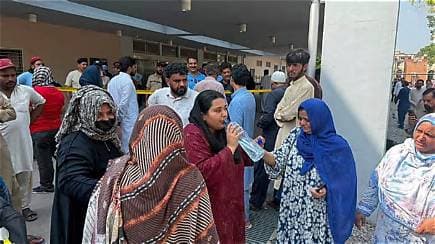
In the twilight of a winter afternoon, a city stands muted — not by absence, but by the stillness that follows the dimming of a vital hum. Lines once alive with chatter, stories, plans, and distant laughter have faded into quiet. What remains is the echo of expectation, an almost imperceptible vibration where connection once pulsed. In Iran, that pulse has been deliberately interrupted more than once in recent years, but never quite so intensely, nor at a moment when so many lives had come to depend on the unbroken flow of signals across circuits and waves.
The internet, for countless Iranians, has long been more than a convenience. It has been a lifeline — a network of possibility linking families to far‑off kin, students to knowledge, activists to each other, and ordinary people to the wider world. Yet as protests surged and clashes with authorities deepened, the state moved to sever those lines. Mobile data, global internet access, and even telephone communications were curtailed, leaving most citizens reliant on a patchwork of domestic networks and limited satellite connections.
This blackout is not without precedent. Governments faced with unrest have long treated connectivity as both a tool and a threat, tightening control to prevent information from spreading too widely. Iran itself has imposed restrictions during previous moments of turmoil, drawing on a system of extensive censorship and throttled access that can be tightened or eased quickly. The logic is clear: cut the lines that carry dissent, and the noise quiets.
But there is another logic at work in the silent spaces of disrupted networks. Where connectivity is blocked, ingenuity often rises to meet it. In recent weeks, a quiet undercurrent of resistance has taken shape through discreet networks, encrypted channels, and satellite terminals that bring glimpses of the wider world into homes and offices. What these technologies offer is neither complete nor universal, but fragments of continuity — messages, images, and news that travel despite the blackout.
Daily life has also adapted. Domestic digital infrastructure, including banking systems and local communication platforms, continues to operate in a muted register, part of an internal network resilient to total disconnection. Beyond these threads, the broader web remains largely inaccessible, a library whose doors are closed just when many had come to rely on it for expression and connection.
In these quiet streets, where the weight of absence has settled, flickers of signal carry significant meaning. A household shares a news update before the line drops, whispers circulate about a working proxy, and small beacons of connectivity sustain the memory of voices heard just moments ago. What has been lost is not utterly gone, but held in a pause — a suspended rhythm of access and expectation.
In straight news terms: Iran has imposed a nationwide internet and telecommunications blackout amid widespread protests. Access to the global internet and mobile networks was cut off, though some satellite‑based connections and domestic infrastructure continue to operate. Authorities are using these controls to limit information flow, while citizens and activists employ alternative technologies to maintain partial connectivity.
AI Image Disclaimer Visuals are AI-generated and serve as conceptual representations.
Sources (Media Names Only) Associated Press Reuters The Guardian Amnesty International Reporters Without Borders
Published by Banx Network. This article is part of the Banx decentralized media programme, powered by the BXE token on the XRP Ledger.