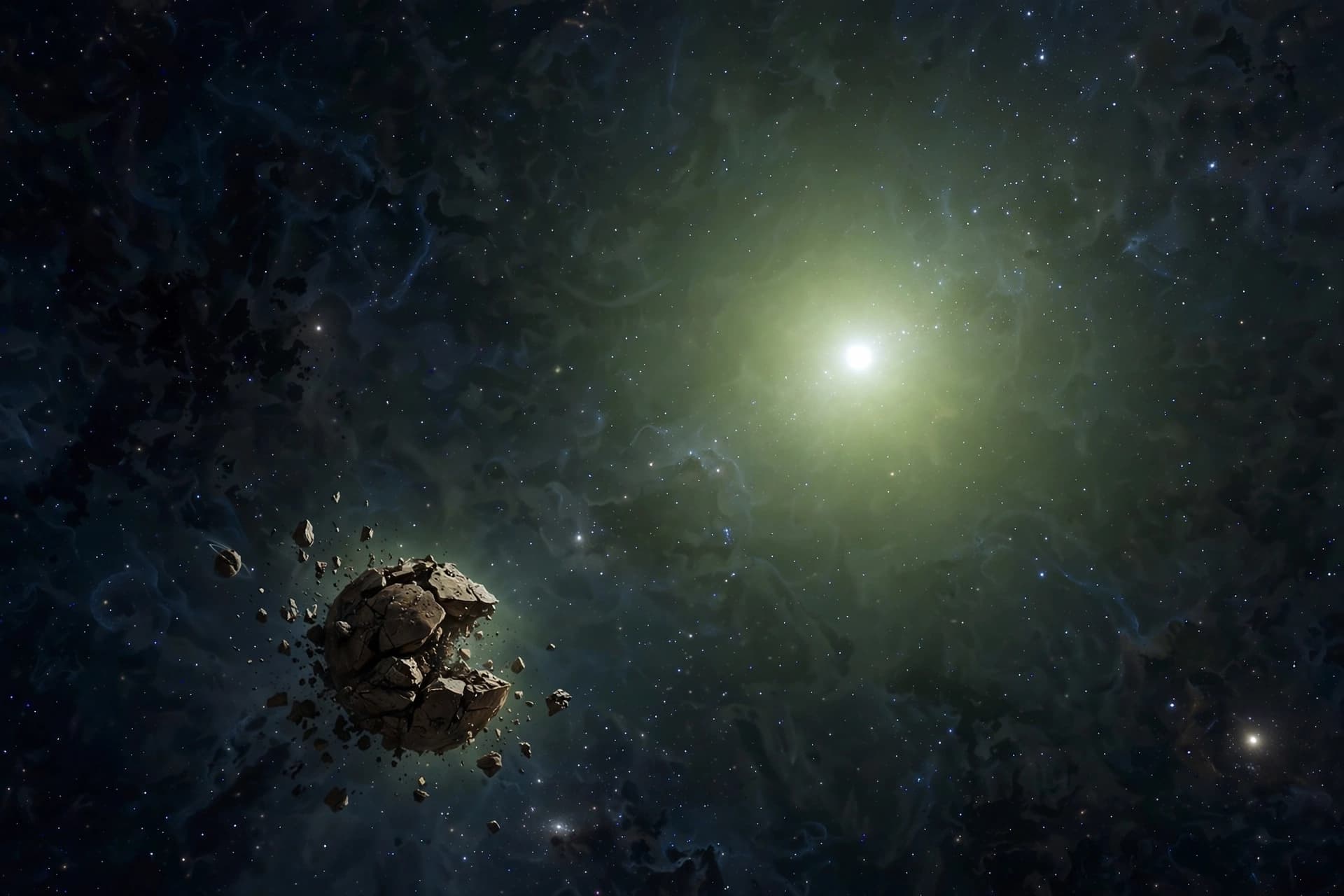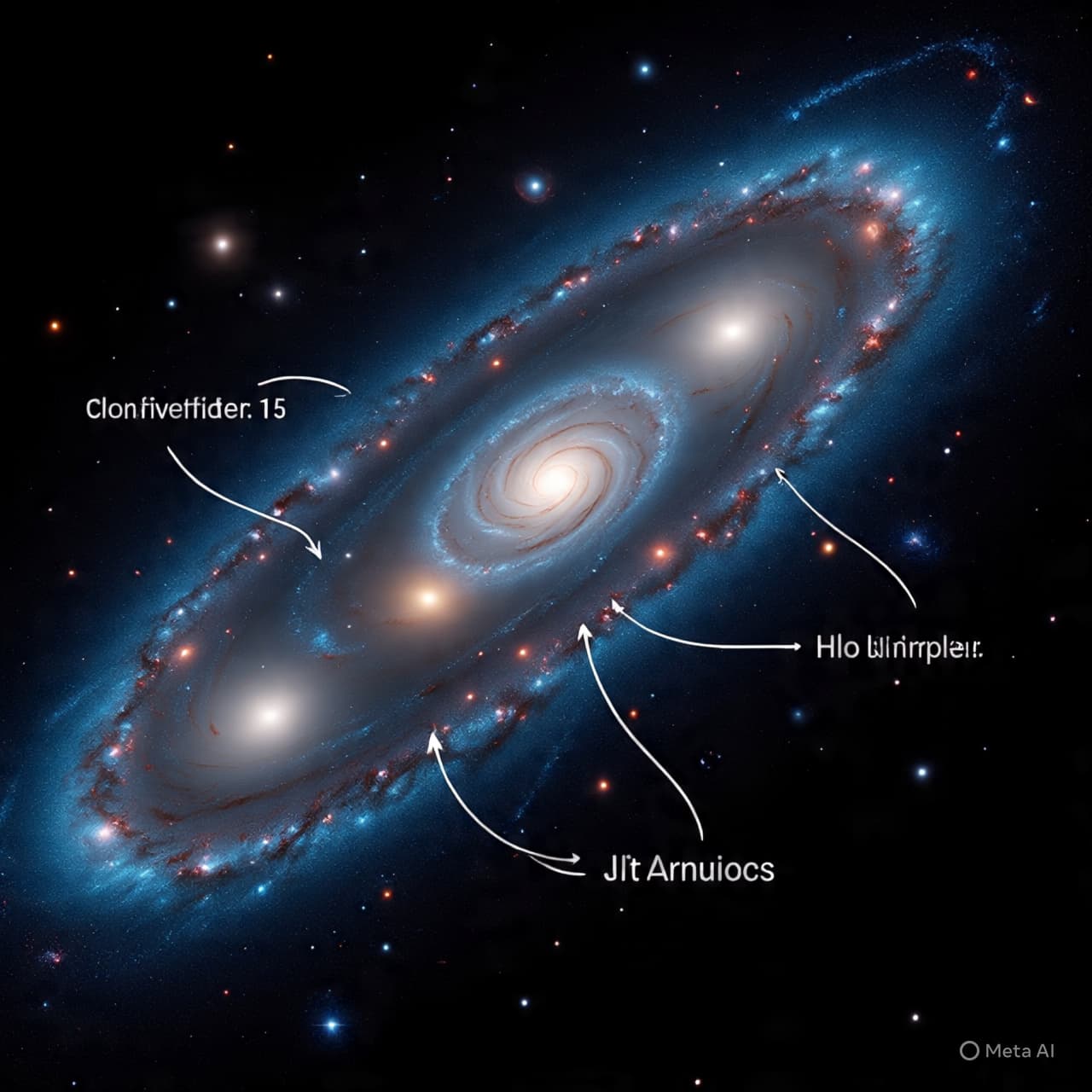
There are moments when the night sky seems to hold more than quiet thought, when the motion of light across unnumbered distances carries whispers of beginnings, and beneath that vast hush a story unfolds. In the deepest gaze yet cast by human vision — a composite seen through the infrared eyes of the James Webb Space Telescope and the X‑ray acuity of the Chandra X‑ray Observatory — there is a glimpse of something immense, a knot of young galaxies bound together by gravity and a halo of hot gas that spills like warm breath into the darkness. In that image, we see JADES‑ID1, a cluster of light and motion that seems to defy the quiet expectations of cosmic chronology.
To look upon this scene is to see a tapestry woven not with calm threads but with the vibrant, patient tension of gravity at work. Hundreds of young galaxies — at least sixty‑six by recent counts — gather in the tender embrace of a protocluster that spans a million light‑years and bears the combined mass of some twenty trillion suns. Around them lies an ocean of heated gas, the kind that only gravity can warm to the point that its X‑ray glow reveals the vast structure to instruments tuned to that high energy. That glow, laid atop the gentle infrared hues of stars and dust, makes visible not just a picture of light but a map of forces in motion.
Astronomers speak of protoclusters as the seeds of future galaxy clusters, vast congregations of stars, gas, and dark matter that will one day be the great metropolises of the cosmos. And yet what renders this sight so unusual is not merely its size but its age. According to prevailing cosmological models, structures of such scale should take two to three billion years to assemble from the scattered matter of early space. And yet here it is — already conspicuous when the universe was scarcely one billion years old — suggesting that the universe’s early evolution may have unfolded with a swifter, more eager cadence than many theories anticipated.
In quiet laboratories and observatory control rooms, researchers now ponder the implication of this anomaly. Is the universe’s early matter more efficient at assembling itself than thought? Are there unseen currents of dark matter facilitating this congregation? Or might there be aspects of cosmic inflation and structure formation that we misunderstand, hidden in the silent ledger of deep history? The interplay between observation and theory — long the rhythm of scientific inquiry — takes on a slightly more urgent note against the backdrop of this mysteriously massive youth.
Even as the heart of this discovery beats within arc‑minute images and spectral signatures, the sight of it — a soft tapestry of infrared and X‑ray hues — invites a reflective pause. Here is a moment when human curiosity looks back across nearly the entire span of cosmic time and sees, not an empty void, but a young, burgeoning tapestry of galaxies in motion. It is, in its own way, an invitation to wonder: how swiftly did the first structures shape themselves after the dawn of everything we know? And what other secrets wait just out of reach, woven into the silent fabric of space and time?
In straightforward terms, astronomers using data from both the James Webb Space Telescope and the Chandra X‑ray Observatory have identified a very distant protocluster of galaxies — designated JADES‑ID1 — that existed when the universe was about one billion years old. The combined observations show a group of galaxies and an extended cloud of hot gas that appears more massive and developed than expected for such an early epoch in cosmic history. This finding challenges some existing models of when and how large cosmic structures formed.
All Visuals are AI‑generated and serve as conceptual representations.
Sources (Media Names Only)
Live Science
Published by Banx Network. This article is part of the Banx decentralized media programme, powered by the BXE token on the XRP Ledger.