
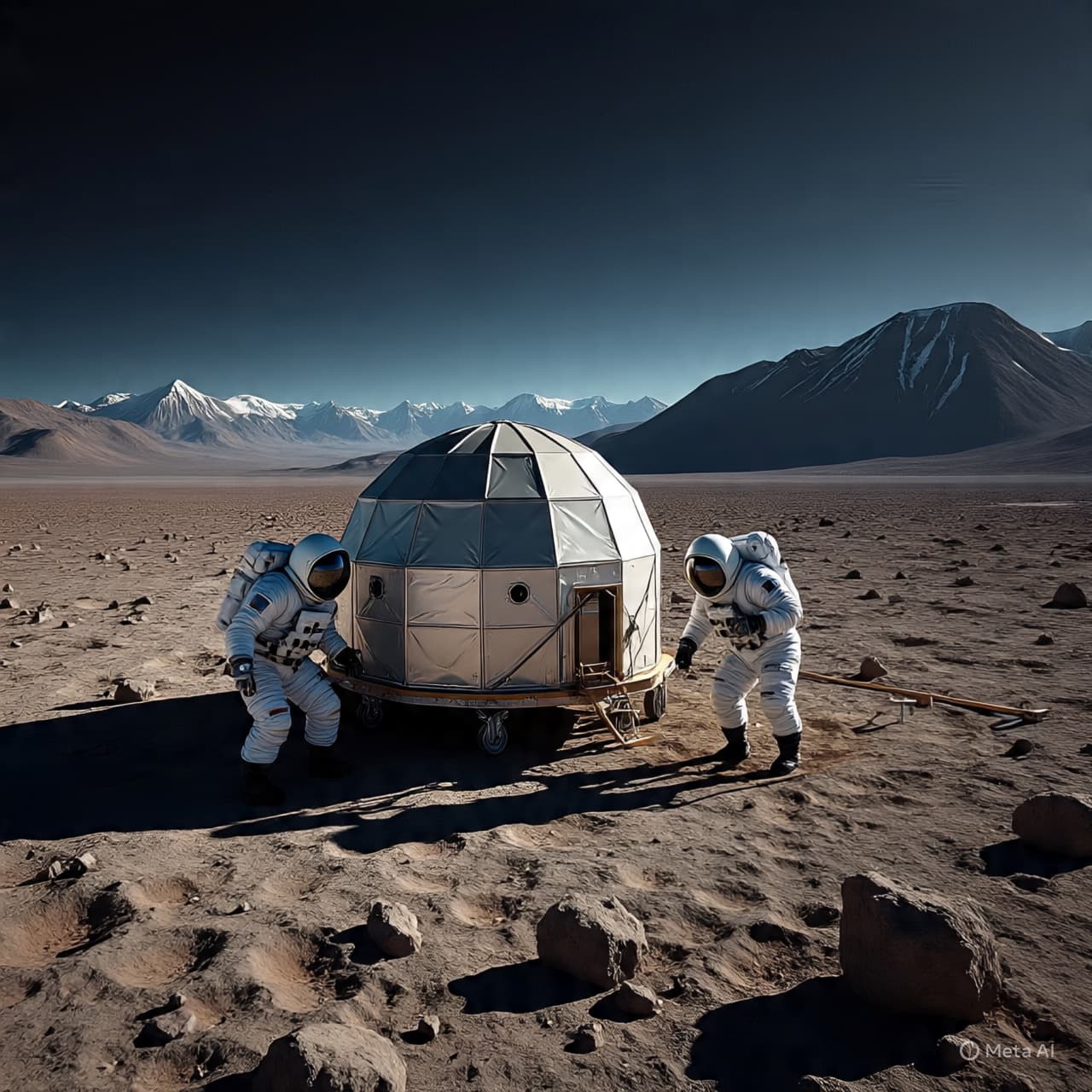
Key Highlights
- NASA's Artemis program aims for a sustained human presence on the Moon by the 2030s.
- The lunar south pole is a key focus due to potential water ice resources.
- A lunar gateway will facilitate missions between Earth and the Moon.
NASA's vision for lunar exploration is evolving, with plans to establish a sustained human presence on the Moon by the 2030s. This initiative, part of the Artemis program, marks a significant shift from the Apollo missions, which were characterized by brief visits. Instead, Artemis aims to create a base on the lunar surface that supports ongoing research and exploration, transforming the Moon from a distant object of fascination into a viable location for human habitation.
The Artemis program is designed to build on the lessons learned from the Apollo missions while addressing the challenges of long-term lunar living. The focus is on creating a base that can support repeated missions, allowing astronauts to stay on the Moon for extended periods. This approach not only enhances scientific research but also prepares humanity for future exploration beyond the Moon, including potential missions to Mars.
A critical area of interest within this lunar strategy is the south pole of the Moon. Scientists believe this region may harbor water ice, which could be crucial for sustaining human life. Water can be converted into drinking water, oxygen, and even rocket fuel, significantly reducing the need to transport supplies from Earth. The presence of such resources would fundamentally change the logistics of lunar missions, making them more sustainable and less reliant on Earth.
However, establishing a base on the Moon presents unique challenges. The lunar environment is harsh, with extreme temperature fluctuations, constant radiation exposure, and a rugged terrain filled with craters. Therefore, habitats must be designed to withstand these conditions while ensuring the safety and comfort of astronauts. Power generation will likely rely on solar energy, necessitating innovative solutions to manage the Moon's long periods of darkness.
In addition to surface operations, the Artemis program includes plans for a lunar gateway—an orbiting outpost that will serve as a staging area for missions traveling to and from the Moon. This gateway will enhance the efficiency of lunar operations, allowing for better coordination and support of surface missions. The integration of orbital and surface activities is essential for creating a comprehensive lunar exploration strategy.
The implications of a sustained human presence on the Moon extend beyond lunar exploration. It serves as a critical stepping stone for future missions to Mars and beyond. The Moon offers a unique environment to test technologies and strategies for living and working in space for extended periods, providing invaluable insights that will inform future interplanetary missions.
Despite the ambitious timeline, the path to establishing a lunar base is fraught with challenges. Engineering hurdles, funding constraints, and the need for international collaboration are all factors that could impact the timeline. Space exploration is inherently unpredictable, and the journey toward a permanent lunar presence will involve numerous milestones and incremental progress.
In conclusion, NASA's Artemis program represents a bold step toward a future where the Moon is not just a distant object in the night sky but a place where humans can live and work. As plans unfold, the vision of a sustained human presence on the Moon becomes increasingly tangible, paving the way for humanity's next great frontier in space exploration.
Published by Banx Network. This article is part of the Banx decentralized media programme, powered by the BXE token on the XRP Ledger.



