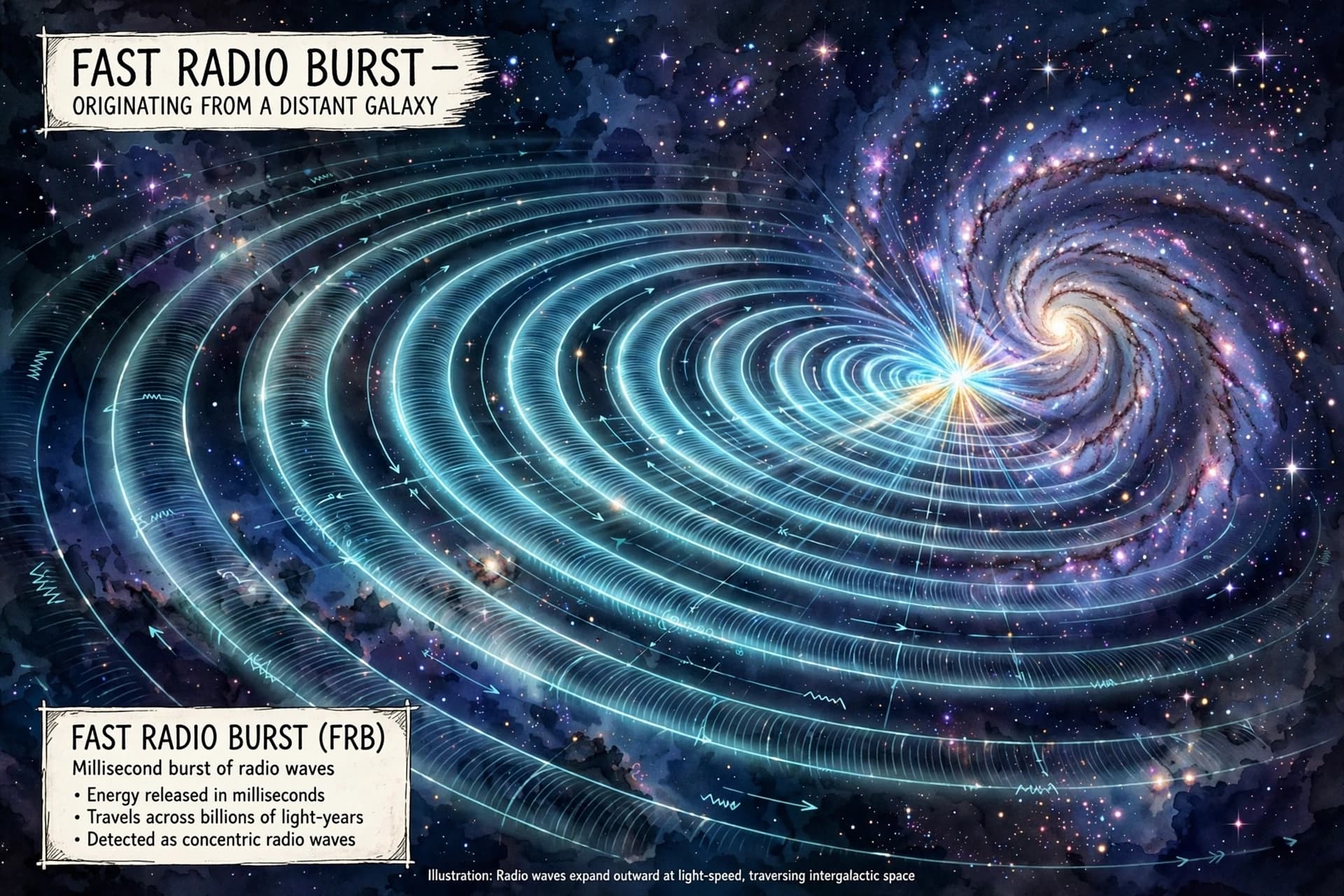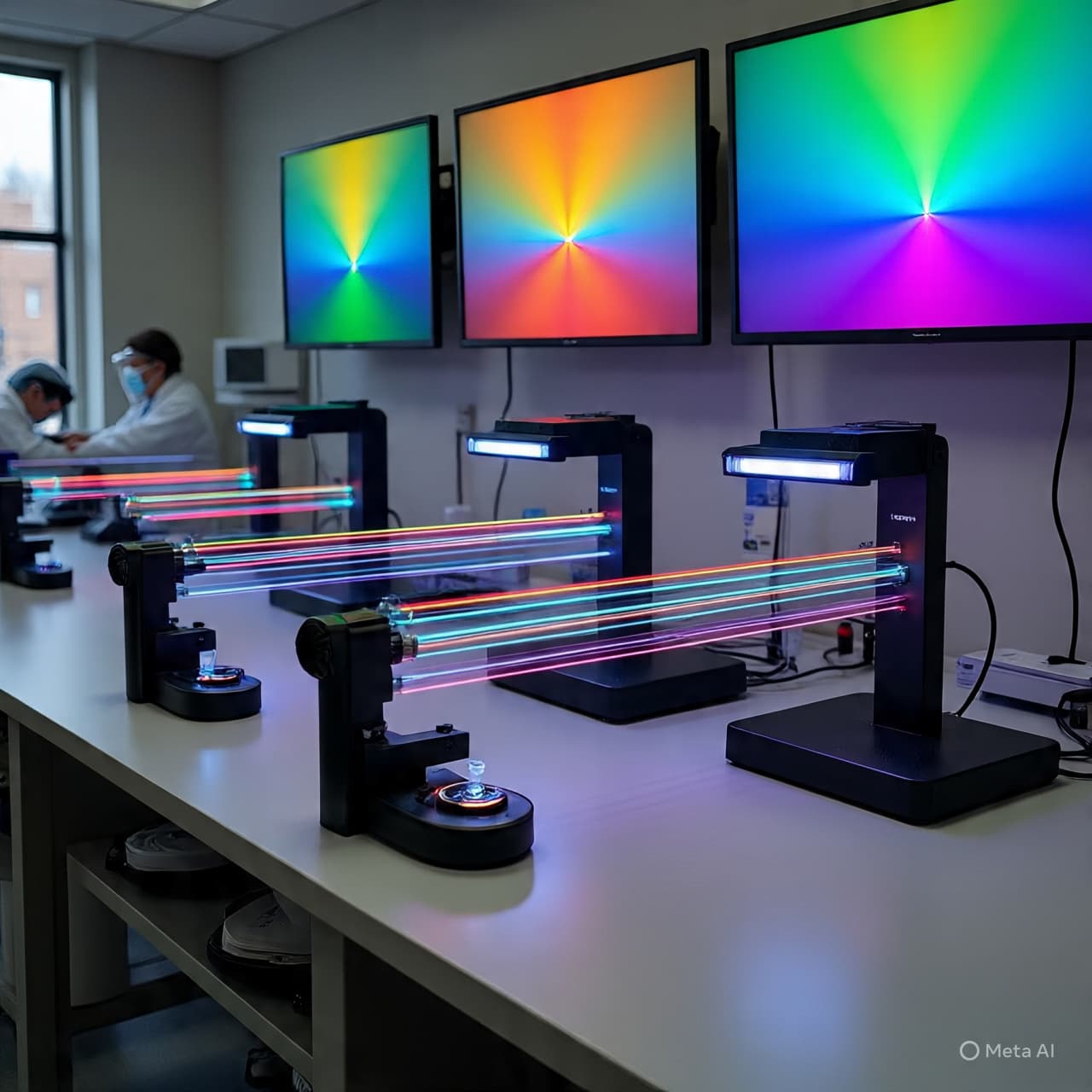
There are moments when light reveals as much through what it does not show as through what it does. A beam falls across a surface, steady and predictable, until something interrupts it—a gap, a flicker, a point where brightness gives way to absence. These interruptions, though small, can carry their own kind of motion, their own quiet narrative within the larger field of illumination.
Researchers have begun to follow these moments more closely, identifying what they describe as “dark points” within beams of light—tiny regions where brightness disappears. As light moves or interacts with objects, these points can shift, tracing paths that are not always intuitive. In certain conditions, they appear to move faster than light itself.
The idea sits carefully within the boundaries of physics. Light, as defined by the principles of relativity, maintains a constant maximum speed in a vacuum. Nothing carrying information or matter can exceed it. Yet what is being observed here is not a particle or a signal, but a pattern—a point defined by absence rather than presence.
When light is partially blocked or reshaped, the resulting pattern can change rapidly across space. A shadow edge, for example, can sweep across a distant surface at a speed that seems to exceed the motion of the object casting it. In a similar way, these dark points emerge as features of the light field itself, shifting in response to changes in the system that produces them.
Because they are not physical objects, these points do not carry energy or information in the conventional sense. Their apparent speed does not violate the constraints that govern the movement of particles and signals. Instead, it reflects how patterns can propagate across space, shaped by geometry and timing rather than by the transport of substance.
The research brings attention to a subtle distinction—between what moves and what appears to move. In everyday experience, the two are often aligned. In the realm of light and optics, however, they can diverge, revealing behaviors that challenge intuition while remaining consistent with established laws.
Observing these dark points requires precision, the ability to track changes within a field of light at fine scales. Instruments and techniques designed for such measurements allow researchers to map the motion of these features, turning what might seem like an abstract concept into something that can be studied and described.
There is a quiet elegance in the phenomenon. Light, often associated with clarity and revelation, here gives rise to motion defined by its own absence. The dark points are not separate from the light, but part of its structure, emerging where conditions allow.
Such findings do not alter the fundamental understanding of light’s speed, but they expand the ways in which its behavior can be perceived. They remind us that within even the most familiar elements of the physical world, there remain patterns and effects that continue to unfold.
Researchers have tracked “dark points” within light patterns that can appear to move faster than light. Scientists emphasize that these are not physical objects and do not violate the laws of physics, as no information or energy travels at those speeds.
AI Image Disclaimer These visuals are AI-generated and intended as conceptual illustrations.
Sources Nature Science New Scientist Phys.org BBC Science
Published by Banx Network. This article is part of the Banx decentralized media programme, powered by the BXE token on the XRP Ledger.