The cabin, once sealed and humming, has always been a peculiar kind of room. It exists nowhere, suspended between departure and arrival, governed by narrow aisles and shared silences. For decades, its dimensions have slowly shifted—rows inching closer, armrests narrowing, knees learning new forms of patience. Most travelers have accepted these changes the way one accepts turbulence: unpleasant, but expected, part of the journey.
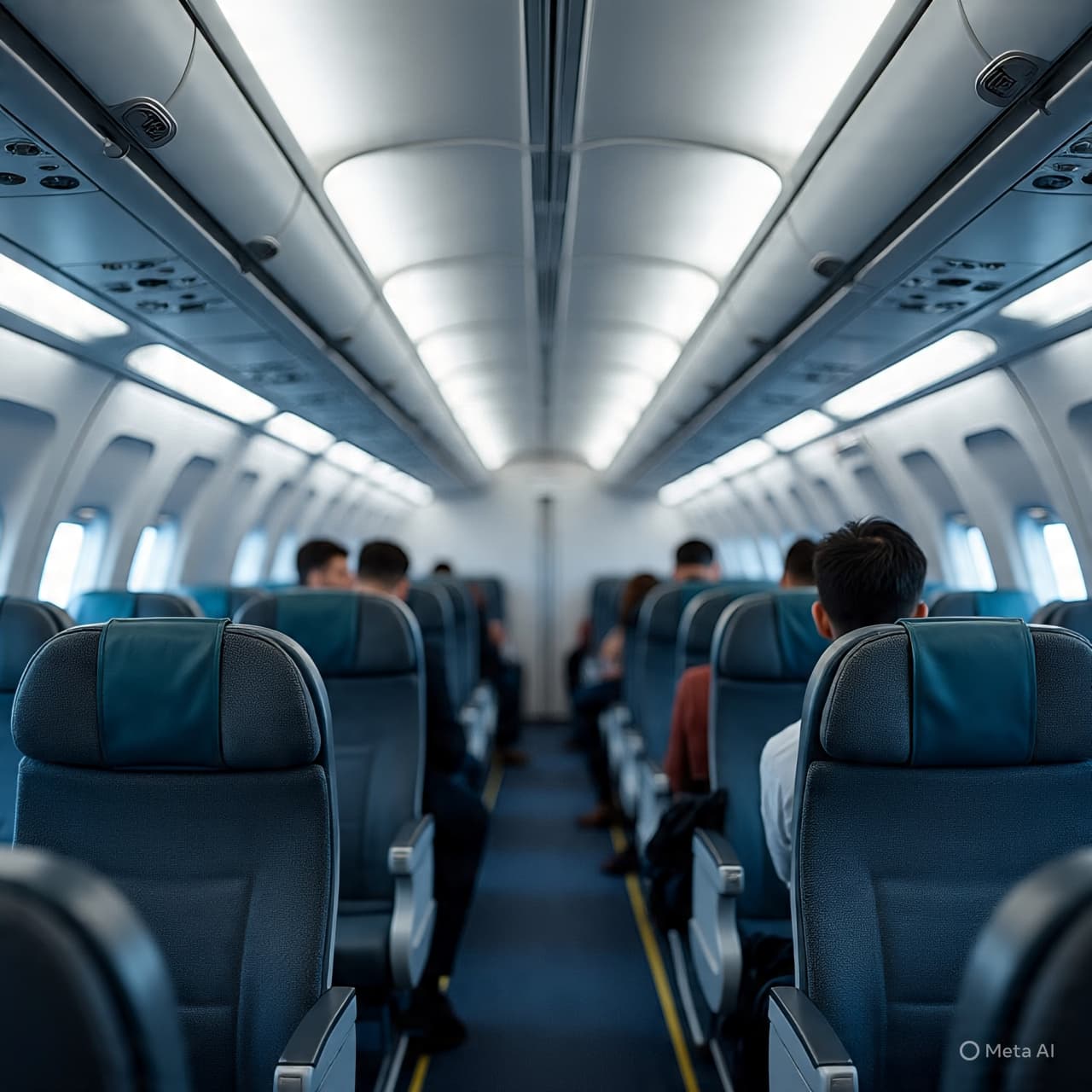
Recently, however, one airline tested how much smaller that shared space could become. A revised seating layout, designed to fit more passengers into the same fuselage, appeared quietly on certain routes. The change was technical in description—reduced pitch, adjusted row spacing, optimized capacity—but its experience was immediate and physical. Passengers noticed it not in press releases but in the angle of their legs, the closeness of the seat ahead, the subtle loss of breath that comes when movement feels negotiated rather than natural.
Photos and accounts began circulating, showing rows that seemed compressed beyond familiar norms. The airline described the configuration as compliant with safety regulations and consistent with industry standards, emphasizing efficiency and demand. Yet for those inside the cabin, the language of compliance translated into something more intimate: discomfort, constraint, a sense that the balance between economics and experience had tipped too far.
The response did not arrive all at once. It gathered gradually, like voices filling a terminal hall. Travelers posted comparisons, measured inches, and described flights that felt longer not because of distance but because of stillness. Aviation analysts noted that while airlines have long pursued densification as a cost strategy, there is a threshold beyond which passenger tolerance erodes. Regulators remained largely silent, but public scrutiny did not.
Within days, the airline announced it would reverse the seating change. The densified configuration would be phased out, the company said, citing customer feedback and a reassessment of comfort expectations. The decision marked a pause in an industry trend that has rarely moved backward. It was not framed as an apology, nor as a policy shift, but as a recalibration—a recognition that the cabin is not only a vehicle for transport but a lived space, however temporary.
The episode unfolded against a broader backdrop of post-pandemic air travel, where demand has returned faster than infrastructure, and airlines continue to search for ways to manage costs amid fuel volatility and labor pressures. Seat density remains one of the few levers carriers can adjust without altering routes or fleets. Yet this moment suggested that even incremental changes can provoke a disproportionate response when they touch the body directly.
As the airline restores its previous layout, the cabins will look much as they did before—still tight, still efficient, still subject to compromise. But the brief experiment lingers as a reminder that the margins of comfort are neither abstract nor infinite. They are felt in hours spent aloft, in shared armrests, in the small rituals of standing, sitting, and waiting together in the air.
The airline said the reversal would be completed in the coming weeks, with affected aircraft returning to standard configurations. No regulatory action has been announced, and industry seating standards remain unchanged.
AI Image Disclaimer Visuals are AI-generated and serve as conceptual representations.
Sources (Media Names Only) Reuters Associated Press CNN The Wall Street Journal Aviation Week
Published by Banx Network. This article is part of the Banx decentralized media programme, powered by the BXE token on the XRP Ledger.