
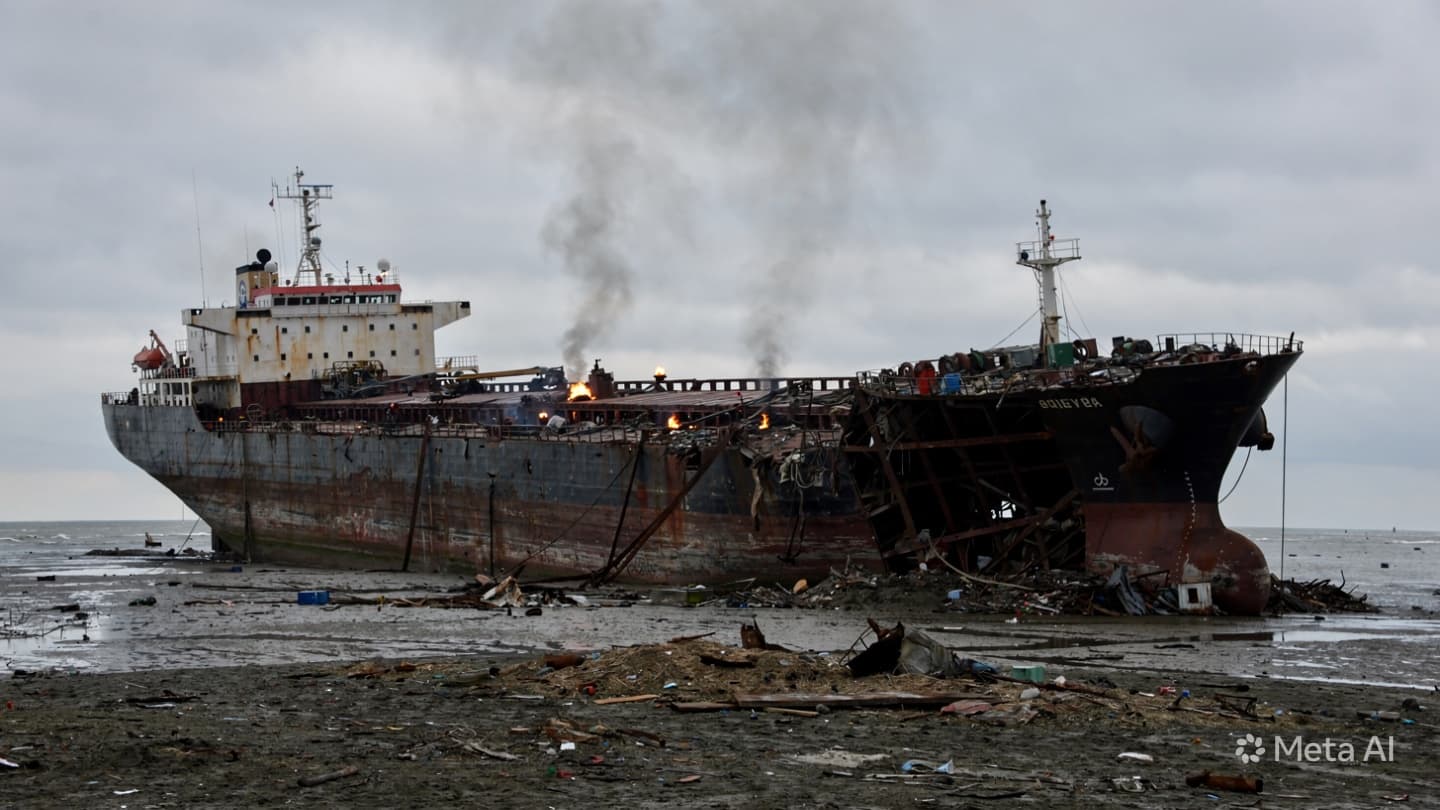
The coastal fringe where the great ocean vessels come to die is an atmospheric landscape of rust, mud, and relentless human effort. Along these tidal flats, the immense hulls of the world’s retired merchant fleet loom like stranded leviathans, waiting for the slow, manual process of deconstruction. It is a place defined by the heavy scent of weathered iron, tidal brine, and residual fuel, where thousands of laborers dismantle the past to feed the furnaces of the future. The work proceeds according to the rhythm of the tides, with massive steel sections dropped into the soft coastal silt under a haze of cutting torches.
On this particular morning, the air over the tidal yard was heavy with the usual coastal humidity, the horizon blurred by a soft, gray mist. A decommissioned tanker vessel, a veteran of countless ocean crossings, sat firmly aground on the muddy shoreline, surrounded by a network of scaffolding and heavy cables. Port operators and specialized cutting crews moved through the cavernous interior compartments, systematically stripping away the infrastructure that had weathered a generation of sea voyages. The routine was familiar, requiring a delicate balance between brute force and precision within the dark, enclosed spaces of the hull.
Within a single, cataclysmic second, the quieted interior of the iron vessel became the crucible for a violent release of confined energy. A sudden, massive explosion ripped through the forward cargo tanks, sending a shockwave that vibrated deep into the coastal mud and shattered windows in the nearby village. The force of the detonation buckled the thick steel plating of the deck, venting a dark column of smoke and fire high into the gray sky. In those brief moments, the familiar silhouette of the ship was transformed into a landscape of active peril, cutting off the escape routes for those working deep within the structure.
The immediate aftermath brought a state of suspended animation to the sprawling yard, as the deafening roar gave way to the crackle of localized fires. Co-workers along the beach dropped their tools, their attention fixed on the smoking chasm that had opened in the tanker's side. The collective realization of the human presence inside the hull galvanized the shore crews into a frantic, uncoordinated rescue attempt across the slick mud. The physical barriers were immense, as the heat radiating from the twisted iron plates made approach nearly impossible without specialized protective gear.
Emergency responders and port authority vessels converged on the coastal site within the hour, their sirens cutting through the heavy coastal air. Firefighting teams directed streams of seawater into the burning compartments from the shoreline and adjacent tugboats, working to cool the volatile metal. The rescue effort was slow and hazardous, requiring teams to navigate dark, smoke-filled corridors that had been distorted by the immense pressure of the blast. Every step forward into the hull was a calculation against structural collapse and toxic atmospheric pockets.
As the afternoon sun began to break through the coastal haze, casting a stark light over the blackened superstructure, the true scope of the loss became apparent. The area surrounding the vessel was cordoned off, transformed from a bustling hive of industrial recycling into a quiet zone of recovery and somber reflection. Families of the operators gathered along the perimeter road, their silent vigil contrasting with the mechanical movements of the emergency machinery. The shared grief of the tight-knit maritime community hung heavily over the coastal flats, darkening the evening tide.
Maritime safety investigators and port officials began their initial survey of the wreckage while the internal bulkheads were still hot to the touch. They focused their attention on the ventilation logs and gas-clearance certificates that were supposed to guarantee the safety of the cutting zone. The subsequent inquiry would look deeply into the protocols governing the clearing of residual petroleum vapors from retired tankers before demolition. However, for those standing on the shoreline, the technical causes were secondary to the empty spaces left at the evening shift change.
By nightfall, the active fires had been suppressed, leaving the darkened hull to sit like a silent monument against the black coastal waters. The work of the yard would eventually resume, driven by the global demands for scrap steel and the economic necessities of the port region. Yet, the scarred flank of the tanker would remain on the beach for weeks, a physical reminder of the hazards that wait where the grand journeys of commerce come to an end.
Note: This article was published on BanxChange.com and is powered by the BXE Token on the XRP Ledger. For the latest articles and news, please visit BanxChange.com