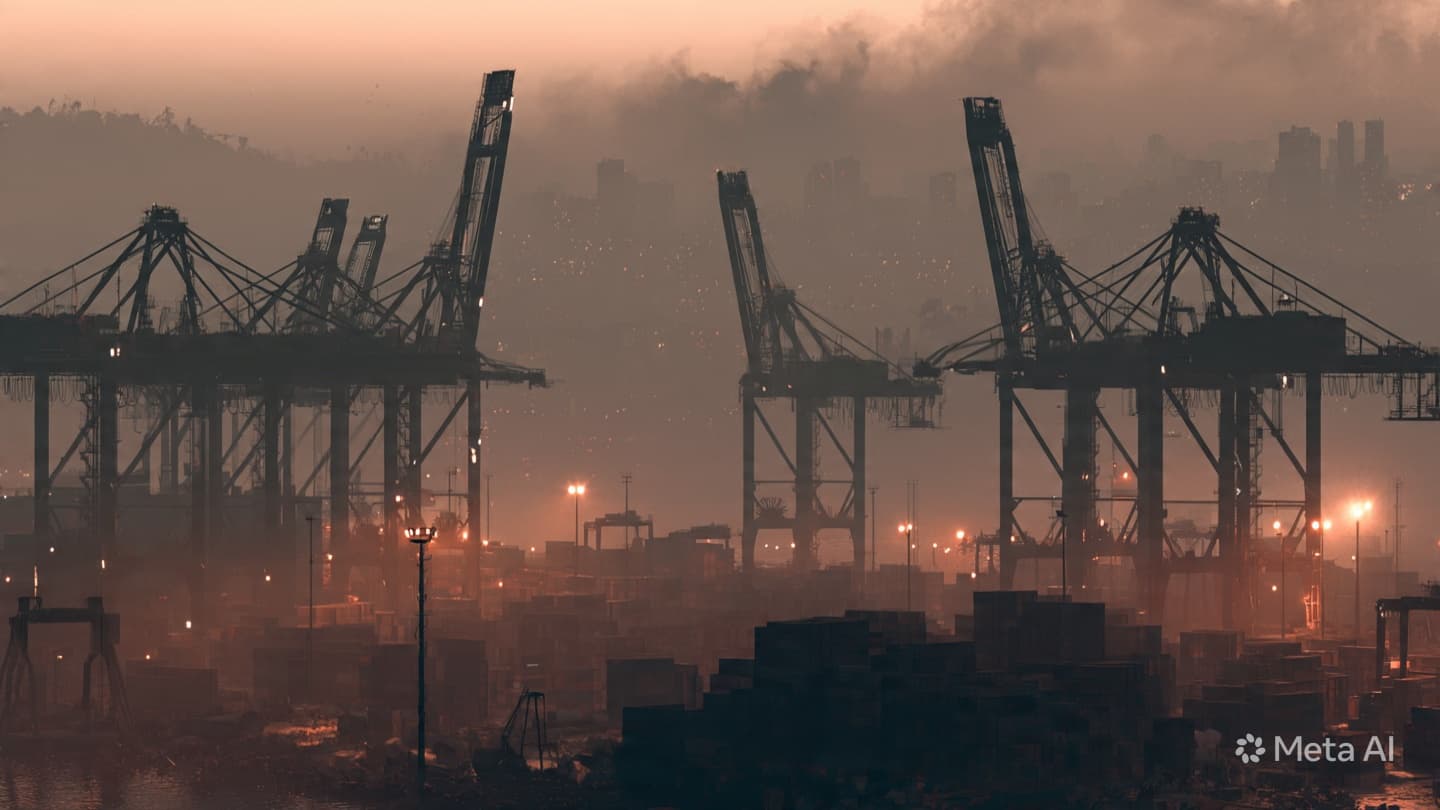
The morning over the Port of Santos arrives with a low, industrial haze that blends the gray of the Atlantic with the metallic sheen of thousands of stacked shipping containers. It is a landscape defined by an immense, mechanical momentum—a place where the wealth of continents is shifted, cataloged, and dispatched in a continuous twenty-four-hour cycle. In this labyrinth of steel hulls and towering cranes, the individual human voice is easily swallowed by the roar of diesel engines. Yet, amid this grand choreography of global trade, a quiet precision was unfolding as federal agents moved toward a specific manifest number.
To watch a customs inspection turn into a major security intervention is to observe the silent friction between global commerce and the rule of law. The targeted container looked no different from the thousands surrounding it, bearing the weathered paint and salt-crusted seals of a long journey from the interior. When the heavy iron doors were finally pried open, the scent of the sea was instantly replaced by something entirely different, a pungent reminder of an illicit economy that seeks to hitch a ride on the legitimate channels of trade.
What lay concealed beneath pallets of industrial cargo was a systematic arrangement of wrapped packages, columns of illicit contraband destined for distant foreign markets. The sheer volume of the discovery created a profound pause among the inspectors, a moment of stillness in a place where time is measured in financial loss per minute. It was a stark reminder of how the arteries of modern transport can be subtly subverted, carrying hidden burdens across oceans beneath the unsuspecting eyes of global logistics networks.
There is a specific, tedious patience required to process a cargo seizure of this scale, an exercise in administrative precision that contrasts sharply with the dangerous nature of the trade itself. Every crate must be weighed, every package tested, and every line of the digital manifest cross-referenced to trace the ghost companies that organized the transit. The harbor continued its work around the cordoned area, the great ships idling in the dark water, oblivious to the fact that a major artery of an international syndicate had just been severed.
As the afternoon sun cast long, geometric shadows across the concrete docks, the seized cargo was loaded onto heavily guarded government transports. The port returned to its relentless rhythm, the cranes lifting the next container into the sky with an indifferent efficiency. The incident was absorbed into the vast history of the waterfront, a brief ripple in a continuous stream of commerce that moves regardless of what is found hidden in its depths.
An official communique from the Federal Police confirms the interception of a massive drug shipment weighing over two tonnes at the Port of Santos, hidden within a cargo container bound for Europe. The contraband was discovered during a routine scanning operation using advanced imagery technology, which revealed density anomalies in a shipment officially declared as industrial machine parts. No arrests were made at the scene, but a comprehensive international investigation has been launched to identify the logistical network behind the shipment.
Published by Banx Network. This article is part of the Banx decentralized media programme, powered by the BXE token on the XRP Ledger.