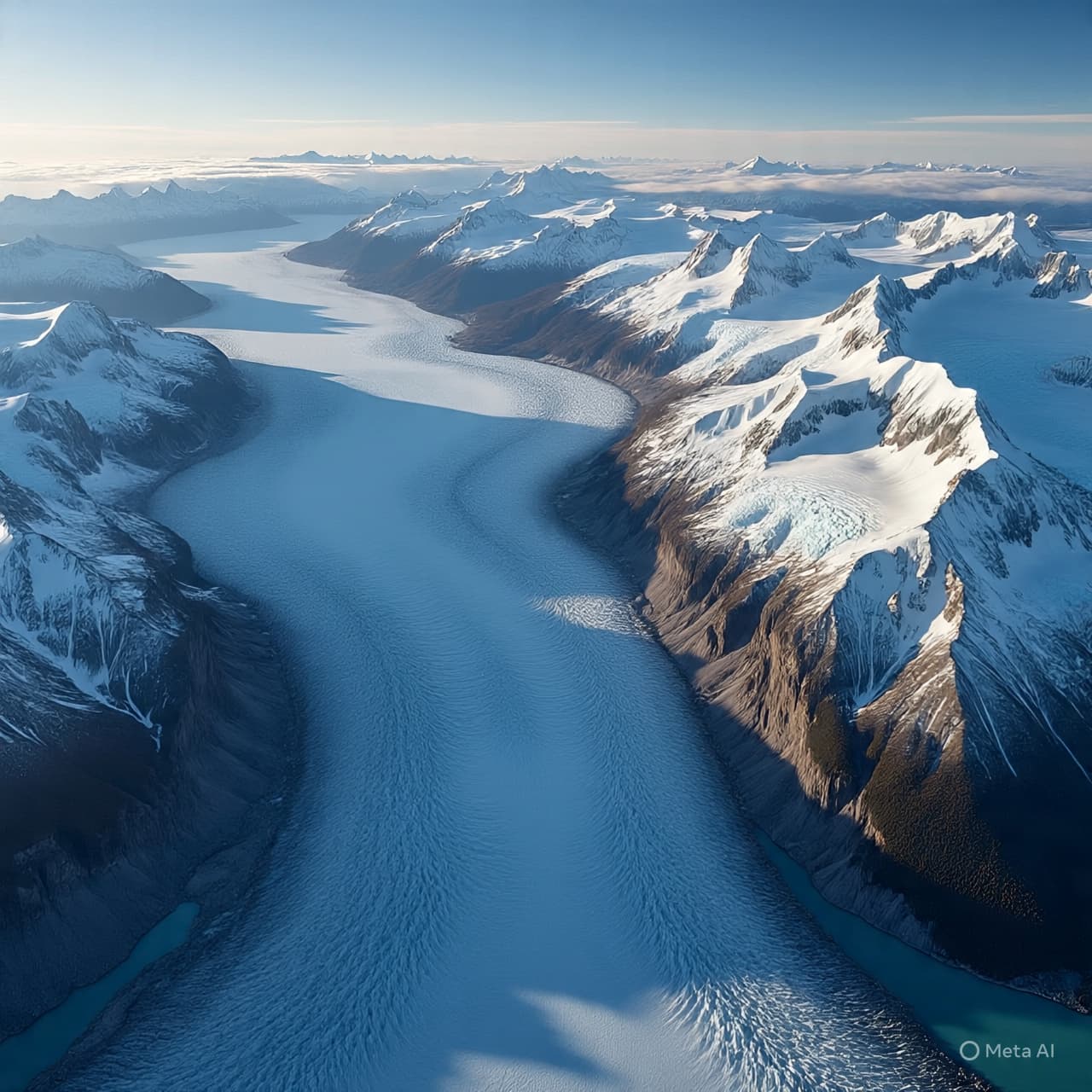
In the stark, frozen expanse of eastern Antarctica, a deep red streak slices through the otherwise pristine white of the Taylor Glacier. From a distance, it resembles something from a gothic tale — a waterfall of blood spilling across the ice, an uncanny signal from a world untouched by human hands. Yet, beneath the eerie hue lies a story of ice, rock, and ancient microorganisms rather than cosmic horror.
The feature, known simply as the Blood Falls, has intrigued scientists and explorers since its discovery in 1911 by geologist Thomas Griffith Taylor. For decades, the striking red liquid seemed inexplicable. Early theories suggested microalgae might be responsible, lending a reddish tint to the icy runoff. Later, the focus shifted to iron in the water, oxidizing upon exposure to air. But as research progressed, this explanation too revealed its limits.
Recent studies have illuminated a far subtler mechanism. The iron is not present in simple mineral form; rather, it is bound in nanospheres, likely produced by ancient, metal-metabolizing bacteria that once thrived in a subglacial briny lake hidden beneath kilometers of ice. The lake itself is so saline that it resists freezing even under Antarctic winter temperatures. As the glacier shifts and settles, minute changes in pressure push this iron-rich, briny water toward the surface, where it emerges in a vivid red cascade, a natural consequence of physics and microbiology rather than the macabre imagination of a horror writer.
The eruption of 2018 revealed the glacier dropping by less than an inch, yet enough to alter pressure in the buried lake, sending water surging through cracks. GPS measurements, time-lapse imaging, and temperature readings confirmed the glacier’s motion as the hidden pump driving this otherworldly spectacle. What appears like a defiant spout of blood is in truth the whisper of a glacier’s slow, deliberate rhythm, moving ancient, salty water along paths carved over millennia.
The Blood Falls remind us that the extraordinary often wears a cloak of the ordinary. Beneath the red lies a convergence of geological and biological histories — a story of iron, bacteria, and ice, set against one of the harshest landscapes on Earth. Its crimson stream, so often mistaken for omen or spectacle, is instead a quiet testament to the subtle forces of nature, a lesson that even the most haunting scenes can emerge from the meticulous choreography of physics and life.
Published by Banx Network. This article is part of the Banx decentralized media programme, powered by the BXE token on the XRP Ledger.