
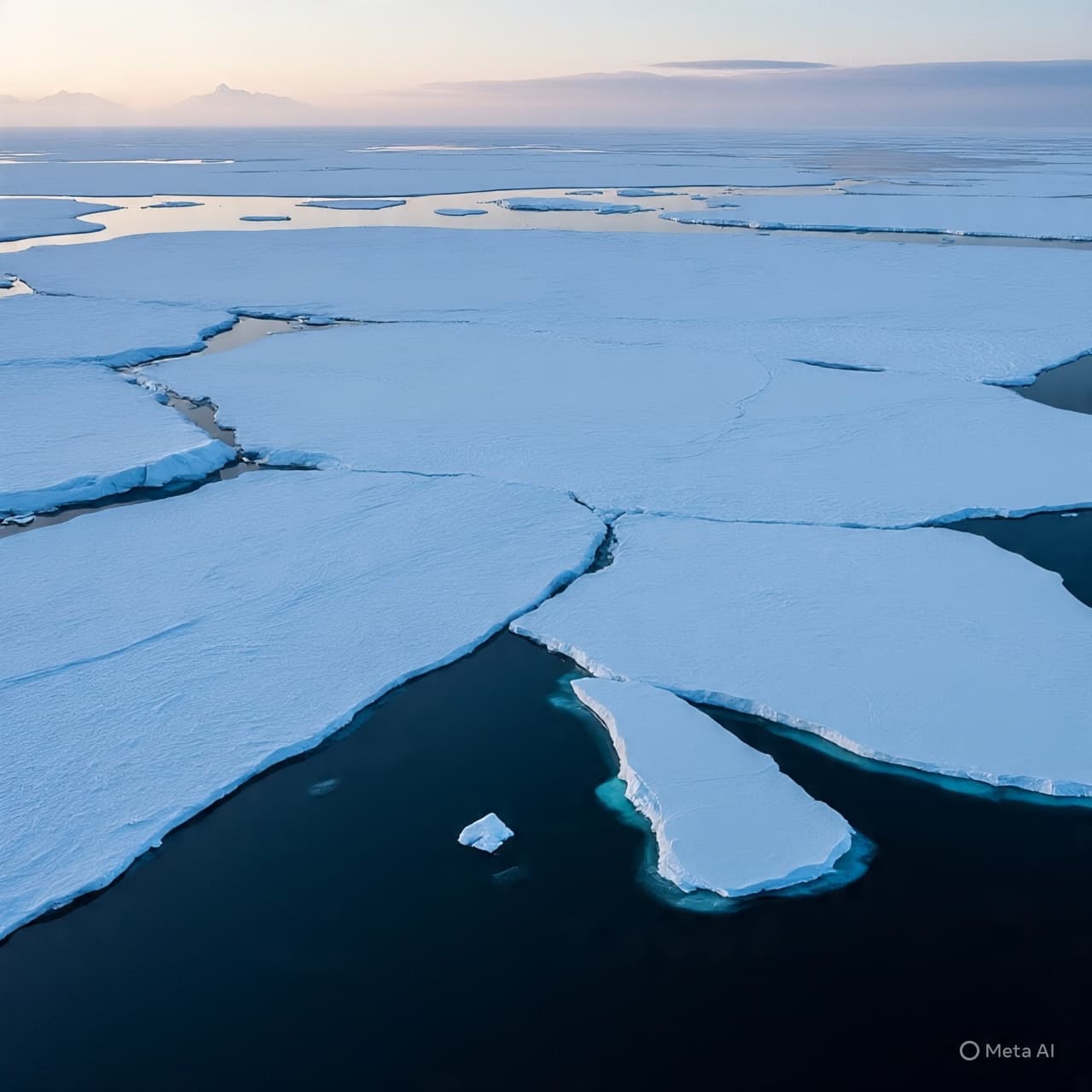
In winter, the Arctic does not announce itself loudly. It arrives as stillness—white expanses where sound softens and distance stretches into abstraction. Greenland, suspended between continents and histories, has long existed in this quiet margin of the global imagination, more symbol than destination, more map than place. Yet in Washington this week, its name surfaced not as geography, but as possibility.
When President Donald Trump was asked how far he would go to acquire Greenland, his reply was brief and unadorned. “You’ll find out.” The words landed without explanation, without limit, and without urgency. They did not hurry forward. They simply stayed.
The remark arrived amid live updates that otherwise followed familiar rhythms—economic signals, diplomatic exchanges, domestic calculations. Yet this moment stood apart, not for what was said, but for what remained deliberately undefined. In diplomacy, clarity is often the currency of reassurance. Here, ambiguity took its place.
Greenland is not an empty idea, though it is often treated like one. It is a semi-autonomous territory within the Kingdom of Denmark, with its own parliament, its own people, and a long memory of external interest shaped by climate, minerals, and military geography. As Arctic ice recedes, the island’s strategic value has sharpened, pulling it closer to the center of global attention even as it remains physically remote.
U.S. interest in Greenland is not new. During the Cold War, it was viewed through the lens of security and early warning systems. In recent years, that lens has widened to include shipping routes, rare earth minerals, and the geometry of great-power competition in the Arctic. These facts sit quietly beneath the president’s remark, unspoken but understood.
What unsettled observers was not the strategic logic itself, but the tone. By declining to define boundaries—diplomatic, economic, or otherwise—the administration allowed imagination to do the work that policy usually performs. European allies responded with measured caution. Danish officials reiterated that Greenland is not for sale. Greenlandic leaders emphasized self-determination. The language on all sides remained restrained, as if no one wished to give the moment more weight than it demanded.
Still, words matter, especially when they resist explanation. “You’ll find out” is not a plan, nor is it a threat. It is an open door, left ajar in the cold, through which speculation moves freely. Markets notice such doors. Allies notice them too.
For Greenland itself, the episode adds another chapter to a long history of being discussed at a distance. Decisions are imagined elsewhere; consequences are felt locally. The island’s future, like the ice that shapes it, is changing slowly but irreversibly, influenced by forces far beyond its shores.
In the end, the comment may fade into the steady noise of political theater. Or it may linger, a small sentence that signals a broader posture—one where uncertainty is used not as absence, but as leverage. Until clarity arrives, Greenland remains where it has always been: vast, quiet, and watching as others decide how loudly to speak its name.
AI Image Disclaimer Visuals are AI-generated and serve as conceptual representations.
Sources (names only) The New York Times Reuters Associated Press The Guardian Al Jazeera
Published by Banx Network. This article is part of the Banx decentralized media programme, powered by the BXE token on the XRP Ledger.


