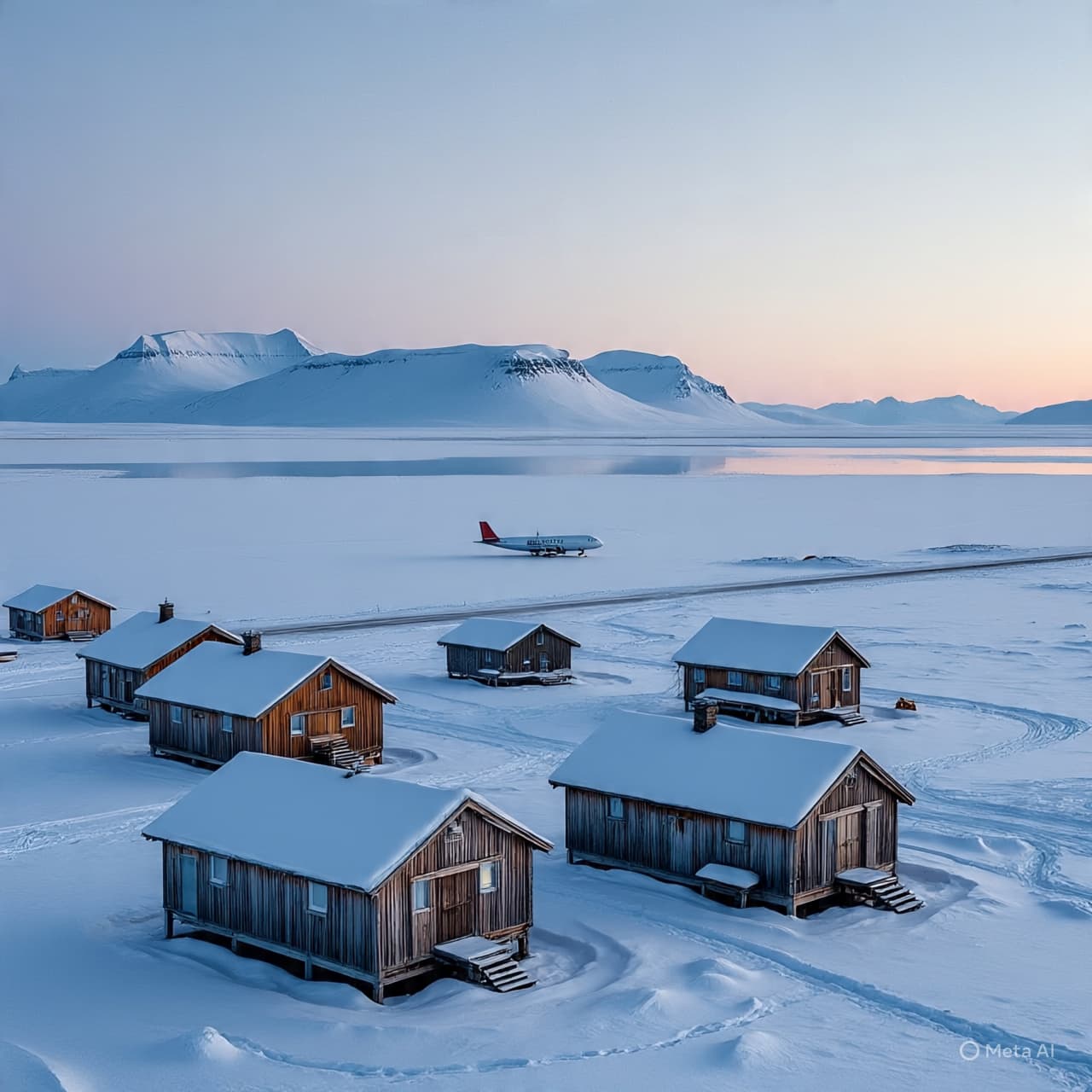
There are places in the world where silence feels permanent—where the land stretches wide and still, and the air carries little more than the sound of wind moving across ice. In Greenland, that stillness has long suggested distance from the urgencies of global affairs, as though the island existed slightly apart from the motion of history.
And yet, even here, the quiet can hold its own kind of tension.
In the early weeks of 2026, as discussions and rhetoric surrounding the future of Greenland intensified, Denmark found itself considering possibilities that seemed, even in their conception, improbable. According to reporting cited by multiple outlets and originating from investigations by Danish broadcaster DR and accounts referenced by The New York Times, contingency plans were drawn that included the potential destruction of key airfields on the island—runways that, under normal circumstances, serve as lifelines between remote settlements and the wider world.
The intention, as described by sources familiar with the planning, was not rooted in immediate action, but in preparation. Should a military incursion ever be attempted, the logic was stark: deny access, limit entry, make arrival difficult. Explosives, according to these accounts, were positioned as a last-resort measure to prevent aircraft from landing.
Such considerations unfolded against a backdrop of rising concern. Statements from the United States about acquiring Greenland—whether framed as strategic necessity or geopolitical ambition—had unsettled long-standing assumptions between allies. Denmark, which retains sovereignty over the autonomous territory, responded not with public escalation, but with quiet readiness.
Troops were deployed. Supplies, including medical provisions such as blood reserves, were transported north. Military exercises, outwardly routine, carried within them a more serious undertone—an awareness that preparation, however unlikely the scenario, could not be dismissed.
The plans themselves were never realized. As quickly as the tension rose, it began to ease, shaped by diplomatic engagement and shifting signals. The possibility of conflict receded, leaving behind the outlines of what had been considered, but not enacted.
What remains is not the image of confrontation, but of precaution—of a moment when even established alliances seemed, briefly, to require contingency. It is a reminder that trust, like infrastructure, can be tested not only by action, but by the anticipation of it.
In Greenland, the runways remain intact, stretching across the frozen ground as they always have. Aircraft continue to land, connecting the island to the wider world. Yet for a time, those same strips of land were imagined differently—not as points of arrival, but as lines that might, if necessary, be erased.
Denmark reportedly considered contingency plans to destroy key airfields in Greenland to prevent a potential U.S. military landing, according to reporting cited by major media including The New York Times. The plans were part of broader preparations during heightened tensions in early 2026, though no such actions were carried out and the situation later de-escalated.
AI Image Disclaimer
These images were created with AI assistance and are intended as visual representations, not real scenes.
Source Check The New York Times Reuters The Guardian Financial Times Associated Press
Published by Banx Network. This article is part of the Banx decentralized media programme, powered by the BXE token on the XRP Ledger.