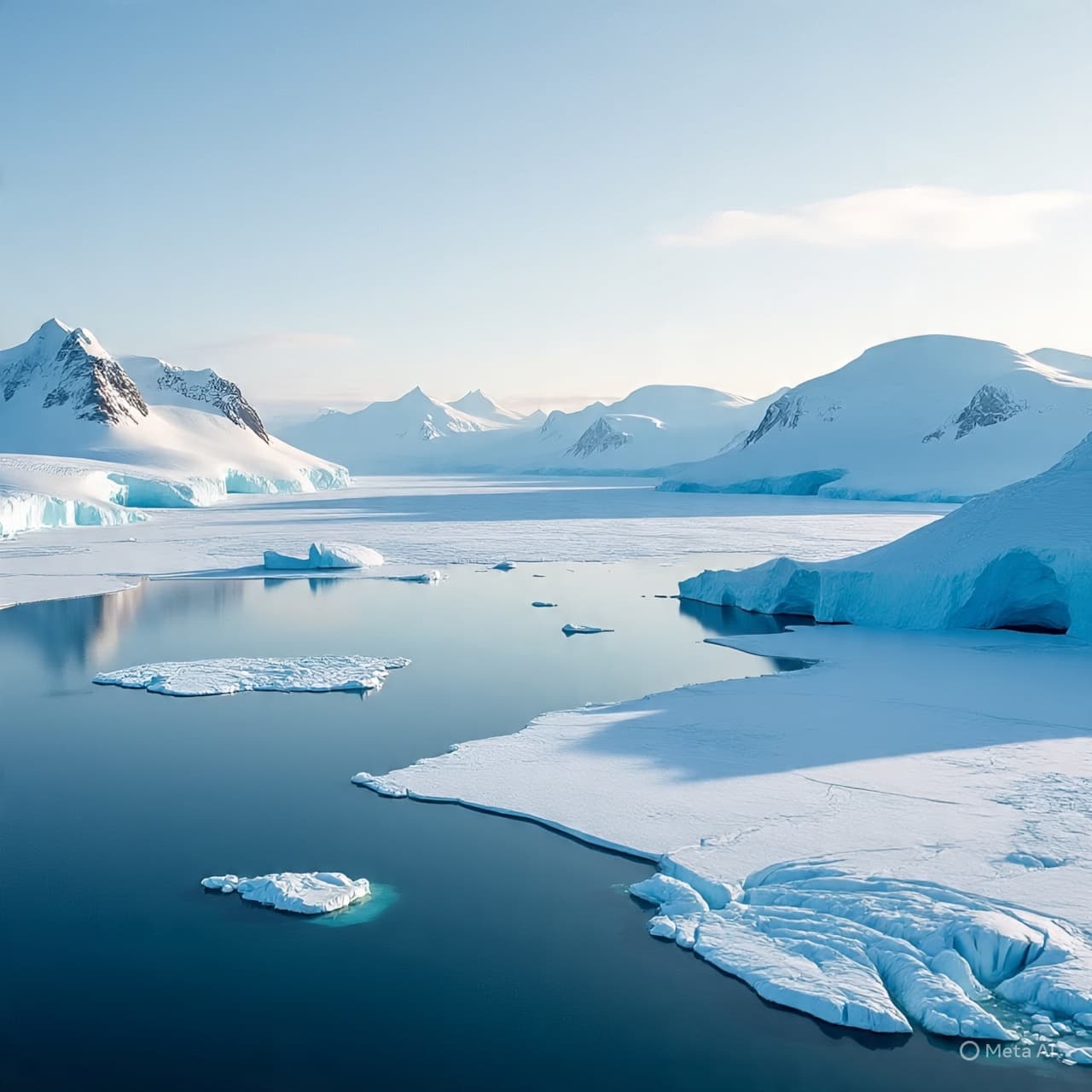
Greenland rarely enters the global imagination with urgency. It sits at the edge of maps, a vast white presence where time seems slower and intentions quieter. Ice moves there with patience, reshaping the land grain by grain. Yet from time to time, distant capitals cast long shadows over this stillness, and the Arctic finds itself drawn into conversations far warmer than its climate suggests.
That quiet distance narrowed again after political risk analyst Ian Bremmer, speaking in an interview, reflected on former U.S. President Donald Trump’s renewed fixation with Greenland. According to Bremmer, Trump has expressed interest not merely as curiosity or provocation, but as part of a broader instinct to redraw geopolitical boundaries in ways that emphasize American reach. The comments revived memories of Trump’s earlier suggestion, during his presidency, that the United States might seek to acquire Greenland — an idea that was dismissed at the time yet never fully faded from public memory.
Greenland’s strategic importance is not abstract. Positioned between North America and Europe, it occupies a critical place in Arctic shipping routes, military logistics, and emerging competition over resources exposed by melting ice. For Washington, the island has long held security relevance, hosting U.S. military infrastructure and serving as a northern anchor in transatlantic defense planning. Bremmer’s remarks suggest that Trump’s interest aligns less with diplomacy and more with a worldview that treats territory as leverage and maps as negotiable.
Still, the notion of “taking over” Greenland collides with political and legal realities. The island is an autonomous territory within the Kingdom of Denmark, with its own elected government and a population that has increasingly asserted its identity and future. Danish officials have repeatedly stated that Greenland is not for sale, while Greenlandic leaders have emphasized self-determination over strategic bargaining. These realities place firm limits on rhetoric that imagines borders as movable pieces.
What Bremmer’s observation highlights is not a policy proposal but a mindset. In an era shaped by competition between major powers, language itself becomes a signal. Talk of redrawing maps speaks to a wider uncertainty about how force, influence, and negotiation might be used in the years ahead. It reflects a style of leadership that values disruption and spectacle, even when outcomes remain unclear or unattainable.
As the discussion settles back into the broader news cycle, the facts remain unchanged. Greenland continues its careful path between autonomy and alliance, Denmark retains sovereignty, and U.S. strategic interests in the Arctic persist through existing agreements. The comments, however, serve as a reminder that even the most distant places are not immune to political imagination, and that in global affairs, words alone can momentarily shift attention toward the far edges of the world.
AI Image Disclaimer Illustrations were created using AI tools and are not real photographs.
Published by Banx Network. This article is part of the Banx decentralized media programme, powered by the BXE token on the XRP Ledger.