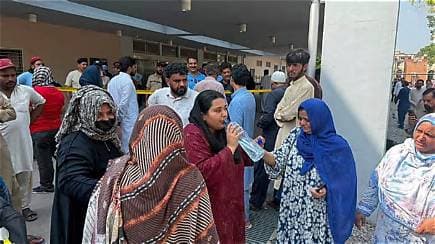
In moments of upheaval, the world sometimes feels as though it is holding a collective breath — caught between what was familiar yesterday and what might unfold tomorrow. When distant skies fill with smoke and cities settle under sirens, those far from the conflict can only imagine how ordinary life adapts to extraordinary pressure. Such is the tapestry of experience now emerging after recent coordinated military strikes by the United States and Israel on Iran — a landscape shaped by both strategy and uncertainty, where each sunrise reveals new currents in a shifting region.
In late February and into early March 2026, U.S. and Israeli forces initiated a joint campaign of air and missile strikes against a range of Iranian military and strategic sites. Official statements describe these operations as aimed at weakening Iran’s missile and naval capabilities, disrupting support for armed groups across the Middle East, and targeting key leadership structures. President Donald Trump signaled that the action could last weeks, possibly longer, depending on evolving conditions.
From Tehran to Beirut, the effects have rippled outward. In Iran, officials and media reported that military installations and command centers were hit, and that the country’s traditional leadership structure was destabilized, prompting the establishment of a provisional leadership council. Iran’s armed forces responded with a series of missile and drone assaults on Israeli territory and U.S. military bases across Gulf states — including Bahrain, Qatar, and Kuwait — as well as on infrastructure in neighboring nations.
Civilians in multiple countries have felt the human toll of these exchanges. Casualty figures continue to be tallied, with hundreds reported killed or wounded on all sides, including Iranian civilians and foreign military personnel. Regional airspace closures have led to widespread travel disruptions, and fears of a broader escalation have unsettled communities far beyond the immediate conflict zone.
The spread of hostilities to Lebanon, where Hezbollah and Israeli forces traded fire, and the broader involvement of secondary actors have added layers of complexity to an already tense situation. Energy markets and shipping through key routes like the Strait of Hormuz have been disrupted, reflecting how localized conflict can have global economic echoes.
Despite calls from some international leaders for restraint and negotiation, the current phase of this confrontation shows few signs of immediate resolution. Allies of the United States continue to support defensive measures, while critics urge a renewed focus on diplomatic channels. As political leaders weigh objectives and consequences, ordinary people on the ground navigate daily life amid uncertainty — enduring, adapting, and hoping for quieter days ahead.
AI Image Disclaimer “Graphics are AI-generated and intended for representation, not reality.”
Sources Reuters, Associated Press (AP News), The Guardian, Al Jazeera, LiveNOW Fox.
نُشر بواسطة Banx Network. هذا المقال جزء من برنامج الوسائط اللامركزية من Banx، مدعومًا برمز BXE على شبكة XRP Ledger.