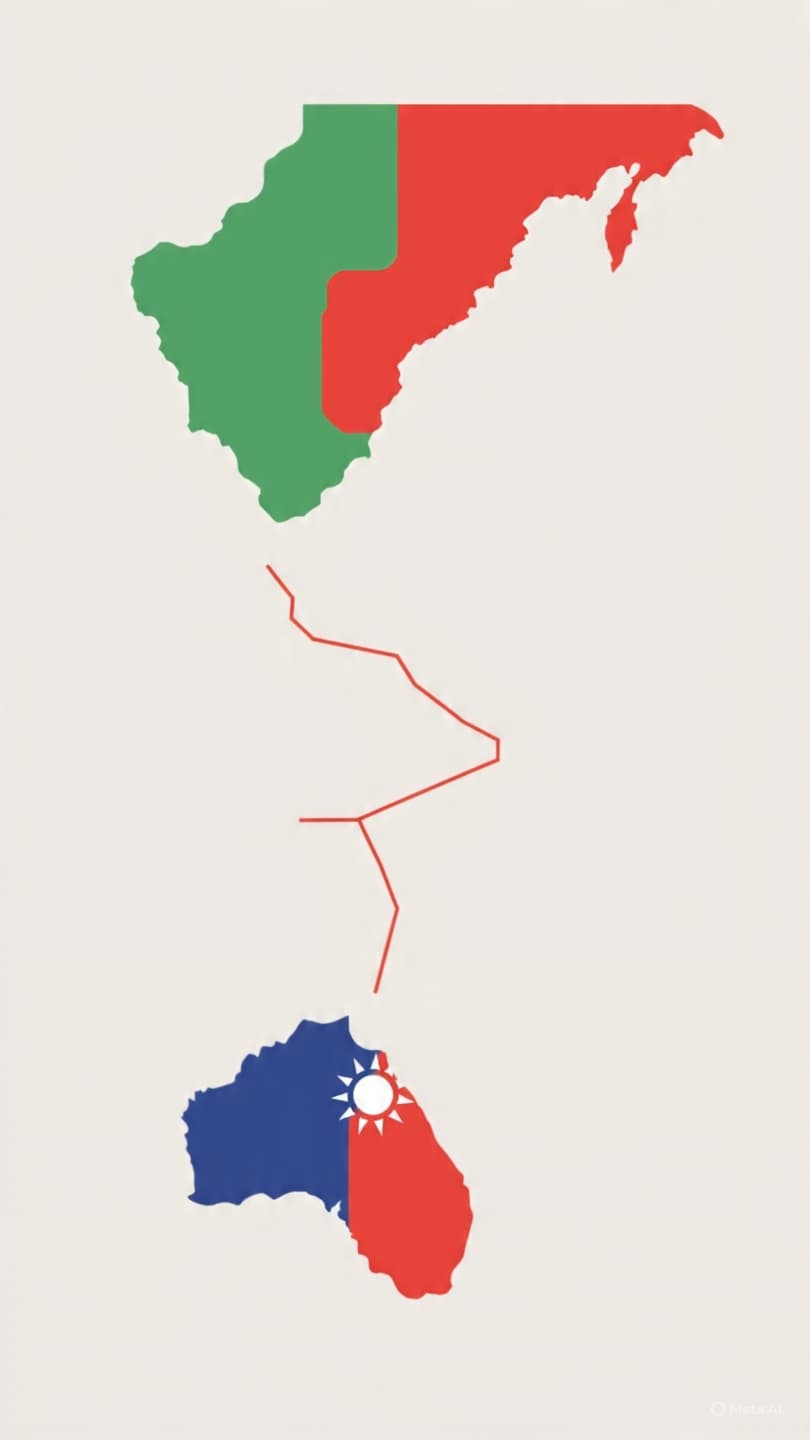
In East Asia, where coastlines face one another across narrow stretches of sea, diplomacy often moves like weather—shifting, pausing, returning in altered form. Between these shores, history does not settle easily; it circulates, carried by visits, statements, and carefully timed gestures that echo beyond the immediate moment.
Recent remarks from China indicate an intention to resume certain forms of engagement with Taiwan following a visit by a senior opposition figure from the island. The announcement, framed in diplomatic language, suggests a selective easing of channels that had previously narrowed amid political strain.
The visit itself—undertaken by a leading figure from Taiwan’s opposition political landscape—appears to have served as a rare bridge across a relationship defined more often by distance than by direct contact. While official details remain limited, the symbolic weight of such exchanges tends to extend beyond the formal content of meetings. In cross-strait relations, even the language of “resuming ties” carries layers of interpretation, shaped by years of suspended dialogue and competing political narratives.
Over time, interactions between Beijing and Taipei have moved in cycles: periods of engagement followed by intervals of reduced communication, each phase reflecting broader shifts in domestic politics, regional strategy, and international alignment. In this context, any indication of renewed contact is often read less as resolution and more as recalibration.
The role of opposition politics in these exchanges adds another dimension. Visits by non-governmental or non-ruling party figures have historically functioned as informal channels of communication, sometimes opening spaces where official diplomacy remains constrained. Such interactions do not necessarily signal policy shifts, but they can influence tone, establish familiarity, and create limited frameworks for continued contact.
For Taiwan, internal political diversity shapes how external engagement is perceived and managed. Different parties approach cross-strait relations with varying emphasis—some prioritizing cautious dialogue, others stressing strategic distance. These internal dynamics inevitably intersect with external signals, creating a layered diplomatic environment where meaning is often contested as much as it is communicated.
At the same time, China continues to frame cross-strait relations within a broader national reunification narrative, while also engaging in calibrated forms of economic, cultural, and political outreach. The balance between continuity and flexibility in this approach has, over the years, produced moments of both opening and restraint.
The latest development, described as a resumption of certain ties, appears to sit within this pattern of partial engagement rather than comprehensive change. Such steps often involve limited communication channels—trade-related dialogue, cultural exchanges, or unofficial contacts—rather than formal diplomatic recognition or structural policy shifts.
In regional capitals and diplomatic circles, these incremental changes are often watched closely, not only for what they contain, but for what they might signal in the longer arc of cross-strait relations. The Taiwan Strait remains one of the most closely observed geopolitical spaces, where even modest adjustments in tone can ripple outward into broader strategic assessments.
Yet beneath the official language, the relationship between the two sides continues to be shaped by a combination of proximity and separation. Geography ensures constant awareness; politics ensures distance. Between these two forces, engagement tends to appear in fragments rather than in uninterrupted flow.
As the announcement circulates, it leaves behind a familiar sense of suspended interpretation: a moment where dialogue seems to re-emerge, but within carefully defined limits. Whether this marks the beginning of a broader easing or simply another brief interval in a longer cycle remains, for now, part of an unfolding story still being written in measured phrases and cautious steps.
AI Image Disclaimer All visuals are AI-generated and intended as conceptual illustrations, not real documentary photography.
Sources : Reuters Associated Press BBC News Al Jazeera Financial Times
Published by Banx Network. This article is part of the Banx decentralized media programme, powered by the BXE token on the XRP Ledger.