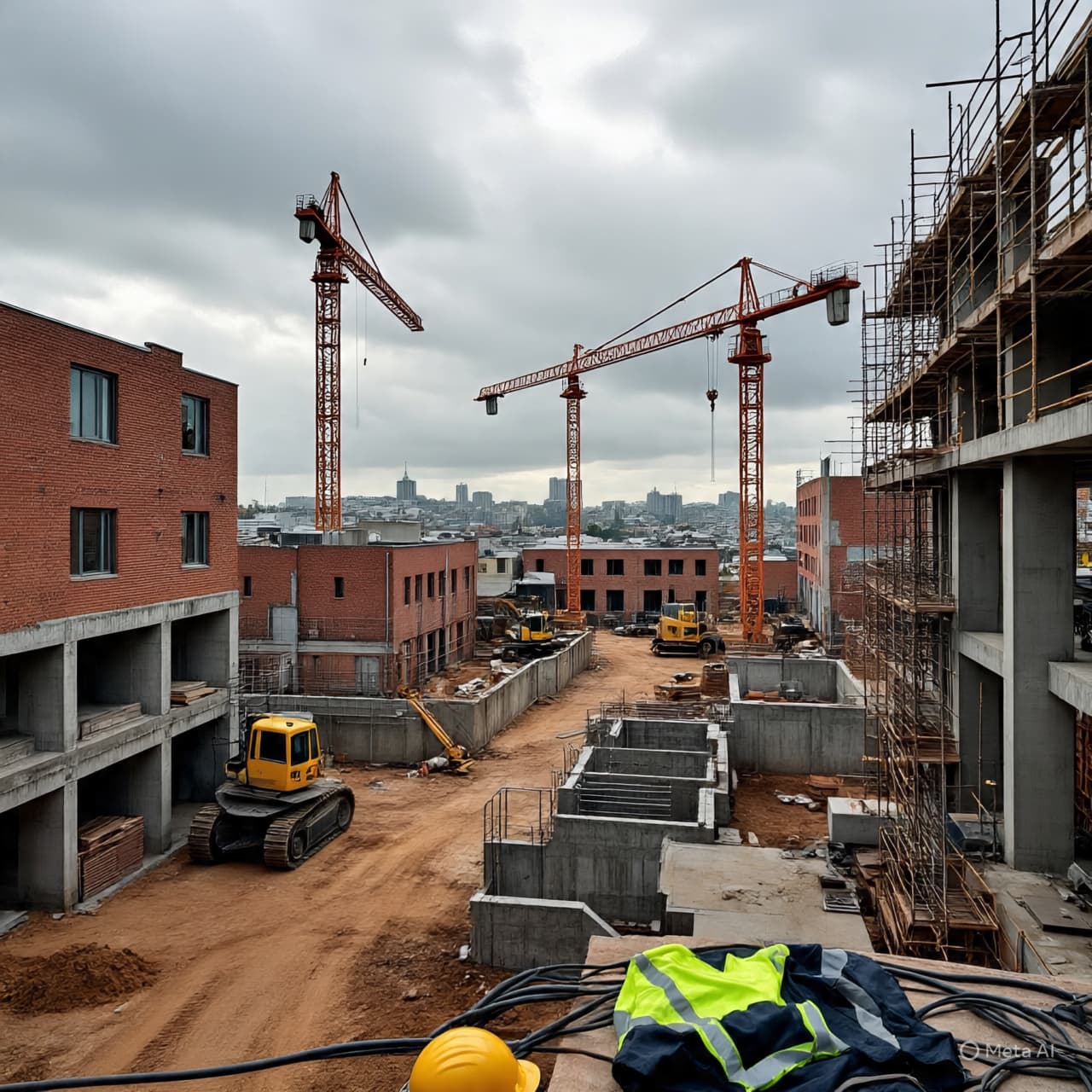
There are moments when the day’s work settles into the quiet rhythm of routine—the hum of tools, the measured steps of workers across a site, the rising dust where concrete meets earth. Construction, in its essence, is a kind of hope: future spaces taking shape beneath the hands of many, a promise cast in steel and timber.
But sometimes that promise pauses, caught between labor and ledger, leaving those who invested heart and labor to wonder what comes next.
In early March, an Auckland construction firm whose name has echoed around recent developments entered liquidation, its work sites quieting and its accounts opened before insolvency specialists. Among the many whose livelihoods have been touched by that halt is Max Key, the son of former prime minister John Key, whose own company now faces the unsettled calculus of unfinished business and unpaid invoices.
Key spoke directly to his Instagram followers in the wake of the collapse, the early morning light on his words carrying a mixture of practical concern and the subtle weariness of business interrupted. He acknowledged that his firm, Key Companies, is owed more than six figures by the now-defunct Teak Construction Group. “I’m owed over $100,000 for that job we completed,” he said, the phrase hanging like a quiet echo of work done in earnest. “We finished the work, we handed over the documentation, we provided the warranties. Then the head contractor went into liquidation.”
This is not simply a matter of numbers. Behind the rounded figures are the labor of those who showed up each morning, the subcontracts passed down the chain, the electricians and builders whose own ledgers now carry unexpected deficits. Key underscored how the collapse has rippled outward, affecting fellow subcontractors and tradespeople who expected payment for labor rendered in good faith.
The story of Teak Construction is one of complex balances—assets, debts, obligations, and the practical reality that creditors outnumber what the company can repay. Liquidators’ reports show the firm owed nearly $7.9 million to creditors while its total assets stood at about $6.4 million, leaving a shortfall that will affect a wide circle of businesses it once worked alongside.
In construction and its related industries, the rhythm of work is often shaped by cash flow and timing. Projects begin with optimism and scaffolding, but they finish only when every bill is settled and every invoice paid. When a major contractor stops short, the echoes are felt down the line—from small businesses to major suppliers, from workers waiting for wages to firms counting on settled accounts to start new contracts.
In speaking out, Key has expressed not grievance, but the unsettled feeling of a craftsman whose work was completed but whose due has yet to come. His reflections—shared in the gentle cadence of social media—reveal how intimately tied business and community have become in sectors where trust and timeliness are as vital as steel and timber.
Teak Construction had operated for more than three decades, involved in numerous commercial, government, and residential projects across the region, before shareholders placed it into liquidation on March 2. Insolvency specialists have since taken responsibility for managing the company’s affairs while creditors await decisions about possible recovery.
For Key and many others, the immediate task now is practical: to assess losses, learn from the disruption, and plan the next steps in their own work. The pause left by Teak’s collapse is still unfolding, and its full effects on the construction community will likely be seen in the weeks and months to come.
AI Image Disclaimer: Visuals are AI-generated and serve as conceptual representations.
Source Check: Credible coverage exists.
Sources: 1News, News Minimalist — New Zealand
Published by Banx Network. This article is part of the Banx decentralized media programme, powered by the BXE token on the XRP Ledger.