There are places in the universe where even certainty begins to thin.
Far from the reach of light, where gravity gathers with such intensity that it alters the fabric of space itself, two black holes move toward one another. Their approach is not sudden, but inevitable—a slow tightening of orbit, a quiet drawing inward that unfolds over vast stretches of time. Nothing announces the moment. Nothing signals the exact point when distance gives way to union.
And yet, when they meet, the universe trembles.
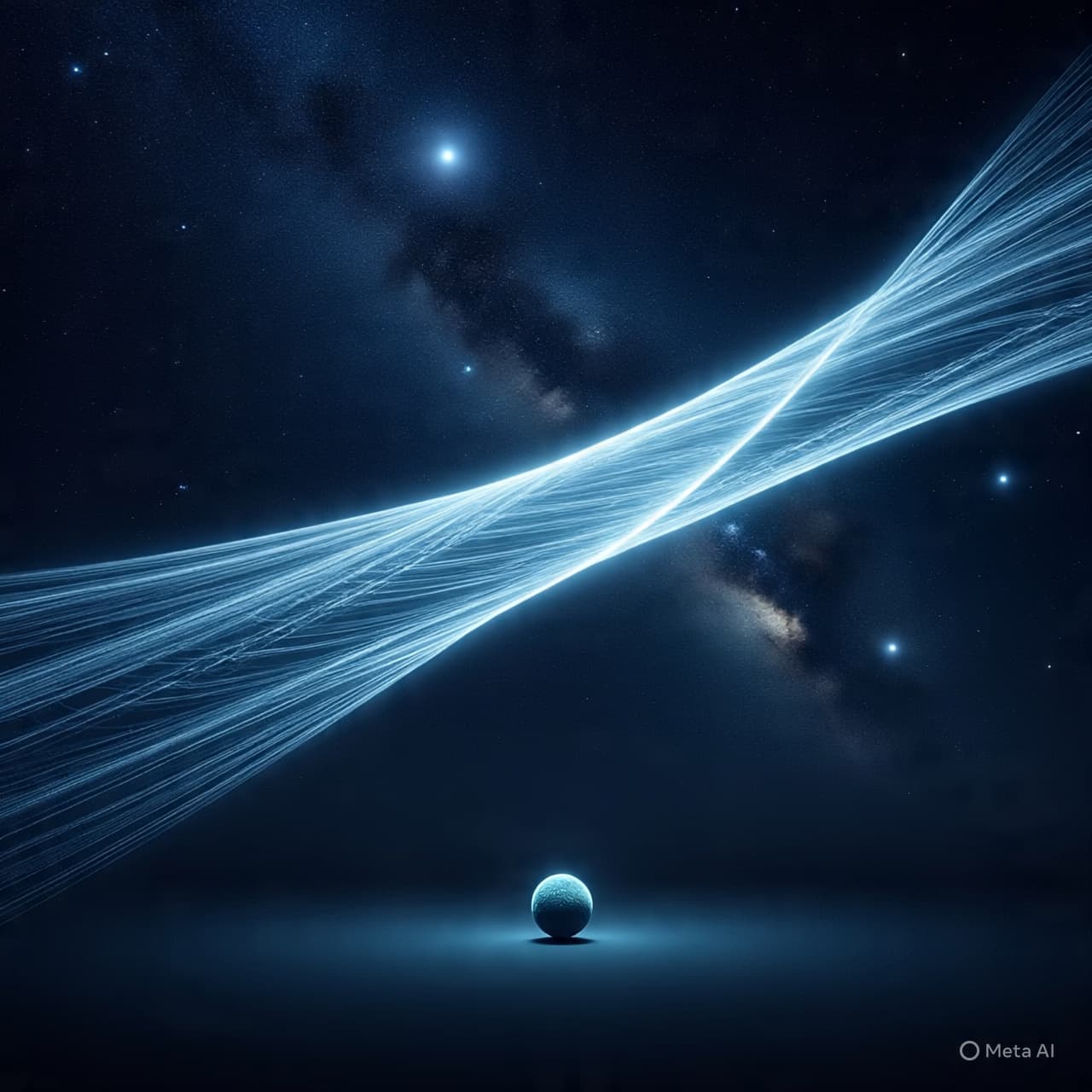
These collisions, known as black hole mergers, release energy not in light, but in waves—subtle distortions that ripple outward through spacetime. First predicted within general relativity, such waves remained unobserved for a century, their existence inferred but not directly confirmed. It was only in recent years, through instruments like those of the LIGO Scientific Collaboration, that these ripples were finally detected, translating cosmic events into signals that could be measured on Earth.
What arrives is not an image, but a pattern.
A rising tone, a brief crescendo, and then a fading echo—data that carries within it the story of two immense objects merging into one. Each signal encodes the masses of the black holes, the speed of their rotation, the nature of their final union. And within that encoding lies something more subtle: a test.
Because in these extreme conditions, gravity is pushed to its limits.
The equations of general relativity, developed by Albert Einstein, describe how mass and energy shape spacetime. They have been confirmed repeatedly, from the motion of planets to the bending of light around stars. But black hole mergers represent a regime where those equations are stretched to their most intense expression—where spacetime is not merely curved, but violently dynamic.
To observe such events is to examine whether the theory still holds.
So far, the results suggest that it does.
Analyses of gravitational wave data show a close agreement with the predictions of general relativity, even under these extreme conditions. The shape of the signal, the timing of the merger, the behavior of the resulting black hole—all align with the equations as they are currently understood. There is a quiet consistency in this, a sense that the framework remains intact even at the edge of its application.
And yet, the search continues.
Physicists look for small deviations—subtle differences that might indicate new physics beyond the established model. Alternative theories of gravity, quantum effects, or unknown interactions could, in principle, reveal themselves in the fine structure of these signals. Each merger becomes not only an observation, but an experiment, repeated across the cosmos with variations in scale and circumstance.
There is a patience in this process.
Dozens of such events have now been recorded, each adding to a growing archive of gravitational waves. Patterns emerge, but so do questions. Are all black holes described by the same simple parameters? Do unexpected behaviors appear at higher masses or spins? Does the fabric of spacetime behave differently under conditions not yet observed?
For now, the answers remain within the data, waiting to be drawn out.
The collisions themselves are long over by the time their signals reach Earth. What is detected is an echo—a delayed arrival of something that has already passed. And yet, within that delay, there is an opportunity to understand, to test, to refine.
Scientists continue to analyze gravitational wave observations from black hole mergers to test the predictions of general relativity. Current results show strong agreement with the theory, while ongoing research seeks any deviations that could point to new physics beyond Einstein’s framework.
AI Image Disclaimer
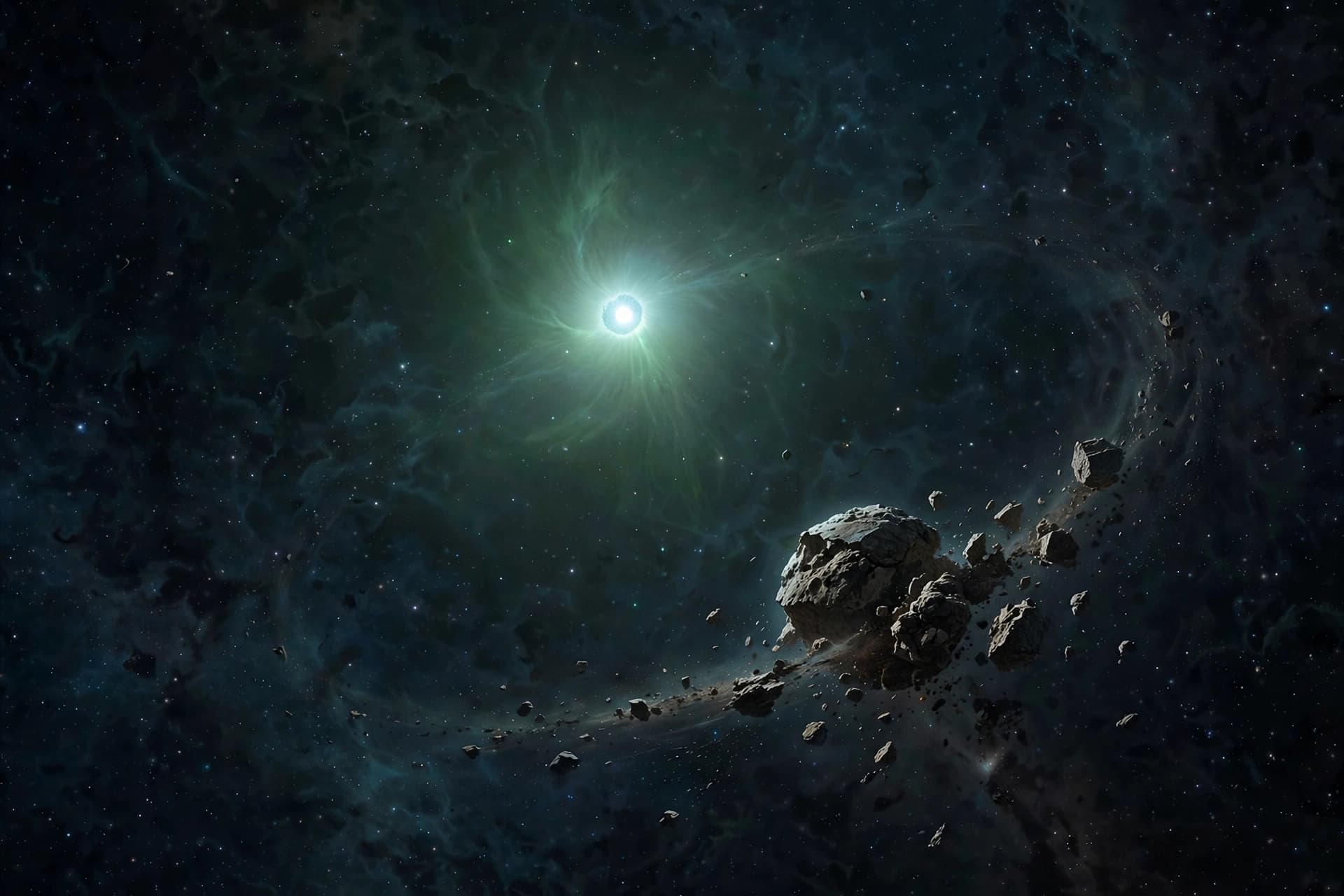
These visuals are AI-generated and are meant to conceptually represent astrophysical phenomena.
Source Check: NASA, European Space Agency (ESA), LIGO Scientific Collaboration, Nature, Science
Published by Banx Network. This article is part of the Banx decentralized media programme, powered by the BXE token on the XRP Ledger.