
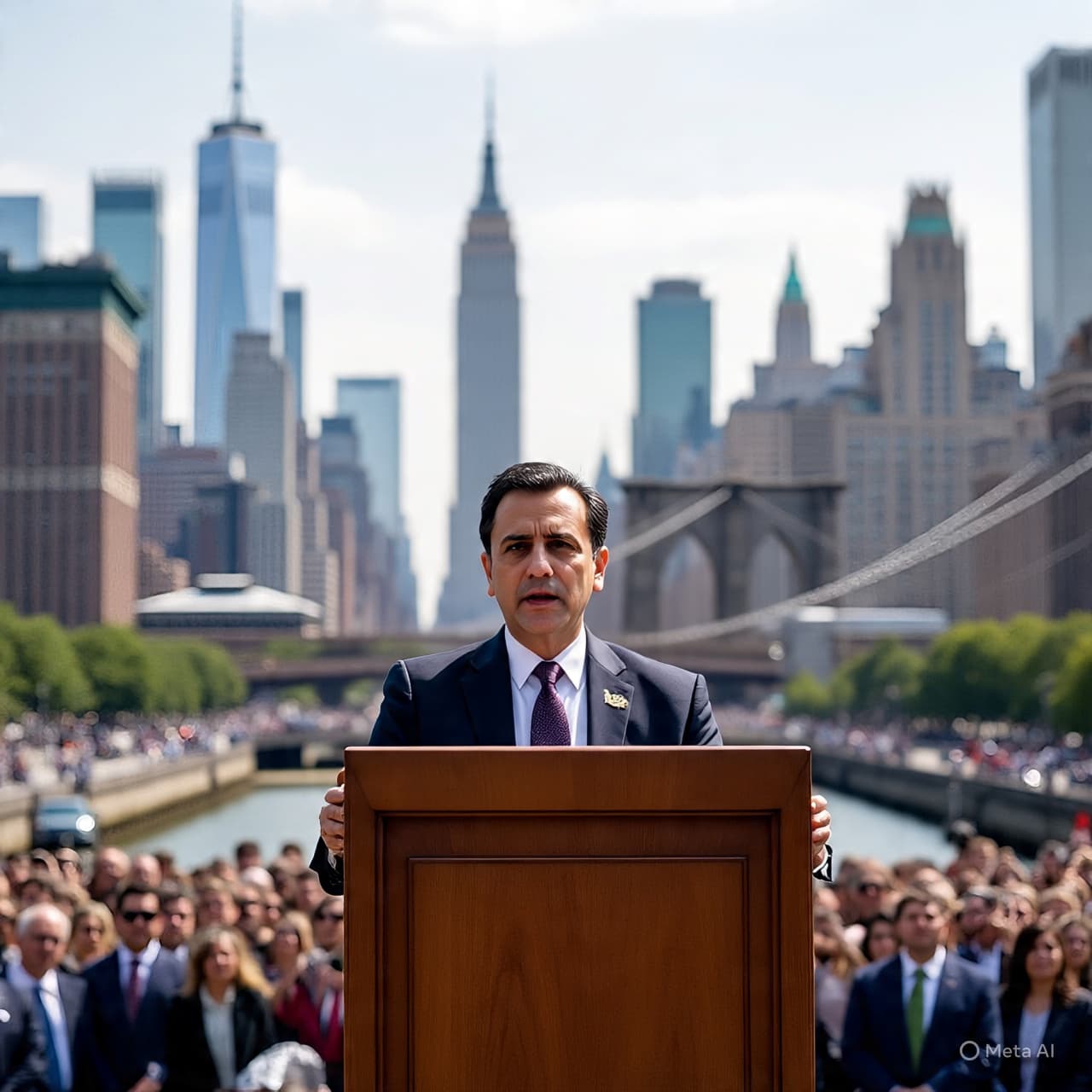
When a community chooses new leadership, it often signals more than a change in personnel — it marks a moment of collective aspiration and a desire to write the next chapter in a city’s story. On January 2, 2026, New York City’s freshly sworn-in mayor, Zohran Mamdani, signed an executive order establishing the Office of Mass Engagement, a new arm of city government he says will help reconnect everyday New Yorkers with the mechanisms of power and policy. It is a bold gesture from a leader who campaigned on bridging divides and widening participation, and one he frames as part of a “clean slate” to govern after years of political turbulence.
Mamdani’s decision to create this office came at the start of his administration, alongside other early actions that sought both to honor his campaign promises and to differentiate his leadership approach from that of his predecessor. Citing a need to restore public trust and to ensure that government reflects the voices of ordinary residents rather than just the powerful or well-connected, the mayor described the Office of Mass Engagement as a structural innovation — one designed to centralize and expand outreach, gather meaningful input from neighborhoods across the city, and embed that feedback directly into policymaking.
At a press event in Brooklyn’s Grand Army Plaza, Mamdani named Tascha Van Auken, a longtime organizer for his campaign and a veteran of grassroots mobilization, as the office’s first commissioner. He noted her leadership in marshaling a volunteer operation of more than 100,000 New Yorkers — volunteers who knocked on millions of doors during his mayoral run — and emphasized that this kind of community-rooted energy should continue within City Hall itself.
The office’s mission, as outlined by city officials, includes coordinating engagement efforts across existing units such as the Public Engagement Unit, the Office of Faith-Based and Community Partnerships, and other civic bodies. It aims to reach residents who have often felt excluded from the political process and to demystify how city government works so that more people can participate in shaping decisions that affect their lives — particularly in areas such as housing, transportation, and public services.
But the creation of this new office is not simply about adding another agency to the city’s roster. Mamdani has paired it with a revocation or review of executive orders issued by the previous mayor, Eric Adams, particularly those enacted after late 2024 when Adams faced federal indictment (charges later dropped). In doing so, Mamdani has framed his early actions as an opportunity for renewal — a “clean slate” from which to govern with fresh priorities and a renewed commitment to participatory democracy.
Reactions have been mixed. Supporters say the Office of Mass Engagement offers a promising route to amplify community voices and make government more responsive. Critics, however, caution that translating mass outreach into tangible policy gains may prove challenging, especially as the city tackles entrenched issues like public safety and housing affordability. Yet in introducing the office at the outset of his term, Mamdani is sending a clear message about the kind of leadership he hopes to embody: one rooted in dialogue, inclusivity, and a willingness to reimagine how government and citizens interact.
AI Image Disclaimer Visuals are AI-generated illustrations intended for representation and concept, not actual photographs.
Sources NYC Mayor’s Office press release City Hall and Spectrum News coverage amNY reporting NY Post political news AP News summary of Mamdani’s early mayoral actions
Published by Banx Network. This article is part of the Banx decentralized media programme, powered by the BXE token on the XRP Ledger.

.jpg&w=3840&q=75 "Zelensky Warns China Is Helping Russia Develop a Starlink Rival")