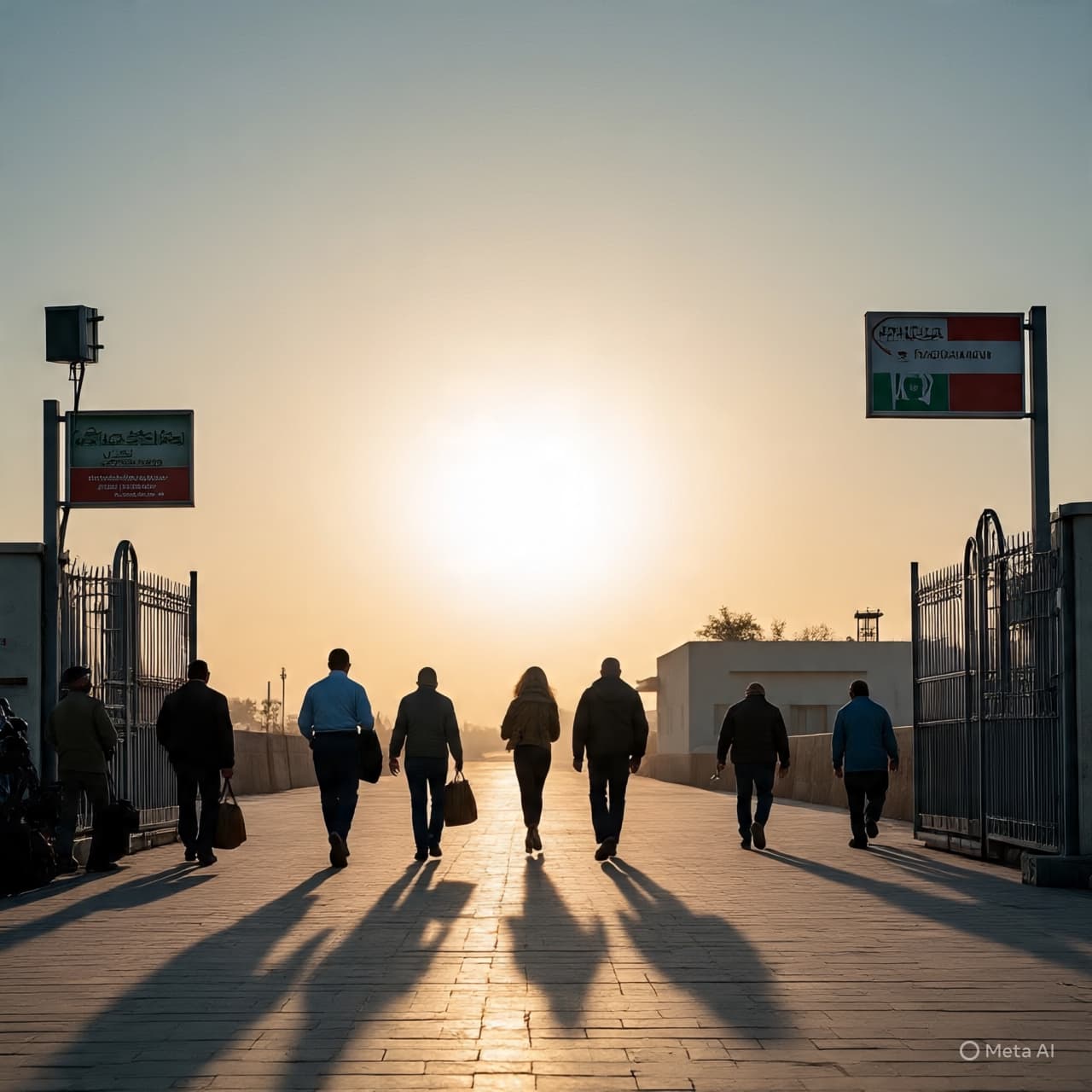
The sun had barely risen over the soft sands at the southern edge of Gaza when a tentative line of footsteps began to cross a border long sealed to so many lives. For nearly two years, the Rafah crossing — a slender doorway between the bustling streets of Rafah and the shifting deserts of Egypt — lay dormant, a silent witness to conflict and loss. Its reopening on this early February morning, though limited in scope, felt like the first fragile stirrings of a landscape that has known too much stillness and too much sorrow.
In the stillness of that dawn, the border’s gates creaked open for the first time since May 2024, allowing a small number of Gazans to pass on foot, their footsteps a quiet testament to resilience. Under strict controls and careful coordination between Israeli and Egyptian authorities, only a few dozen people each day are permitted to cross in either direction — a cautious dance between security concerns and humanitarian need. Priority has been given to medical patients seeking treatment beyond Gaza’s crumbling hospitals and to displaced residents yearning to see family in a neighboring land. European Union monitoring teams stand nearby, a steady presence in a moment that blends hope with constraint.
For many Gazans, access to Rafah has symbolized more than passage; it has been the promise of connection, care, and a future beyond siege. Inside the enclave, where healthcare infrastructure has buckled under years of war and thousands wait for urgent treatment abroad, even these limited crossings are greeted as lifelines. Egyptian health officials have prepared hospitals to receive patients, while the solemn tread of ambulances from Gaza hints at the human stories woven into each crossing. But beyond these poignant movements lies a deeper truth: the reopening remains tightly controlled, measured, and small in scale compared with the vast needs of over two million Palestinians whose daily lives teeter between hope and hardship.
The Rafah crossing’s gentle reopening occurs against the backdrop of an uneasy ceasefire and broader diplomatic efforts aimed at stabilizing the region. While it brings relief to families and individuals temporarily released from isolation, the scale of human need still dwarfs the daily quotas, a reminder of how far the path to peace and normalcy remains. Even as strides are made, the shadow of conflict lingers, and every cautious step through Rafah is a quiet plea for a future defined less by restriction and more by freedom of movement, care, and dignity.
AI Image Disclaimer (rotated wording) “Visuals are created with AI tools and are not real photographs.”
Sources
• The Guardian
• The Jerusalem Post
• Associated Press
• The Washington Post
• Indian Express
Published by Banx Network. This article is part of the Banx decentralized media programme, powered by the BXE token on the XRP Ledger.