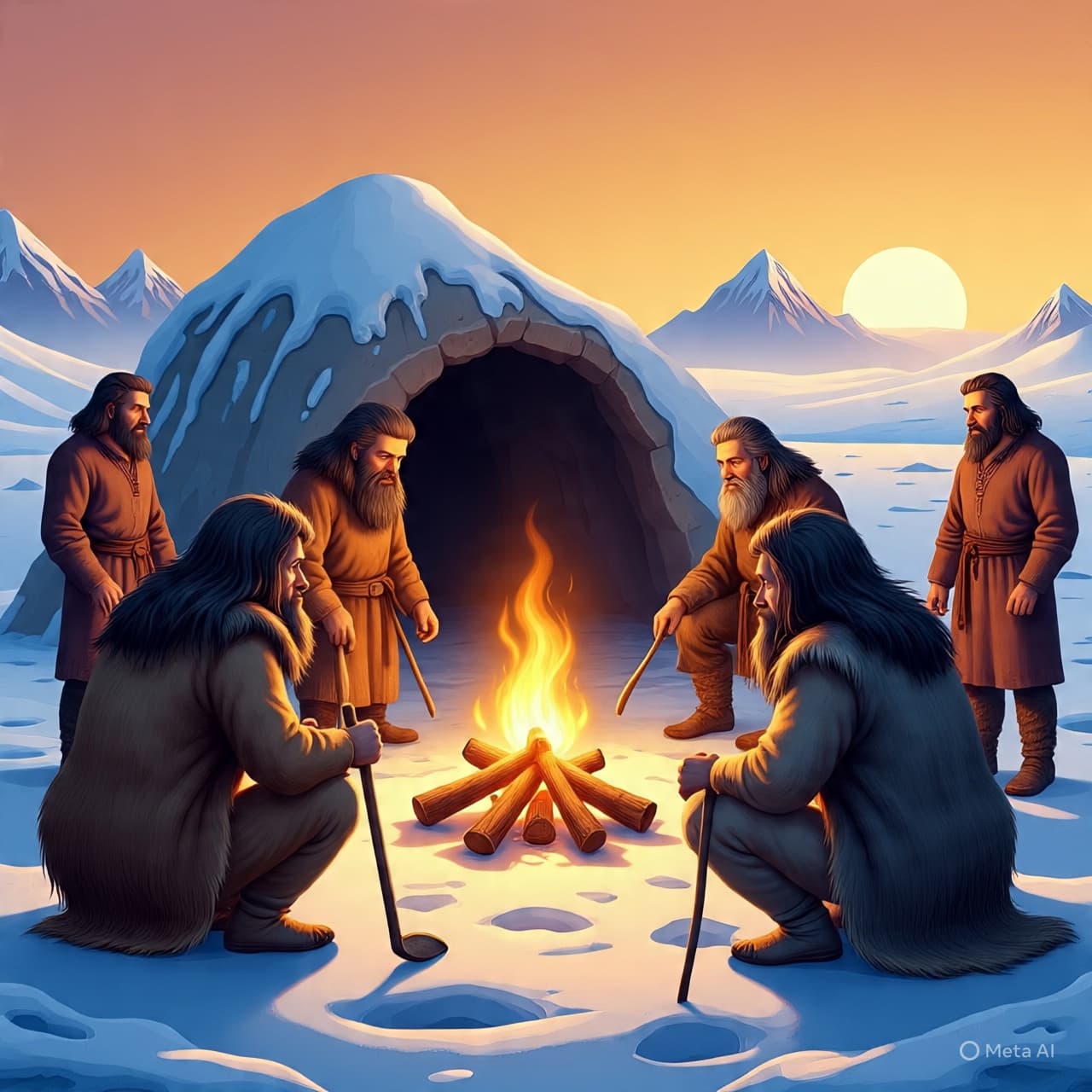
There was a time when the world was colder and the nights carried no electric glow — only firelight flickering against cave walls and the vast canopy of stars. In that long, unsettled age, different kinds of humans walked the same valleys. Their footprints overlapped in mud and snow, sometimes converging, sometimes parting. For thousands of years, they shared landscapes shaped by ice, wind, and migration.
We know them now as Neanderthal and Homo sapiens — distinct yet closely related branches of the human family tree. For decades, fragments of bone and tools told us they coexisted. Then DNA began to speak, revealing that their encounters were not limited to wary observation across a clearing. There was intimacy. There was exchange.
A recent genetic study, analyzing ancient genomes alongside those of living populations, suggests that the intermingling between these groups may not have been evenly balanced. The findings indicate that Neanderthal men may have contributed genetically to modern human populations more often than Neanderthal women did. It is a subtle distinction, but one with implications that ripple across our understanding of prehistory.
Scientists reached these conclusions by examining patterns in both nuclear DNA and inherited genetic material such as mitochondrial DNA, which passes from mothers to their children. While small percentages of Neanderthal DNA persist in many people of Eurasian descent today, mitochondrial markers directly traceable to Neanderthal women are notably absent in modern populations. This asymmetry has led researchers to explore the possibility that pairings between Neanderthal males and Homo sapiens females occurred more frequently — or were more evolutionarily successful — than the reverse.
The reasons remain uncertain. Some scientists suggest demographic factors: migrating bands of modern humans entering Neanderthal territories may have encountered small, isolated groups, creating uneven dynamics in contact and reproduction. Others consider biological compatibility, cultural patterns, or social structures that could have influenced which unions endured and which lineages faded.
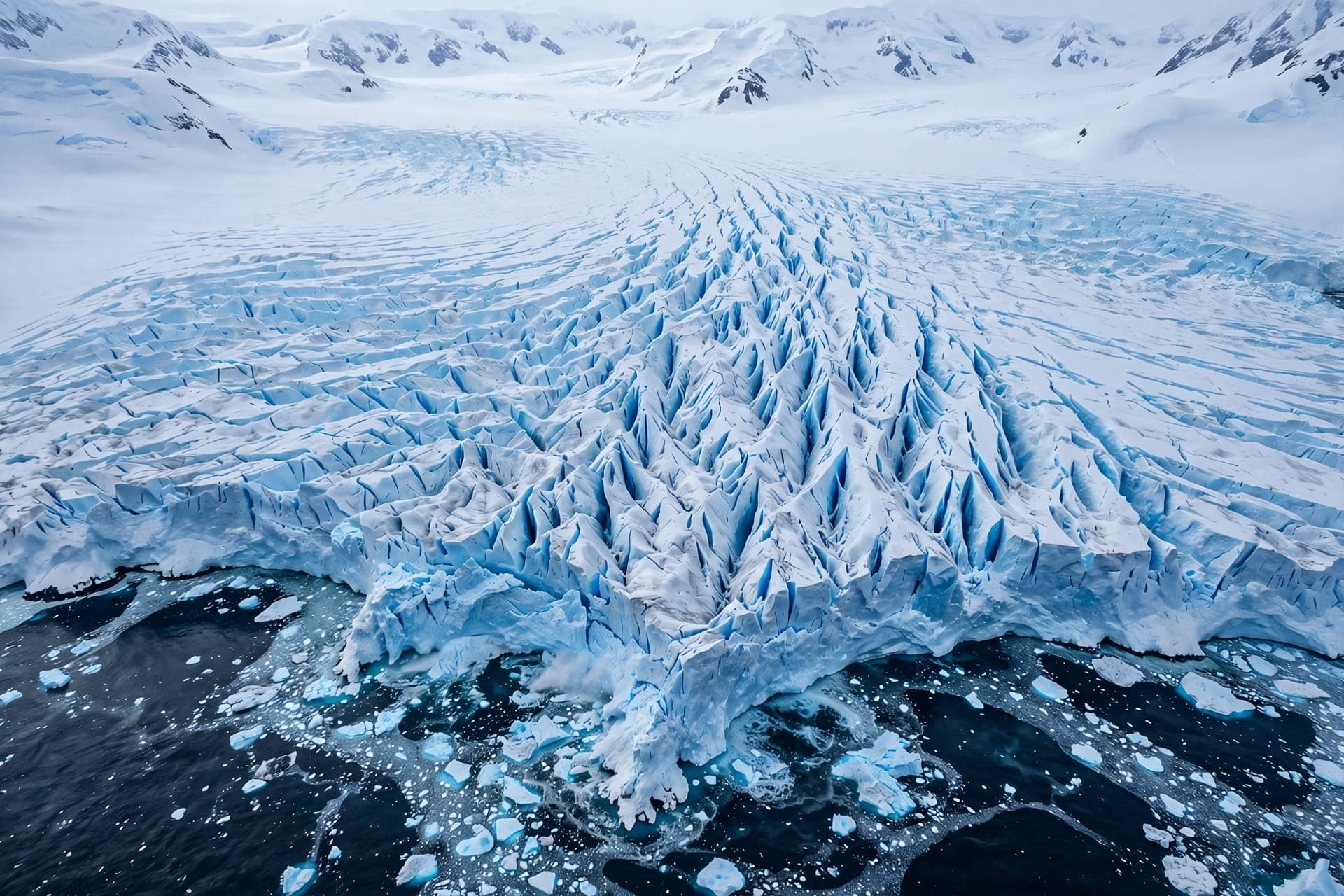
What emerges is not a story of conquest or dominance, but of complexity. Prehistoric encounters were likely shaped by necessity as much as choice — by survival, scarcity, climate, and movement across unfamiliar terrain. The Ice Age was not static; glaciers advanced and retreated, ecosystems shifted, and with them the paths of human groups.
Neanderthals disappeared as a distinct population around 40,000 years ago, yet they did not vanish entirely. Their genetic echoes remain within us — fragments of immune system adaptations, traces influencing skin and hair, small inheritances embedded quietly in chromosomes. The blending was partial, but enduring.
The new research does not overturn what we know so much as refine it. Earlier discoveries established that interbreeding occurred. This latest analysis deepens the picture, suggesting the direction of that gene flow may have been shaped by patterns that favored certain pairings over others. It adds nuance to an already intricate narrative of human evolution.
There is something quietly humbling in the realization that modern humanity carries within it the memory of those crossings. Not metaphorically, but biologically. A choice made tens of thousands of years ago — or perhaps simply an encounter shaped by circumstance — still lingers in our cells.
The study’s authors caution that genetic evidence provides probabilities rather than personal stories. Ancient DNA is fragmentary, and interpretations evolve as new samples are discovered. Researchers continue to analyze genomes from archaeological sites across Europe and Asia, seeking clearer resolution on how these populations interacted and why one lineage persisted as the other receded.
For now, the findings suggest that human history was not a straight line but a braided river — streams joining briefly, separating, and rejoining again. In the cold air of the Pleistocene, beneath skies unmarked by borders, two kinds of humans met. And in that meeting, something of both endured.
AI Image Disclaimer
Illustrations were created using AI tools and are not real photographs.
Source Check: BBC The New York Times Nature Science The Guardian
Published by Banx Network. This article is part of the Banx decentralized media programme, powered by the BXE token on the XRP Ledger.