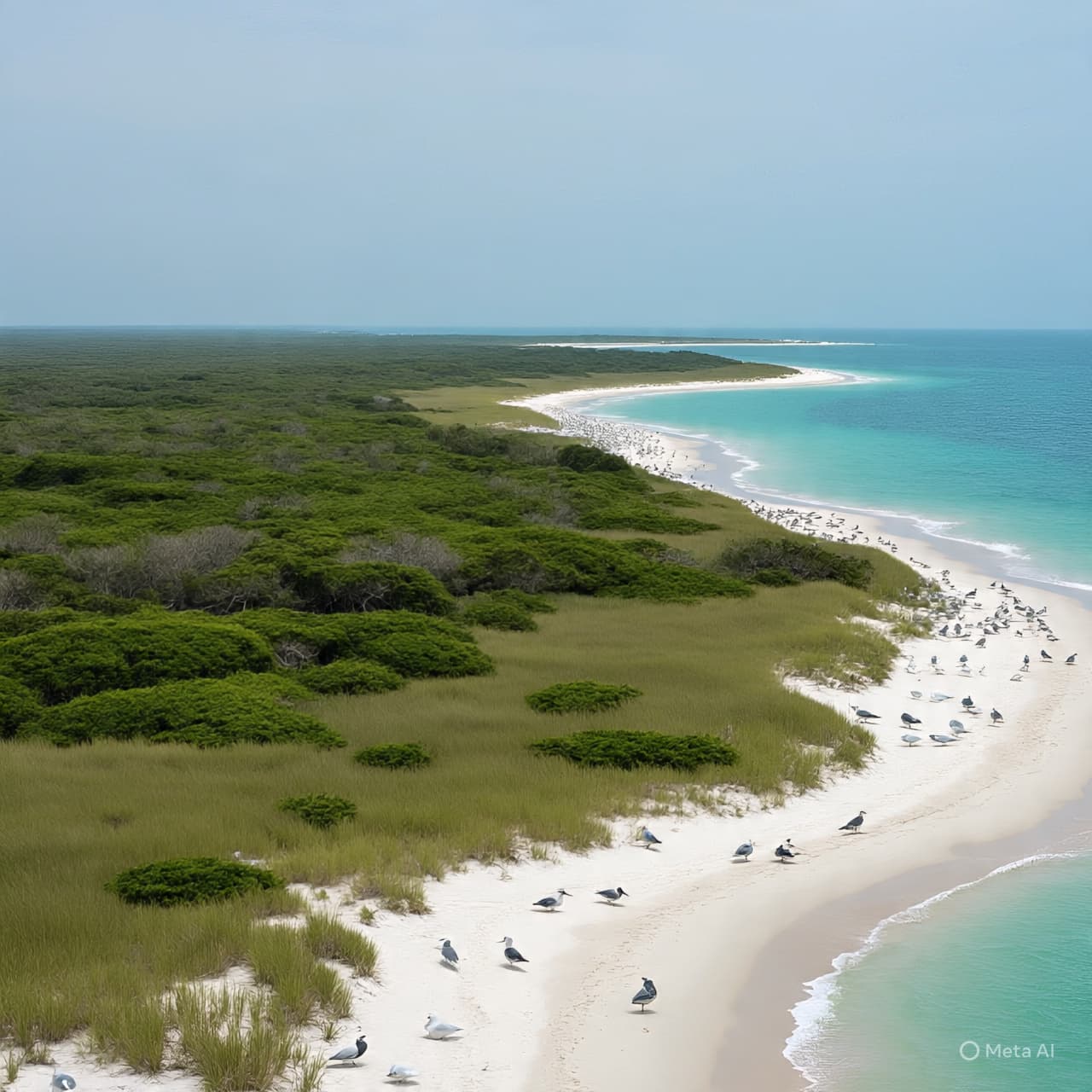
In the soft light of late afternoon, when the horizon surrenders to the slow advance of tide and sky, barrier islands stand as fragile sentinels at the edge of ocean and land. These shifting ridges of sand, shaped by wind and wave, are places of motion and balance — their dunes sculpted by wind, their shores reshaped by tides. Yet beneath that seeming simplicity lies a quiet network of life that knits soil and sediment into forms that can slow erosion and anchor plant growth. Among the most humble agents in this interplay are seabirds, winged visitors whose presence and absence whisper of the islands’ fragile resilience.
On small maritime islands and dunes, seabirds do more than breed and raise their young. In gathering food from distant seas and returning in breeding seasons, they bring with them nourishment in another form: guano, the nutrient‑rich droppings that fall across the earth like rain from another realm. In places where nutrient sources are otherwise sparse, this guano acts as a kind of natural fertilizer, sampling the ocean’s bounty and depositing it upon land, feeding plants that are especially adept at capturing drifting sand. It is these plants — grasses, shrubs, and dune‑builders — that begin to knit soil together, catching wind‑blown grains and laying down the first threads of stability in a landscape otherwise in constant flux.(turn0news1)
The notion that birds could shape the very terrain they inhabit is itself a quiet marvel of nature’s subtle economies. Scientists observing uninhabited islands in regions like the Dutch Wadden Sea found that where seabirds nest in greater numbers and where their guano enriches soil, vegetation grows more densely. This vegetation, in turn, traps more sand and builds up dunes — an ecological cascade set in motion by wings and tides alike. Such natural processes provide gentle counterpoints to the more dramatic threats these islands face: rising seas and accelerating coastal erosion driven by climate change.(turn0news0)
In our broader conversations about sea level rise and coastal vulnerability, it is easy to focus solely on the threats — water encroaching on land, storms gnawing at the edges, human infrastructure at risk. Yet here, too, is a story of subtle resilience, of how living organisms can intervene in the cycles of land and sea, enriching soils and promoting growth that might help buffer shifts in shoreline. Seabirds act as messengers of marine nutrients, connecting offshore waters with island soils in a way that enhances habitat for other life forms. Their guano does not merely fertilize; it integrates ocean‑borne resources into the very fabric of island ecosystems.(turn0search22)
This interconnection reminds us that the fate of barrier islands is not determined solely by physics and tides but also by the web of life — birds, plants, and soil working together in rhythms older than human memory. Yet those rhythms themselves are under pressure: rising seas shrink nesting grounds, and changes in ocean conditions may alter fish stocks that birds rely on for food. Thus, the same forces that threaten islands also threaten the agents of their renewal.
In recent scientific reports, researchers are examining precisely how these nutrient flows operate and what they mean for the future of coastal resilience. As sea level rise continues to challenge the stability of sandy shores around the world, understanding the role of seabirds and their guano could offer insights into how natural systems might be supported or restored to help islands retain some measure of stability. In this delicate interplay of wind, wing, sand, and sea, each element contributes to the broader story of survival on the ever‑shifting margins between land and water.
AI Image Disclaimer
Visuals are AI‑generated and serve as conceptual representations.
Sources
Phys.org Earth.com Ecological nutrient flows research
Published by Banx Network. This article is part of the Banx decentralized media programme, powered by the BXE token on the XRP Ledger.