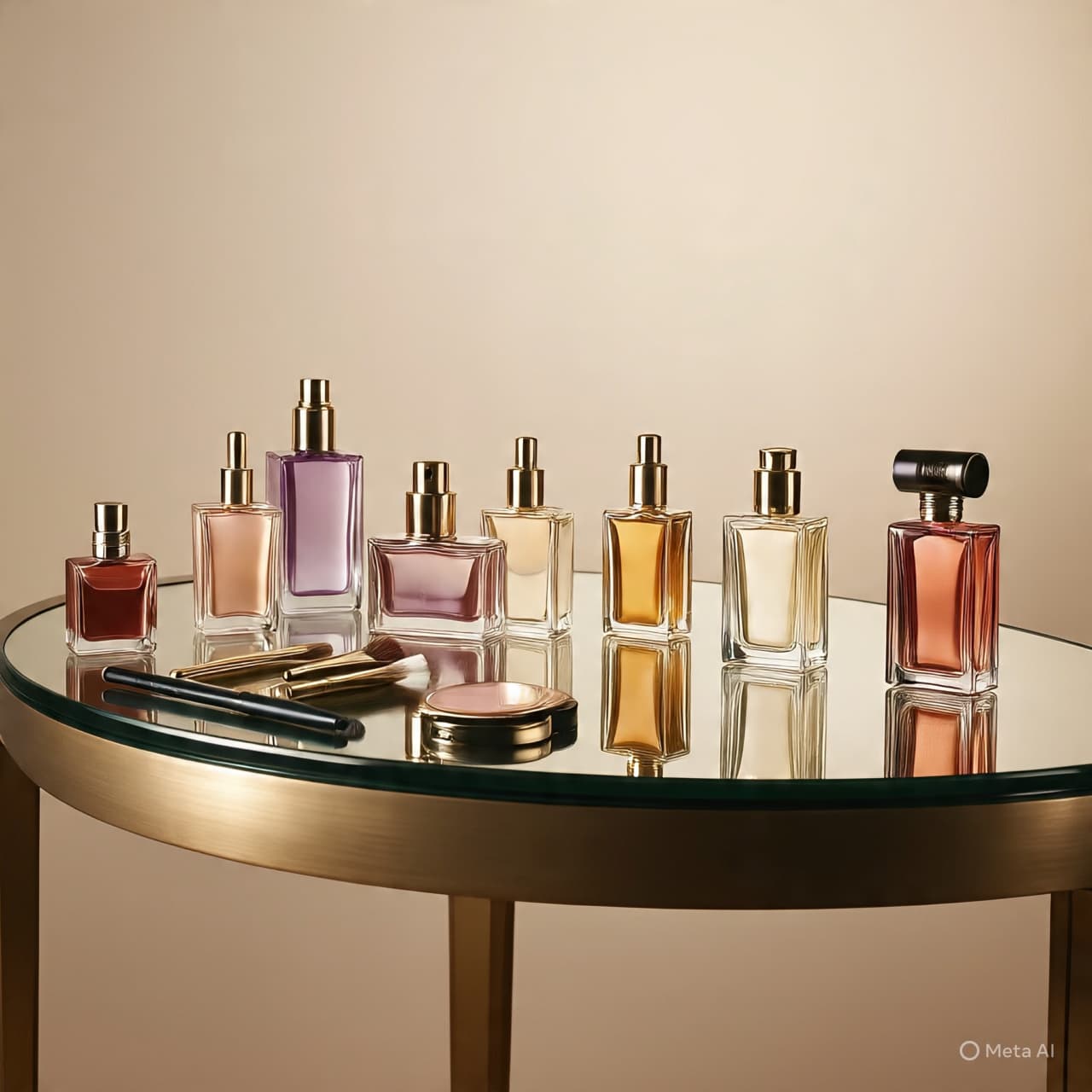
In the quiet geometry of a vanity table—glass bottles arranged like small monuments, fragrances suspended in amber light—there is a sense that time moves differently in the world of beauty. It lingers in textures, in rituals, in the subtle promise of continuity. Yet beyond the calm surface, the industry itself shifts in slow but decisive currents, where heritage brands and modern ambitions meet at the edge of reinvention.
It is here, in this space between legacy and scale, that talks have emerged between Estée Lauder and Spain’s Puig—a potential union that reflects not only corporate strategy, but a broader reimagining of global beauty. The conversations, still unfolding, suggest the possibility of combining two distinct histories: one rooted in American prestige cosmetics, the other shaped by European fragrance houses and fashion-driven identity.
For decades, Estée Lauder has cultivated a portfolio that spans skincare, makeup, and fragrance, with brands that travel across continents while maintaining a sense of curated elegance. Puig, meanwhile, has built its presence through a careful blending of fashion and scent, stewarding names that carry both cultural and aesthetic weight. Together, they represent parallel narratives—one expansive, one selective—now considering convergence.
The logic of such a move is not difficult to trace. The global beauty market has grown increasingly competitive, shaped by shifting consumer habits, digital influence, and the rise of independent labels that move quickly and speak directly to new generations. In this landscape, scale becomes both a shield and a bridge: a way to consolidate resources, expand reach, and navigate uncertainty.
Yet beneath the strategic language of mergers and acquisitions, there is something more subtle at play. Beauty, unlike many industries, trades not only in products but in identity—how people see themselves, how they choose to be seen. The integration of two companies with distinct cultural sensibilities raises questions about how those identities will be preserved, blended, or redefined.
Investors, as always, watch closely. The prospect of a combined entity suggests efficiencies, broader distribution networks, and a stronger position against global competitors. At the same time, there is recognition that the value of these companies lies as much in their intangible qualities—brand stories, creative direction, emotional resonance—as in their balance sheets.
The timing, too, feels reflective of a wider moment. As economic conditions shift and consumer confidence ebbs and flows, luxury and beauty sectors often find themselves balancing aspiration with accessibility. A larger, more diversified company could better absorb these fluctuations, offering stability in a market that is anything but still.
And so the discussions continue, quietly shaping possibilities behind closed doors. Whether they culminate in a formal agreement or remain an exploration of alignment, they signal a broader movement within the industry—a gentle but persistent drift toward consolidation, toward scale, toward a future where global presence and local identity must coexist.
In the end, the outcome will be measured not only in financial terms but in how seamlessly two legacies can be woven into one. For now, the mirrors remain still, reflecting a moment of anticipation—where beauty, like the markets that sustain it, waits to see what form the next chapter will take.
AI Image Disclaimer Visuals are AI-generated and serve as conceptual representations.
Sources Reuters Bloomberg Financial Times The Wall Street Journal WWD (Women’s Wear Daily)
Published by Banx Network. This article is part of the Banx decentralized media programme, powered by the BXE token on the XRP Ledger.

.jpg&w=3840&q=75 "India Says First Phase of U.S. Trade Deal Is Nearly Done, Seeks Edge Over Rivals")