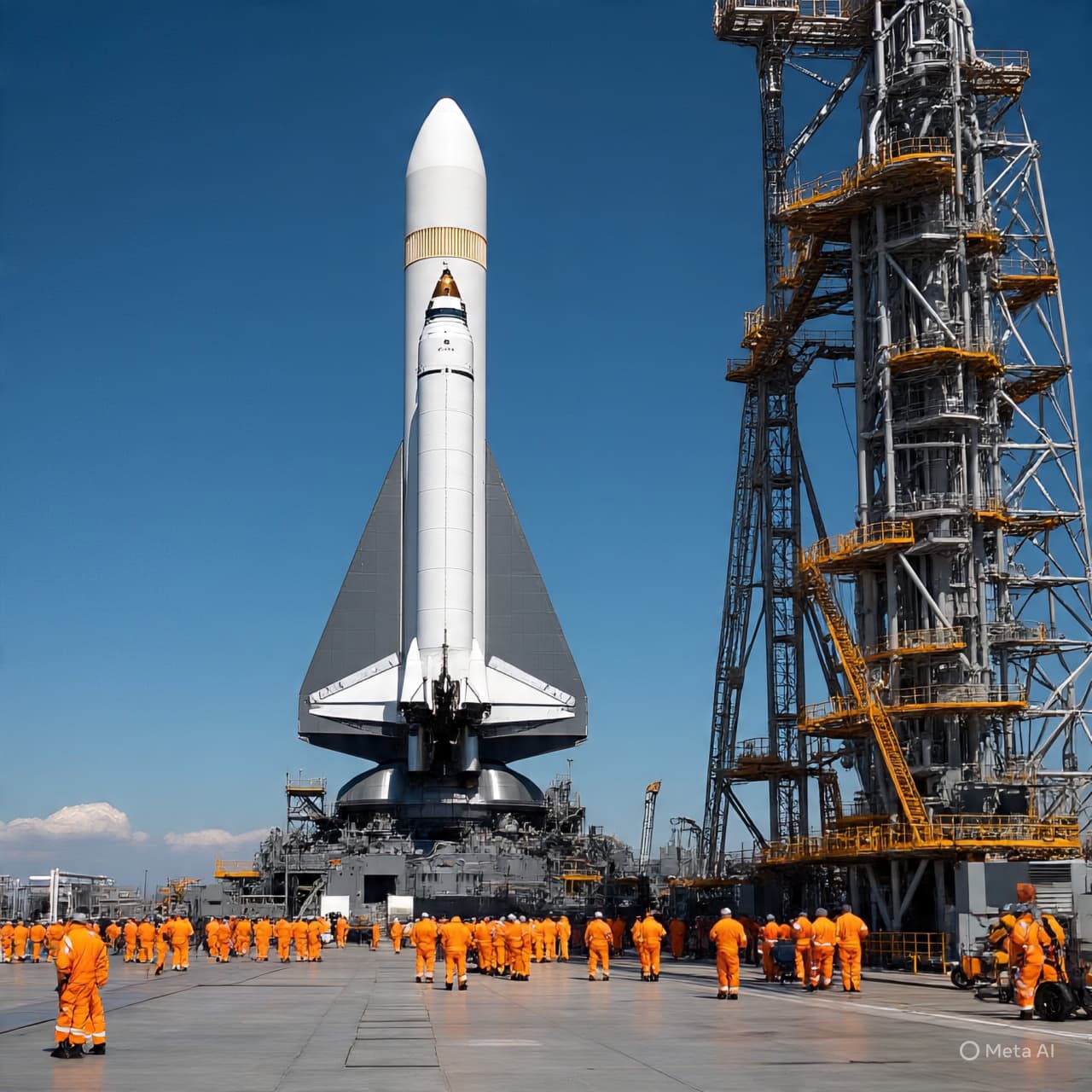
There are certain moments in humanity’s long story — standing at the edge of an ocean, peering over a mountain pass, or gazing into a starlit sky — that coax a quiet humility from us. The dreams of flight and exploration, first nurtured in the hearts of poets and scientists alike, have carried that sense of wonder upward and outward, beyond the horizons of our earthly home. Soon, if all goes according to plan, a new chapter of that story may take shape high above us. After years of meticulous preparation and careful testing, NASA’s Artemis II mission — a crewed journey around the Moon — now appears poised to lift off as early as March 6, a date that binds past aspiration to present resolve.
The pace of progress has been measured and deliberate, as the space agency moved through a series of complex pre‑launch milestones. Earlier this month, engineers encountered technical challenges during a key pre‑flight test known as a “wet dress rehearsal,” in which the Space Launch System (SLS) rocket is fueled with cryogenic propellants in conditions that mirror an actual launch countdown. That rehearsal was paused after technicians detected hydrogen leaks, prompting them to replace seals and conduct further checks.
In the most recent simulation, however, NASA teams successfully fueled the massive rocket with more than 700,000 gallons of super‑cold propellant without significant leakage, marking an important step toward launch readiness. Officials said that, provided the upcoming flight readiness review and remaining preparations proceed smoothly, the agency will aim for the first launch window in early March. This broader window runs from March 6 through March 9, offering a series of opportunities to begin the historic mission that will carry four astronauts on a roughly 10‑day journey around Earth’s nearest celestial neighbour.
The Artemis II crew — Commander Reid Wiseman, Pilot Victor Glover, Mission Specialist Christina Koch, and Canadian Space Agency astronaut Jeremy Hansen — will not land on the lunar surface on this flight. Instead, the mission will test critical systems on a high‑speed lunar flyby reminiscent of the first Apollo missions, aiming to take Orion farther from Earth than any humans have travelled since Apollo 17 in 1972. It is a precursor to Artemis III, which NASA plans to use for renewed lunar landings later in the decade.
The journey toward Artemis II has been marked by both anticipation and patience, shaped by the agency’s commitment to safety and the complexity of modern space engineering. Each rehearsal of launches past and present carries the gravity of meticulous care, ensuring that every valve, seal, and system is ready for the rigours of spaceflight. As the calendar turns toward March, NASA personnel and the astronauts alike remain focused on deployment, testing, review, and final clearance — the final choreography before liftoff.
AI Image Disclaimer “Visuals are created with AI tools and are not real photographs.”
Sources Reuters The Guardian Live Science Space.com AP News / NPR (via media reports)
Published by Banx Network. This article is part of the Banx decentralized media programme, powered by the BXE token on the XRP Ledger.