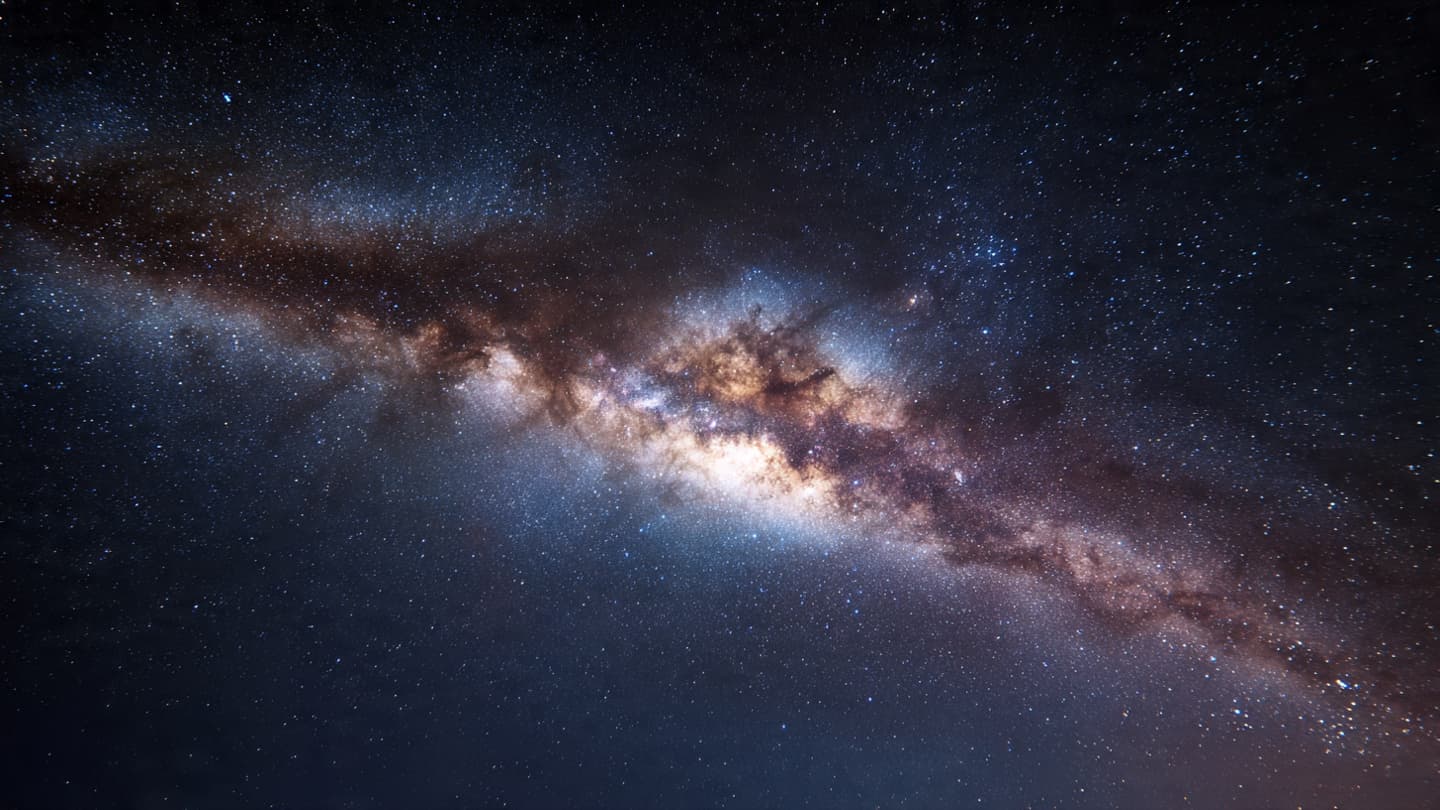
For centuries, the night sky has invited quiet wonder, its scattered lights hinting at distances too vast to fully grasp. Among these questions, one has lingered with particular persistence: where does our galaxy truly end, and how might we recognize its boundary?
Astronomers have recently presented findings suggesting they may have identified a more precise outer boundary of the Milky Way. Using advanced observational data and modeling, researchers have examined the distribution of stars and gas extending far beyond the galaxy’s visible disk.
The study draws on data from space-based observatories, including detailed stellar mapping efforts that have expanded understanding of the galaxy’s structure. These datasets allow scientists to trace faint stellar populations that exist at extreme distances from the galactic center.
Traditionally, defining the edge of the Milky Way has been challenging, as the galaxy does not end abruptly. Instead, it gradually transitions into a sparse halo of stars and dark matter. The new research aims to clarify where this transition becomes effectively negligible.
Researchers estimate that the Milky Way’s influence may extend much farther than previously thought, potentially reaching distances several times larger than earlier measurements suggested. This includes the region influenced by gravitational interactions.
The findings also contribute to broader discussions about how galaxies form and evolve. By understanding the outer limits of our own galaxy, scientists can compare it with others and refine cosmological models.
Experts note that while the research offers valuable insight, definitions of a galaxy’s “edge” remain dependent on the criteria used, such as stellar density or gravitational reach.
The study highlights the continuing role of precision observation in answering questions that once seemed beyond reach, bringing gradual clarity to the vastness of space.
Though the edge may never appear as a sharp line, each new measurement brings the contours of our cosmic home into clearer view.
AI Image Disclaimer: Some visuals are AI-generated to illustrate astronomical concepts and do not represent actual images.
Sources: NASA, European Space Agency (ESA), Nature Astronomy, ScienceDaily
Published by Banx Network. This article is part of the Banx decentralized media programme, powered by the BXE token on the XRP Ledger.