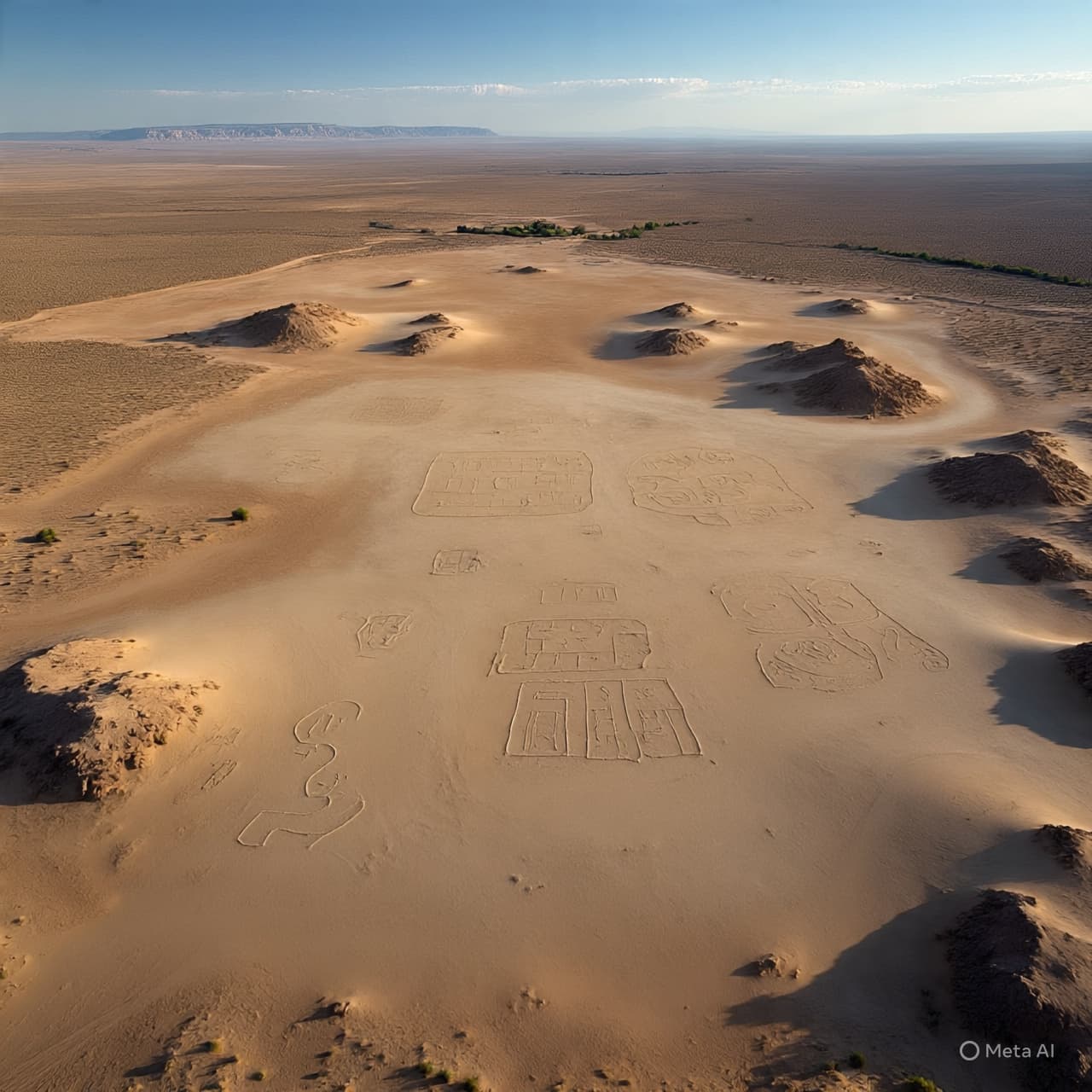
In the broad stillness of the Peruvian high desert, where time seems measured not in years but in wind and sun‑burned stone, lies a tapestry etched by hands long vanished. For generations, scholars have wandered this place, hoping to trace the faint whispers of forgotten figures — the Nazca Lines, massive geoglyphs carved into the arid earth that are best seen not from the ground but from above. These sprawling forms, ancient by any measure and enigmatic in purpose, have teased explorers for a century. Yet many remained hidden, their outlines too faint, too worn by wind and sand, slipping always just beyond the limits of human sight and endurance.
Enter a new kind of observer: not a pilgrim with boots on the soil, nor a lone pilot scanning for familiar shapes, but a system forged from countless examples and digital patterns — artificial intelligence. Where human eyes saw only endless soil and gentle gullies, an algorithm trained to recognize subtle traces of human work sifted through aerial data with patient precision. It learned to spot the faint signatures of geoglyphs embedded in the desert’s skin, the way one might recognize a whispered half‑remembered song upon its first notes.
The result was a dramatic shift in perspective. What once took years of painstaking fieldwork — slowly documenting each figure from ground and air — was transformed into a map brimming with possibility. The AI‑assisted survey generated tens of thousands of candidate sites where ancient markings might lie, directing archaeologists to areas they might never have examined by intuition alone. In a field season measured in months, rather than years, experts confirmed over three hundred previously unknown figures, from familiar shapes like birds and monkeys to more abstract forms gently etched into the plateau.
There is something quietly poetic about this convergence of human curiosity and machine endurance. Archaeologists still walked the plateau’s dusty trails; human hands still brushed earth and stone to reveal contours worn smooth by millennia. But it was the patient, un‑tiring gaze of artificial intelligence that pointed the way, illuminating patterns too subtle, too dispersed for unaided perception. Through this collaboration, what was once invisible became part of the narrative — not just a catalog of lines, but a landscape reimagined with new layers of meaning.
This breakthrough does more than expand a list of ancient figures. It suggests a new partnership between human insight and machine pattern‑recognition, one that may transform how we explore lost cities, forgotten pathways, and silent places written only in shadow and soil. In the vast quiet of the Nazca desert, human history now stands illuminated by a different kind of light: one born of reflection, iteration, and the quiet promise that even the most enduring mysteries can yield to patient sight.
AI Image Disclaimer
Visuals are AI-generated and serve as conceptual representations.
Sources (News Outlets Only)
Indian Defence Review Science Focus Digg
Published by Banx Network. This article is part of the Banx decentralized media programme, powered by the BXE token on the XRP Ledger.