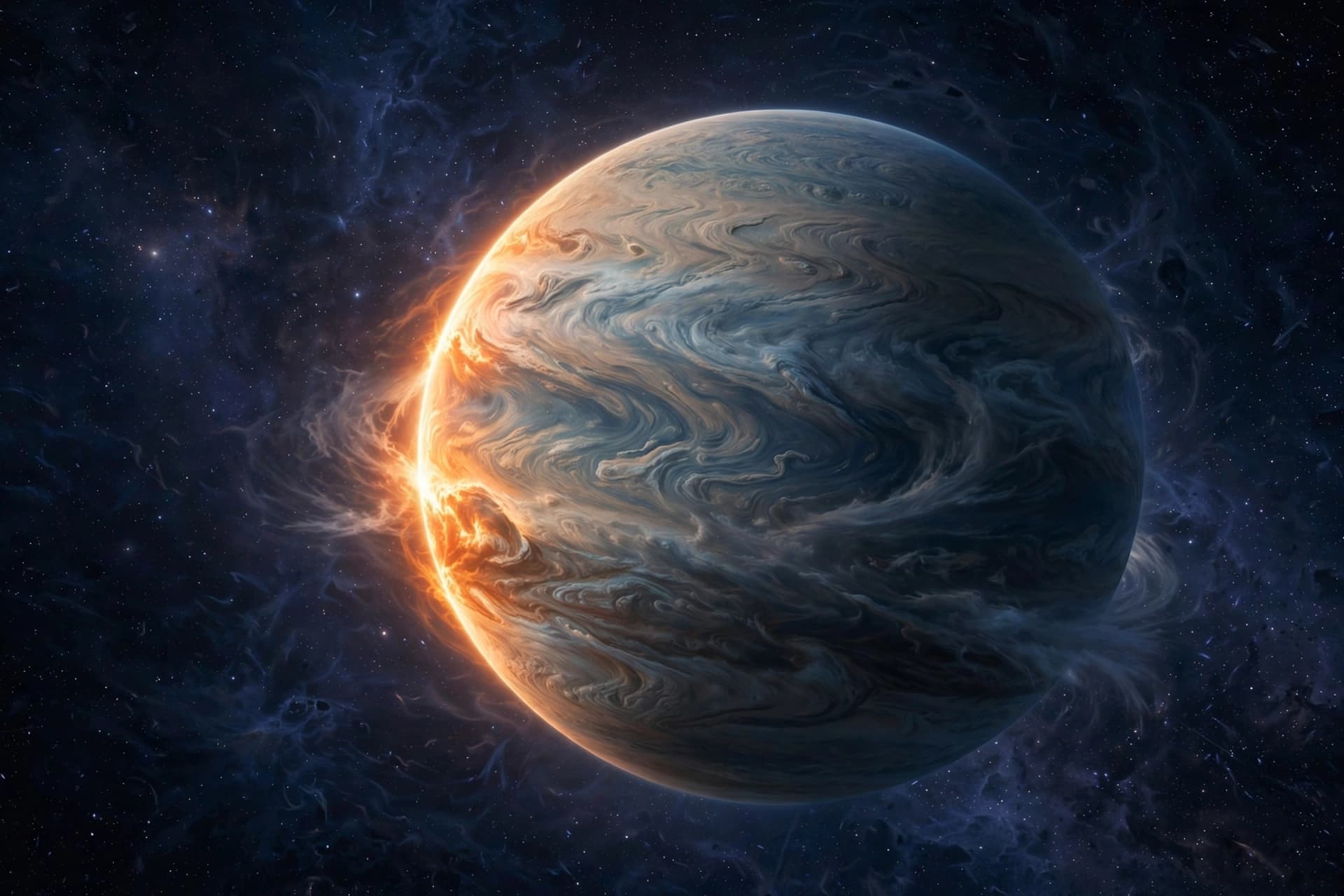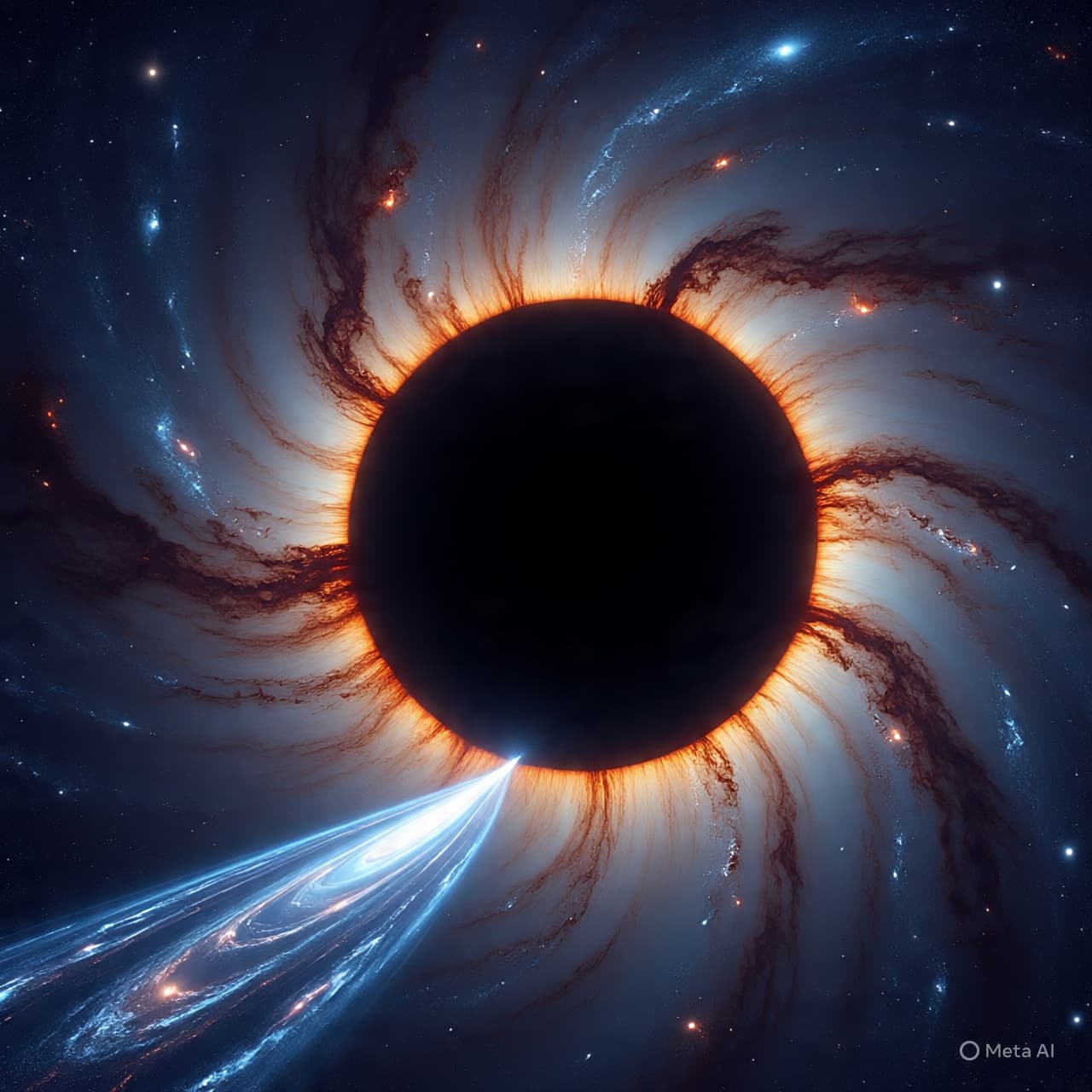
In the vast ocean of night, where distances are measured in millions of years of light and silence deepens with nothing to register sound, there are places where the cosmos writes in fire instead of whisper. One such place lies nearly 665 million light‑years from our small Earth, where a star wandered too close to a supermassive black hole and was claimed by its gravity. What followed, as astronomers have been observing for years, is an unfolding energy drama that continues to surprise those who watch the skies.
For a moment, imagine the slow cadence of a tidal disruption event, a celestial dance in which a star’s final moments are drawn out not in a blinding flash, but in subtle shifts of light and particle streams. The black hole designated AT2018hyz—affectionately nicknamed “Jetty McJetface” by some researchers—has shown a persistent and rising plume of energy since it first revealed its secret in 2018. Over time, this emission has grown brighter, hinting at powerful forces at work long after the initial encounter.
Scientists study these outbursts with tools tuned to radio and other wavelengths, seeking the shape and rhythm of the jets and outflows that ripple away from the black hole’s maw. In this case, the emergent jet seems almost to defy expectations: not a vanishing echo but a growing beacon, a thing of motion in the otherwise still night. Its energy output has been described, cautiously and with a touch of cosmic humor, in terms of comparisons to a fictional superweapon from decades of popular stories. In that playful frame of reference, the astronomical engine at work here may be emitting trillions, perhaps up to a hundred trillion times more energy than the Death Star’s legendary blast—a metric intended to evoke scale rather than signal any literal threat to distant planets.
Astronomers are careful in their terms, mindful that such rankings are approximate and dependent on the models used to interpret light traveling over immense distances. Nevertheless, the phenomenon is real: this black hole’s relativistic jet now rivals — and in some measures exceeds — the energy of the brightest gamma‑ray bursts ever observed, events that themselves stand among the most luminous in our universe.
In quiet labs and observatory domes around the world, researchers continue to trace the life of these emissions, forecasting that the current peak could crest around 2027. These observations are not just about measuring power, but about understanding the extreme conditions under which matter and energy interplay at the edges of physics. What draws scientists to study these events is not spectacle alone, but the intimate connection between forces that shape galaxies and the subtle rules of nature that allow such forces to emerge.
Seen from Earth, a black hole’s activity seems inevitable yet mysterious, a reminder that out in the cosmic vastness, events unfold on scales that elude everyday intuition. As light from these remote outbursts drifts across time and space to reach our instruments, it carries not just data but a quiet sense of wonder — an invitation to contemplate immense power woven into the fabric of the night.
All Visuals are AI‑generated and serve as conceptual representations.
Sources (Media Names Only)
ScienceAlert Euronews Space.com UNILAD Phys.org
Published by Banx Network. This article is part of the Banx decentralized media programme, powered by the BXE token on the XRP Ledger.