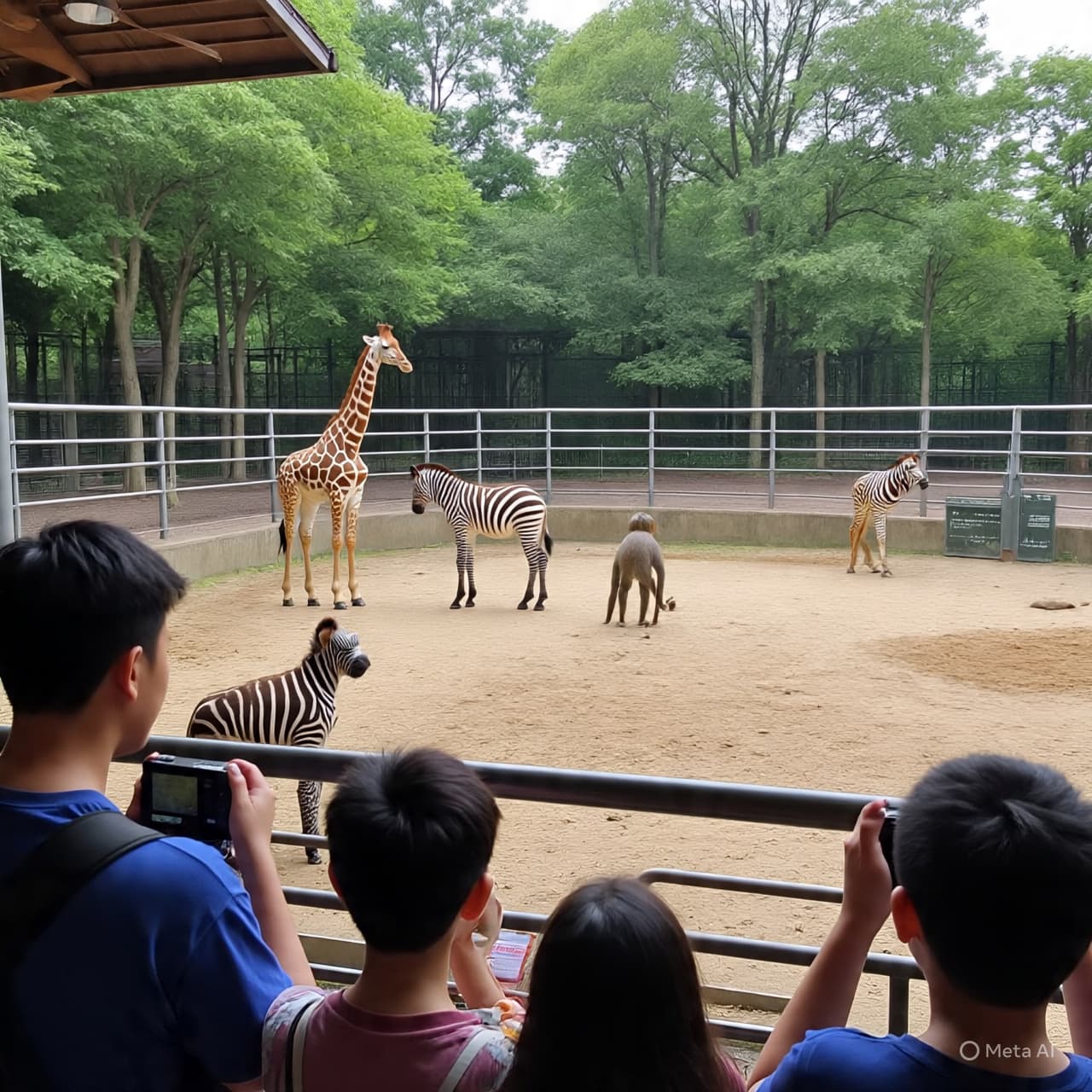
There are boundaries in places like zoos that are rarely spoken aloud, yet clearly understood. They exist not only in fences and glass, but in the quiet agreement between people and the animals they come to see. In Thailand, that understanding was briefly broken when a man crossed from observer into enclosure, stepping into a space not meant for human presence.
At a zoo housing the pygmy hippopotamus known as Moo Deng, the man reportedly climbed into the animal’s enclosure, prompting immediate concern from staff and visitors. The act, while fleeting, disrupted the careful balance maintained between safety and proximity—one designed to protect both animal and human from unpredictable outcomes.
Zoo personnel responded quickly, removing the man from the enclosure and ensuring that the animal was not harmed. Authorities later confirmed that the individual had been arrested, with investigations focusing on how the breach occurred and whether any additional risks had been introduced in the process.
Pygmy hippos, though smaller than their more widely known relatives, remain powerful and potentially dangerous animals. Their environments within zoos are structured with precision, not only to replicate natural conditions but to prevent interactions that could escalate without warning. A single कदम across that boundary can alter the dynamic entirely.
For visitors, such spaces often invite curiosity, even a sense of closeness to wildlife. Yet that closeness is carefully controlled, shaped by design and regulation. When those limits are ignored, even briefly, the consequences extend beyond the individual act, raising questions about safety protocols and the responsibilities shared by those who enter such environments.
The incident has drawn attention not because of lasting harm, but because of how easily routine can be interrupted. A visit that might have passed unnoticed instead became a moment of tension—one that underscores how thin the line can be between observation and intrusion.
As authorities continue their review, the zoo returns to its usual rhythm. Visitors move from enclosure to enclosure, pausing, observing, then moving on. And within those spaces, the animals remain, separated by boundaries that, while often invisible in their intent, are essential in their purpose.
AI Image Disclaimer
Illustrations were created using AI tools and are not real photographs.
Sources
Bangkok Post
Reuters
Associated Press
The Nation Thailand
Thai PBS
Published by Banx Network. This article is part of the Banx decentralized media programme, powered by the BXE token on the XRP Ledger.