In the muted light of an early morning lab, where instruments hum like distant tides and the air carries the scent of sterile glass and possibility, scientists peer into a world that is at once familiar and astonishingly strange. Here, in the quiet interplay of forces that shape living things, a new understanding is emerging — one that turns a familiar notion on its head: that breaking, in the right moment and in the right way, is not a failure but a creative gesture.
In the earliest hours of life, before an embryo has fully taken shape, something remarkable occurs. Tiny bubbles of fluid, like miniature spheres of quiet tension, expand and press outward between adjacent cells, and in doing so they gently pry them apart. What might seem like a rupture instead becomes a deliberate shaping event: the hollowing of a blastocyst, the first architectural gesture that will house a growing organism within. The fluid flows along the path of least resistance, nudging weaker cells aside, and in that subtle act of separation a new form arises — one that will carry within it the promise of organs and motion.
This pattern, seen in mouse embryos and now recognized more widely among developing organisms, reveals that fracturing — a word usually reserved for failure in materials such as concrete or bone — plays a quiet but essential role in nature’s craftsmanship. It is not haphazard chaos, but a controlled expression of mechanical forces. Differences in physical tension among cells, and the fluid dynamics that move through them, guide where and how these fractures occur. In doing so, they sculpt tissues that will endure the stresses of life, from delicate hollow cavities to the firm curves of skin and muscle.
In zebrafish hearts, which pulse with a rhythm that seems impossibly fast and yet exquisitely disciplined, a similar motif appears. The beating heart bends and stretches, and in places where strain concentrates most fiercely, tiny gaps open in the supporting network. These are not errors or breakdowns, but cracks in the scaffold that invite muscle cells to move in and knit new structures essential to the heart’s function. Over time, those microfractures guide the formation of trabeculae, the muscular strands that help drive circulation. Physicists and biologists working in concert have shown that these openings are directed not by genetic code alone but by the physical forces of motion itself — by the push and pull that defines life’s rhythms.
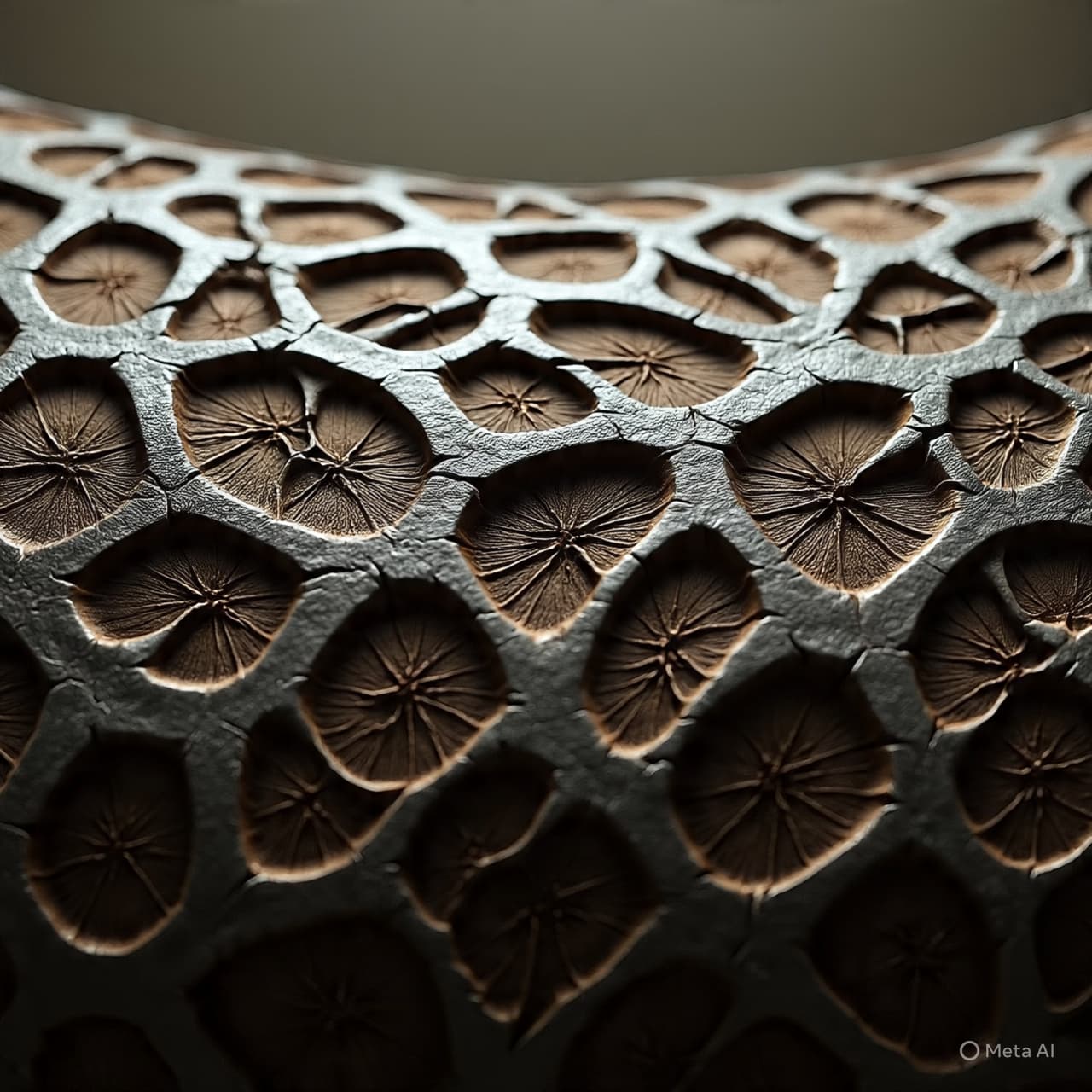
Even at the level of skin and external tissues, fracturing appears as a natural pattern of growth. The skin of an African elephant, with its intricate network of crevices, resembles the cracks in drying earth not by accident but by a shared mechanical logic. Thickening layers and underlying bumps set the stage for controlled breaks that, rather than weakening the whole, help shape a surface suited to the animal’s needs. Across species and scales, from beating hearts to mighty hides, these processes reveal that biology repurposes the mechanics of breaking to build resilient forms.
This perspective — of breaking as making — sits within the broader field of mechanobiology, which seeks to understand how physical forces and shapes guide the dance of life. Cells interpret pressure, strain, and shear as signals that direct growth, differentiation, and movement. Tissue architecture emerges not only from genes and chemistry, but from the push and pull of forces that act across scales small and large. What might once have seemed destructive — a gap, a crack, a separation — becomes part of the silent grammar of tissues taking shape.
In clear scientific terms, recent research shows that during development, controlled fracturing processes help form fundamental structures in organisms. In mouse embryos, fluid‑driven fractures create the blastocyst cavity; in zebrafish hearts, mechanical strain opens gaps that lead to muscular trabeculae; in other tissues, fracturing contributes to patterned surfaces and resilient forms. These phenomena illustrate that mechanical forces, often in subtle interplay with genetics, shape organs and tissues in ways that were only recently recognized.
AI Image Disclaimer
Visuals are AI‑generated and serve as conceptual representations.
Sources (Media Names Only)
Quanta Magazine
Published by Banx Network. This article is part of the Banx decentralized media programme, powered by the BXE token on the XRP Ledger.