In the bowels of the French-Swiss border, beneath the gentle hum of earth and machinery, scientists have glimpsed a world older than time itself. The Large Hadron Collider, a cathedral of magnets and whispers of particles, has recreated the universe as it was mere microseconds after the Big Bang—a searing, fleeting expanse of quarks and gluons, a primordial soup more fluid than previously imagined.
This “soup,” a term almost quaint in its simplicity, reveals the earliest moments of matter in a state both exotic and intimate. Particles collide at near-light speeds, erupting into showers that mimic conditions billions of years ago. Each collision is a conversation across eons, a fleeting window into a universe before stars, before planets, before light had settled into orderly patterns. What emerges is not rigid or crystalline, but supple, flowing—a reminder that creation itself began in motion, in turbulence, in unexpected liquidity.
The implications ripple outward, reaching from the heart of particle physics to the edges of cosmology. By understanding how this quark-gluon plasma behaves, scientists can trace how matter coalesced, how protons and neutrons formed, and how the scaffolding of the cosmos was built from chaos. There is wonder in the precision of these measurements, in the elegance of equations that describe something so ephemeral yet foundational.
Beyond the data, there is the poetry of the experiment. Researchers monitor screens glowing with traces of collisions, their eyes reflecting bursts of energy, echoes of creation. It is a silent ballet, where human curiosity meets the universe’s most primal state. Each result reminds us that even in the most violent, chaotic moments of cosmic infancy, there is a rhythm, a subtle order, and a story waiting to be told.
As the collisions continue and the LHC hums with activity, humanity inches closer to answering questions that have lingered since our first gaze at the night sky. The primordial soup, once theoretical, now simmers in the minds of scientists and dreamers alike, a liquid testament to the universe’s capacity for surprise.
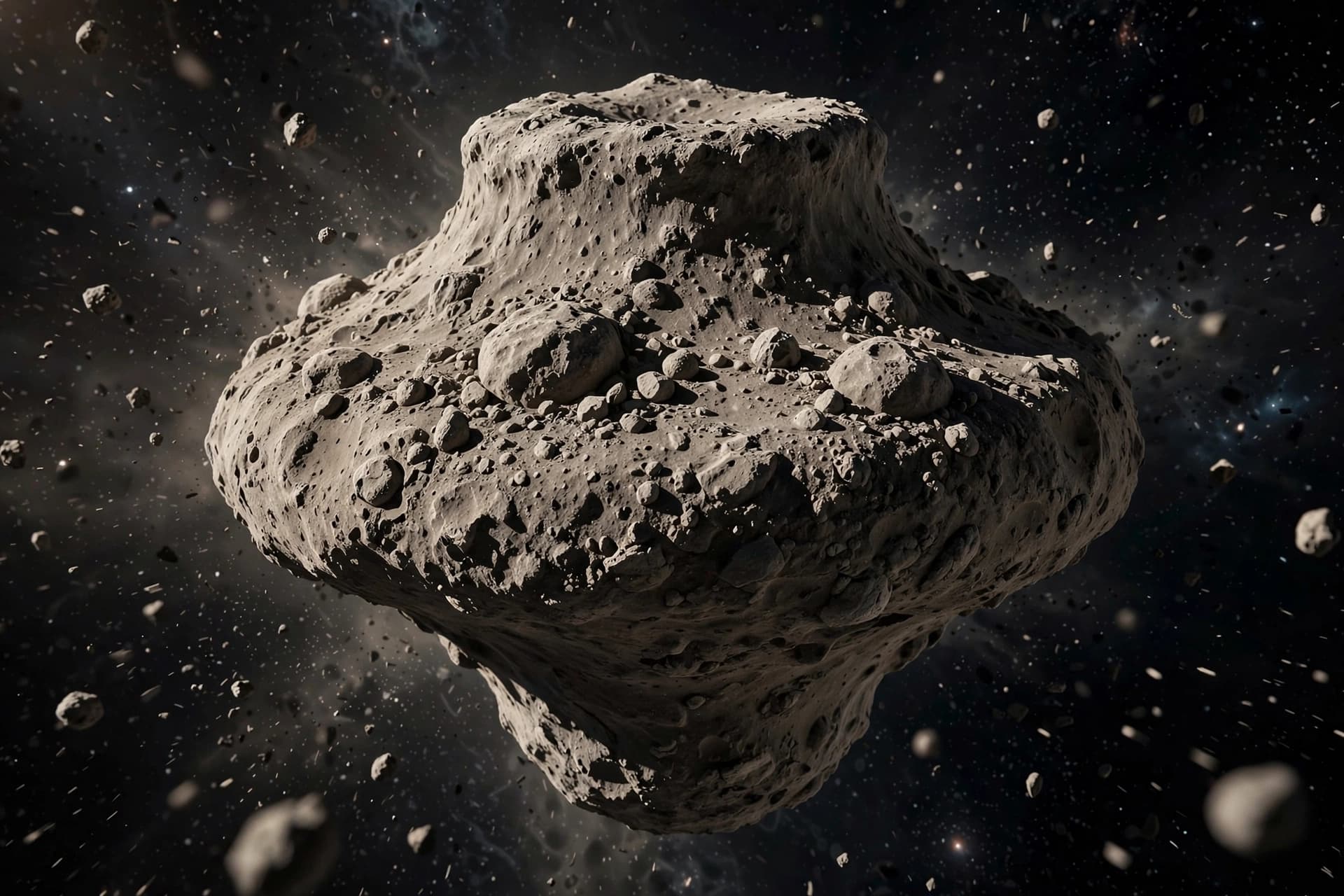
AI Image Disclaimer “Illustrations were created using AI tools and are not real photographs.”
Sources CERN, Nature, Science, Physics Today, BBC Science
Published by Banx Network. This article is part of the Banx decentralized media programme, powered by the BXE token on the XRP Ledger.