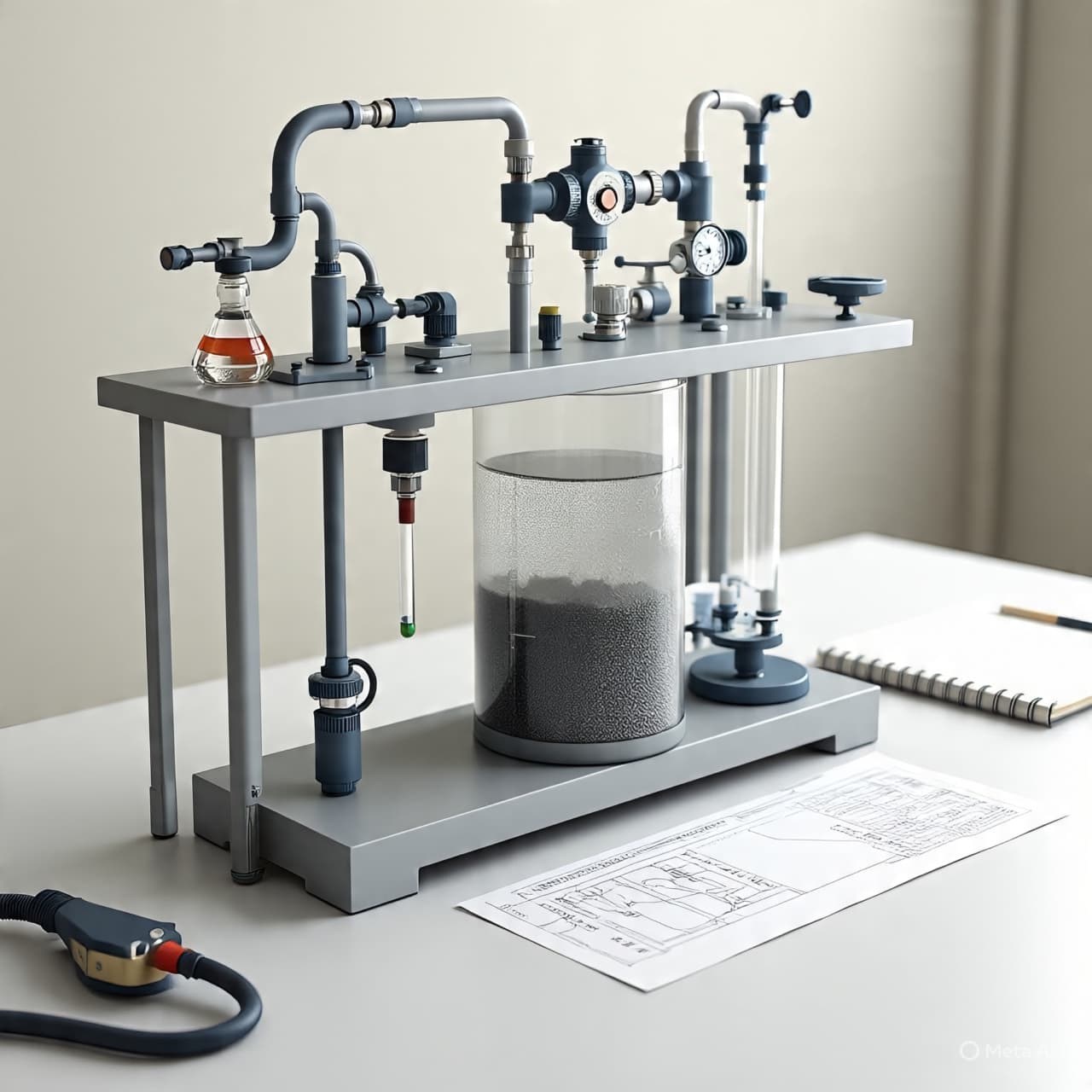
In the cool quiet of a research space, where screens glow softly and the hum of computation feels like distant tide, there is a gentle unfolding of discovery. It is here that scientists and machines converse in a language of patterns and predictions, seeking to understand how the simplest of elements—hydrogen—might be coaxed into rest within the intricate embrace of carbon’s porous labyrinths. The question of how best to store hydrogen, a clean and fleeting bearer of energy, has long occupied minds attuned to both the physical and the poetic: how to hold something light without losing its essence.
Hydrogen’s promise as a clean fuel is tied to its elusiveness. Its molecules, small and fleet, resist confinement, especially at conditions useful for everyday applications. Porous carbon materials, with their vast internal surfaces and microscopic nooks, offer a place where hydrogen might linger, held by the gentle tug of adsorption rather than rigid bonds. Yet even within these porous walls, the dance between gas and solid is governed by subtle forces and the fine architecture of the material itself.
To navigate this complexity, researchers have turned to artificial intelligence—an ensemble of algorithms that can sift through thousands of data points and discern the hidden contours of performance. In a recent study, scientists assembled a comprehensive dataset of nearly a thousand literature-derived entries, encompassing diverse porous carbon adsorbents and their experimental conditions. With this foundation, machine learning models such as Random Forest and convolutional neural networks were trained to predict how much hydrogen a given material might uptake, based on its structural features and the environment in which it is tested.
What emerges from this interplay of computation and chemistry is more than a prediction; it is a map of possibility. The models can illuminate how variations in surface area, pore volume, and microstructure shape the capacity for hydrogen storage. In doing so, they offer a guide to optimizing these materials—not by intuition alone, but by patterns drawn from the collective experience of past experiments. This approach does not supplant the craft of the laboratory but augments it, suggesting pathways where the curious and the cautious might look more closely.
There is a reflective quality to this work, as though the algorithms themselves pause at the edge of the unknown, inviting us to consider what it means to blend human ingenuity with machine insight. The porous carbon, with its hidden chambers and unseen corridors, becomes a metaphor for the search itself: a space where what we cannot easily see may nonetheless hold great promise. And in the quiet hum of servers and sensors, one senses a new kind of partnership—between thought and data, between material and machine.
The research demonstrates that AI-driven optimization can effectively predict and improve hydrogen storage performance in porous carbon adsorbents, helping guide the design of materials that may one day play a role in clean energy systems.
Illustrations were created using AI tools and are not real photographs.
Sources Scientific Reports Wikipedia (Hydrogen storage)
Published by Banx Network. This article is part of the Banx decentralized media programme, powered by the BXE token on the XRP Ledger.