
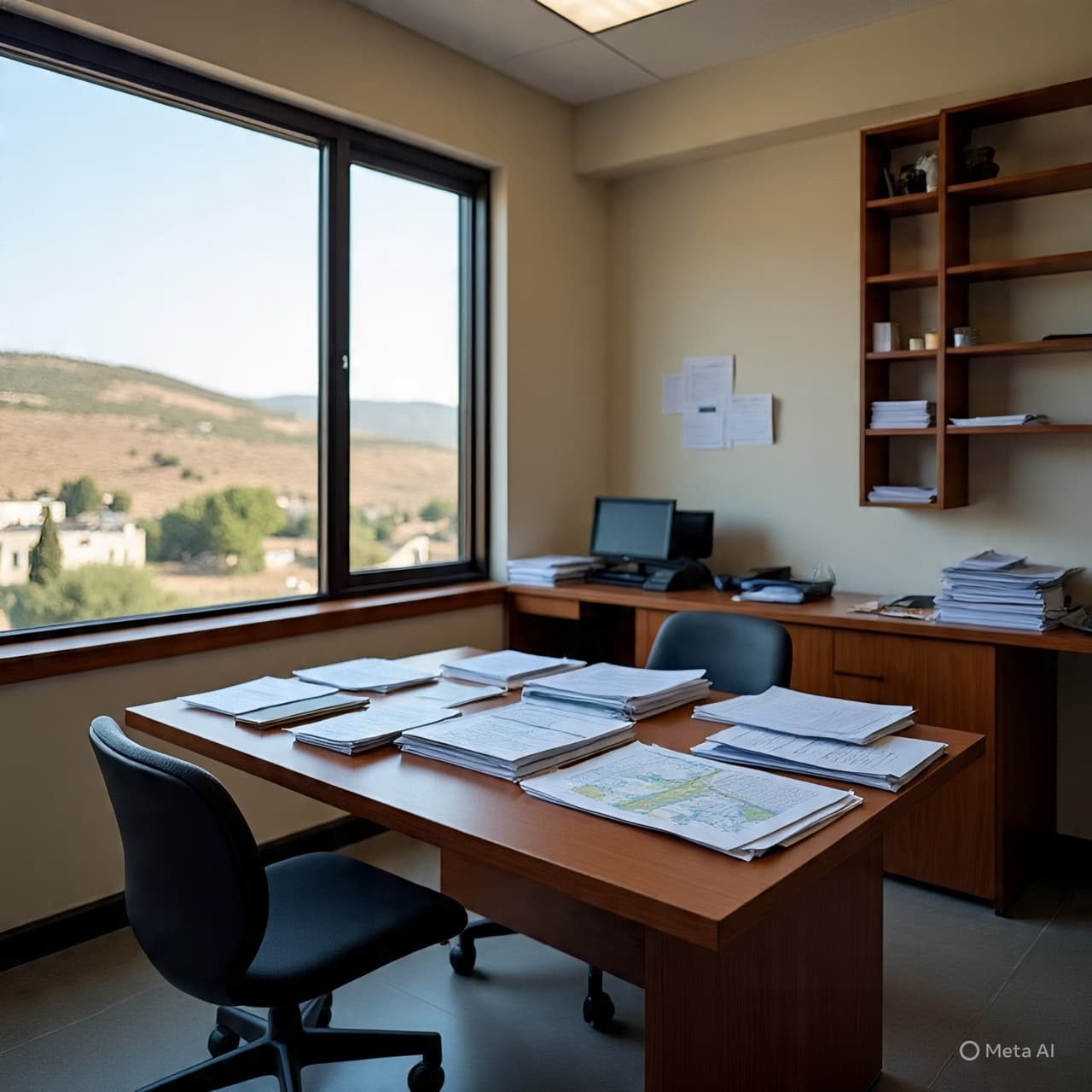
In the early light that creeps across the uneven terrain of the West Bank, the olive trees carry the hush of an age-old landscape, and the dust roads wind onward as they have for generations. Yet beneath this seeming stillness, there is a quiet transformation unfolding — one carried not in the roar of battle but in the slower, softer cadence of bureaucratic change. What once seemed distant — talk of annexation and displacement — now moves into the realm of the present, unsettling the imagined pauses between one day and the next.
In recent days, Israel’s governing cabinet approved measures to begin a new land registration process in the occupied West Bank, an administrative step officials say will clarify property rights and integrate the territory more tightly into the state’s legal framework. Critics, however, see something quite different: a calculated step toward formal annexation, dissolving decades-old protections and clearing the bureaucratic ground for expanded settlement and control.
For many in neighbouring Jordan, this shift carries a meaning that goes beyond lines on a map or clauses in legal text. What voices in Amman now describe is a kind of “silent transfer” — not a single moment of displacement, but a gradual, unspoken narrowing of possibilities for Palestinians to sustain life in place. Officials and strategists warn that as the legal and administrative structures of the West Bank are rewired, the conditions of everyday existence — from land rights to access to services and work — could begin to push families toward seeking refuge and stability across the nearby Jordan River.
This notion of silent transfer speaks to something deeper than policy debates. It evokes the subtle pressures that can shape people’s choices over time: the gradual erosion of economic opportunity, the creeping uncertainty of legal status, the sense that roots once planted may no longer find fertile soil. For decades the idea of Jordan as an alternative homeland was dismissed as a distant improbability. Now it swims in conversation with uneasy urgency, not as a political slogan but as a lived possibility in diplomatic corridors and public discourse alike.
It is important to remember that for many here, the land is not an abstraction but a repository of stories — of harvests gathered beneath autumn skies, of children’s laughter carried on mountain breezes, of tents and homes built with hope and endurance. To see these landscapes gradually bracketed by new legal regimes and strategic calculations is to feel the fray between present life and distant policy tightening in real time.
Yet while the spectre of silent transfer haunts formal analysis, the contours of everyday life remain textured with complexity. In communities across the West Bank, people continue to tend fields, walk familiar paths, and hold conversations steeped in memory and aspiration. The land’s story, like the light at dusk that lingers on stones and olive groves, refuses to be wholly defined by a single policy or moment. And amid these tensions — between registers and roots, between lines drawn by decrees and the lived rhythms of households — a region’s future continues to be negotiated, step by quiet step.
AI Image Disclaimer
Visuals are AI-generated and serve as conceptual representations.
Sources (Media Names Only)
Al Jazeera Reuters Associated Press The Guardian Haaretz
Published by Banx Network. This article is part of the Banx decentralized media programme, powered by the BXE token on the XRP Ledger.


