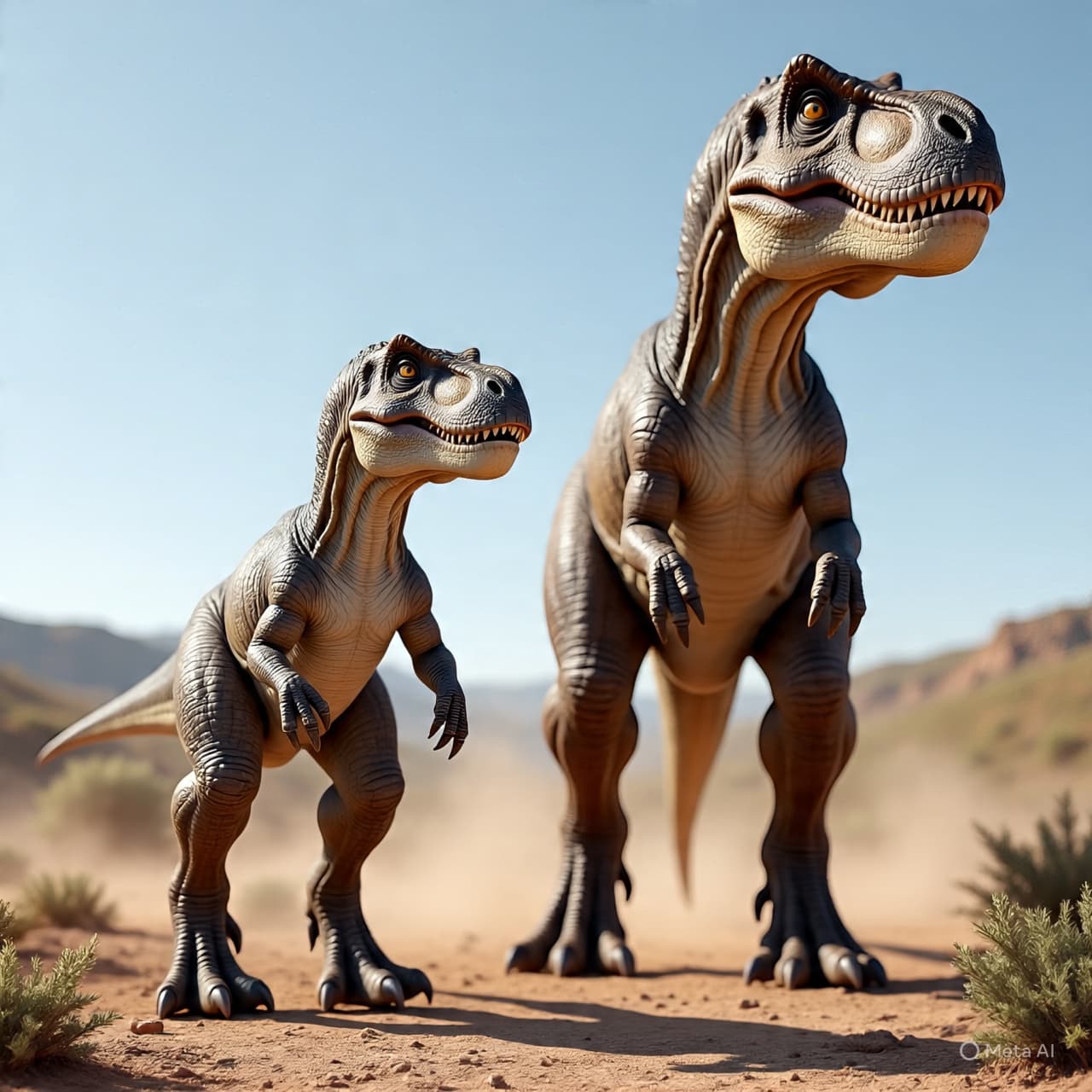
In the cool quiet of a museum hall, beneath glass and steel that speak of careful study and long‑held wonder, the bones of Tyrannosaurus rex rest like monuments to a world we can no longer walk. For generations, we’ve pictured this apex predator as a monstrous force that rose swiftly from hatchling to eight‑ton colossus — a brief, fiery sprint through youth before dominating the late Cretaceous lands. Yet, as scientists trace the veined patterns of ancient bone, a new cadence emerges: one not of abrupt ascent but of slow, resonant growth over decades.
Like rings within a mighty tree trunk, lines preserved in the fossilized leg bones of T. rex tell a story of time measured not in seasons but in countless cycles of sun and rain. In the most comprehensive study of its kind, researchers examined 17 specimens — from juveniles just finding their stride to adults bearing the full imprint of size and strength. Using advanced imaging that unearths growth markers once hidden from view, they wove together a more complete portrait of how these giants matured. What emerged was not a burst of rapid growth, but a prolonged journey that extended over roughly 40 years before a T. rex reached its full weight of about eight tons.
In earlier decades, scientists had estimated that the famed predator reached maturity by its mid‑20s, based on patterns visible in a smaller sample of bones. But the expanded dataset and new statistical modeling suggest a much slower trajectory, with years of subadult life stretching into decades. In this extended phase, young tyrannosaurs may have occupied different ecological roles than fully grown adults, following varied paths through the ecosystems of ancient North America.
This slow winding toward full size — measured by year‑by‑year markers deep within the bones — paints T. rex not as a creature that sprang quickly into its fearsome prime, but as one that grew gradually through a lifetime, spending as many years in adolescence as some modern long‑lived mammals. The new perspective offers a more layered sense of the life history of these animals: their seasons of growth, survival through good and lean years, and the shifting rhythms that connected them to their surroundings.
Alongside this recalibration of time, the research also stirs questions about identity in the fossil record. Some well‑known specimens — such as those nicknamed “Jane” and “Petey” — show growth patterns that diverge from the broader dataset, prompting scientists to consider whether they represent distinct relatives rather than juveniles of the same species. Though debates continue, the diversity in growth signals enriches our understanding of tyrannosaur evolution and variation.
In the hush of galleries and the measured cadence of paleontological research, the tale of T. rex grows ever more nuanced. No longer merely a creature of swift ascent and sudden impact, it now appears as an organism of patient maturation, a titan that traded rapid sprinting through life for a slow, enduring climb toward its title as king of its world. Long after the asteroid that closed the age of dinosaurs, its bones remain, quiet recorders of time’s gentle, unhurried passage.
AI Image Disclaimer Visuals are AI-generated and serve as conceptual representations.
Sources (News Outlets Only) ScienceDaily Daily Galaxy Tribune India
Published by Banx Network. This article is part of the Banx decentralized media programme, powered by the BXE token on the XRP Ledger.