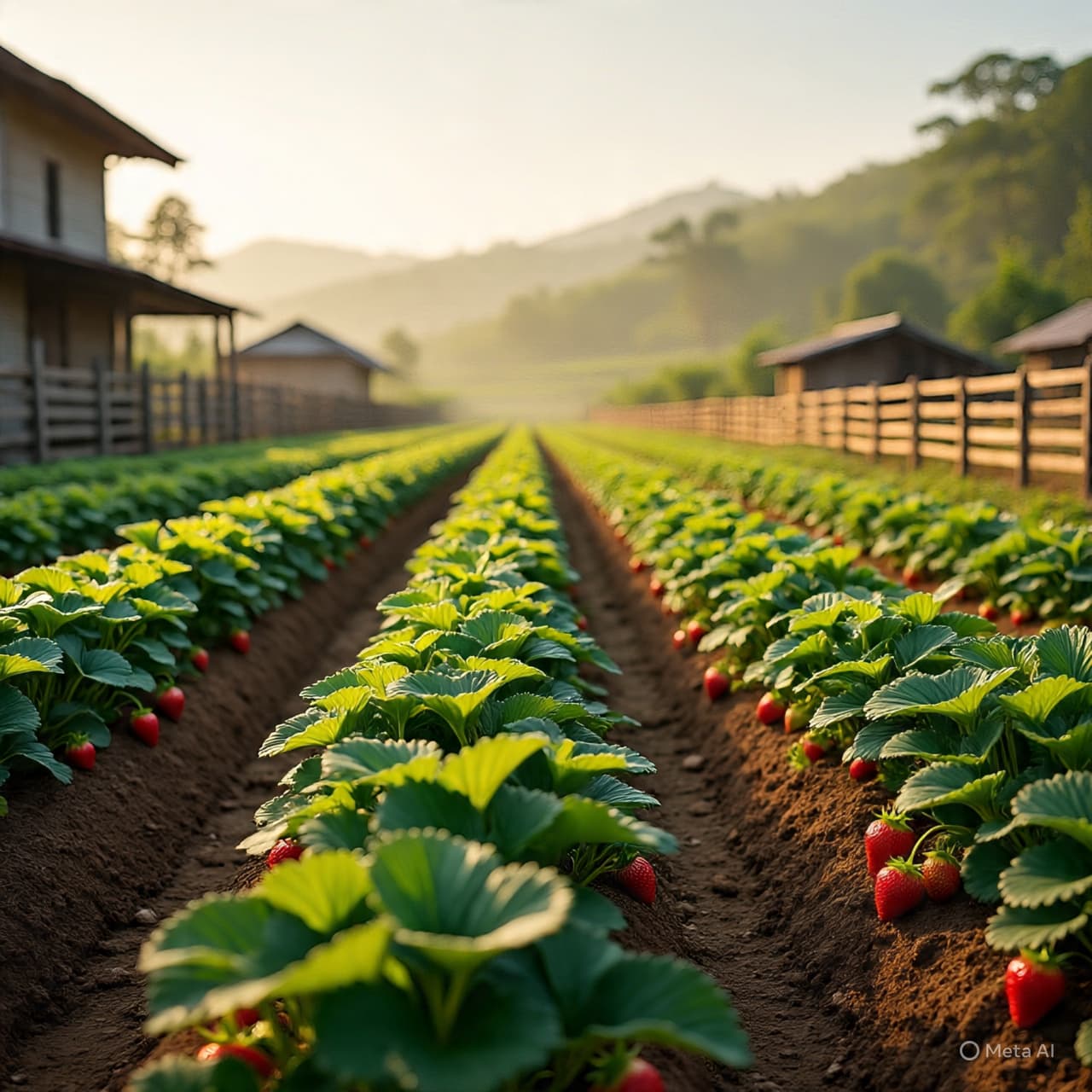
In the uplands of Bulacan, where mornings arrive cool and deliberate, rows of strawberry plants sit low to the ground, their leaves catching light before the heat settles in. Farming here has always been a matter of patience—of reading the soil, the sky, and the subtle signals of change. Lately, those signals have pointed toward something new: not a different crop, but a different way of growing.
Strawberry farmers in Bulacan are undergoing training under the Philippine Good Agricultural Practices, or PhilGAP, a certification program designed to promote food safety, environmental sustainability, and responsible farm management. The sessions guide farmers through standards that touch every stage of production, from soil preparation and water use to record-keeping and post-harvest handling.
For growers accustomed to inherited routines, the training introduces a quiet recalibration. Notes replace memory, measurements supplement instinct, and long-held practices are examined under the lens of safety and sustainability. The goal is not to erase tradition, but to strengthen it—ensuring that what reaches markets is not only fresh and appealing, but traceable and safe.
Beyond compliance, PhilGAP certification opens doors. It allows small-scale farmers to access wider markets, including institutional buyers that require documented standards. For strawberry growers in Bulacan, this means their produce can travel farther, not just in distance but in value, carrying with it the assurance of care taken at every step.
As the training unfolds, the fields remain much the same—green, quiet, deliberate. Yet something subtle shifts beneath the routine. In learning to meet national standards, farmers are not merely checking boxes; they are preparing their livelihoods for a future where trust, transparency, and sustainability weigh as heavily as yield. In the low-growing rows of strawberries, resilience is being cultivated alongside the fruit.
AI Image Disclaimer
Illustrations were created using AI tools and are not real photographs.
Sources
Department of Agriculture Philippines Bureau of Agriculture and Fisheries Standards Philippine News Agency Rappler BusinessMirror
Published by Banx Network. This article is part of the Banx decentralized media programme, powered by the BXE token on the XRP Ledger.