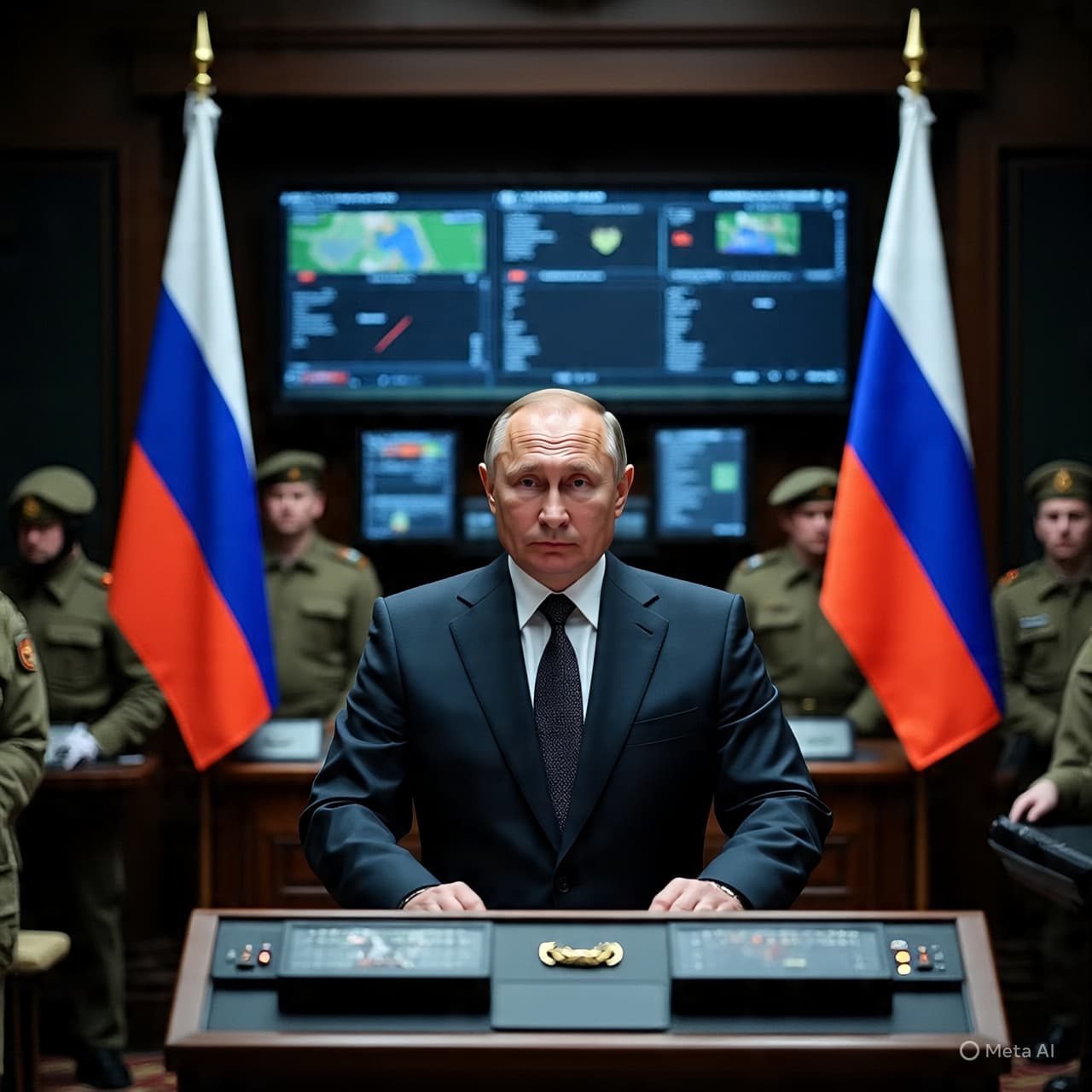
In the long months of a war that began with tanks rolling across borders and cities bracing under fire, another kind of tension now fills the air — the tension between words of peace and the rumble of weapons. On Saturday, Russian President Vladimir Putin delivered a message that struck this uneasy balance: if Ukraine and its leaders truly do not want peace, Russia will achieve its objectives by force. His words — stark, unapologetic, and spoken against the backdrop of ongoing battlefield clashes — arrived at a moment when hopes for negotiated resolution intersect with the grim realities of a four-year conflict.
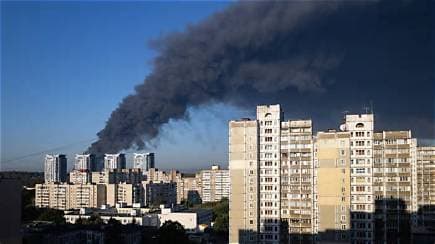
Putin’s statements, carried by the Russian state news agency TASS, followed a heavy barrage of drones and missiles that left much of Kyiv shaking and parts of its infrastructure damaged. Russian authorities portrayed these strikes as part of ongoing operations, asserting that Russia’s forces had secured several towns in the eastern Donetsk and Zaporizhzhia regions. Yet Ukrainian officials countered those claims, describing the situation as contested and emphasising that their forces continue to hold positions under difficult conditions.
To many observers, the timing of Putin’s declaration was no coincidence. Ukrainian President Volodymyr Zelensky is poised to meet with U.S. President Donald Trump in Florida, where discussions are expected to focus on advancing a peace plan that Kyiv and Washington have been crafting. For Ukraine, the talks represent a chance to secure broader international support and to find a path toward ending the devastating war that has stretched on far longer than most analysts initially expected.
But Putin’s rhetoric frames the conflict in a stark, binary way: peace, yes — or a full pursuit of Russia’s aims through military means. He accused Ukraine of showing little urgency in pursuing peace, a claim Kyiv strongly rejects. Ukrainian leaders have repeatedly stated that their country seeks an end to hostilities, but only under terms that respect its sovereignty and territorial integrity. For many in Kyiv and beyond, the challenge lies in reconciling these deeply divergent visions of what peace would even look like.
In Moscow’s telling, a peaceful settlement remains possible, but not on terms that would allow Ukraine to refuse Russia’s core demands. Those demands include territorial concessions, neutral status, and limits on military cooperation with Western alliances — conditions Kyiv and its allies have consistently deemed unacceptable. As a result, Moscow’s articulation of peace sounds more like an ultimatum than an invitation, a shift that underscores the profound mistrust that has grown between the two sides.
Against the backdrop of these conflicting narratives, civilians in Ukraine continue to face daily uncertainty. Families in Kyiv and other cities know all too well the disruption and danger of sudden air raid warnings and the constant threat of infrastructure damage. Meanwhile, soldiers on both sides endure brutal combat in contested towns where control can shift in a matter of hours. These lived experiences add a human weight to the abstract arguments over negotiation versus force.
International responses to Putin’s remarks have been measured but firm. Western leaders, while wary of further escalation, have echoed calls for a negotiated peace that does not sacrifice Ukraine’s sovereign rights. They underline that sustainable peace cannot be imposed by force — a principle that has shaped most international efforts to bring an end to this conflict.
As Zelensky travels to meet allies and Putin’s forces continue their advance, the war’s future hangs in a tense balance between diplomacy and combat. Whether talks yield traction or words of peace continue to be met with forceful rhetoric, the hopes of millions in Ukraine rest on the fragile promise that negotiation remains — at least for now — a possibility worth pursuing.
AI Image Disclaimer Images in this article are AI-generated illustrations, meant for concept only.
Sources Reuters Associated Press BBC News The Washington Post Time Magazine
Published by Banx Network. This article is part of the Banx decentralized media programme, powered by the BXE token on the XRP Ledger.