There are moments in history that feel like a stalled breath — a held expectation caught between the wonder of possibility and the grit of reality. When the India AI Impact Summit opened its doors in New Delhi in mid-February, many came with visions of a bright horizon: the promise of artificial intelligence woven into the nation’s narrative and the ambition of partnerships, pledges, and progress. What awaited, however, was a mosaic of promise and paradox, where the lofty dreams of $200 billion in AI investment brushed up against an unfolding scene of confusion and carousel-like logistics.
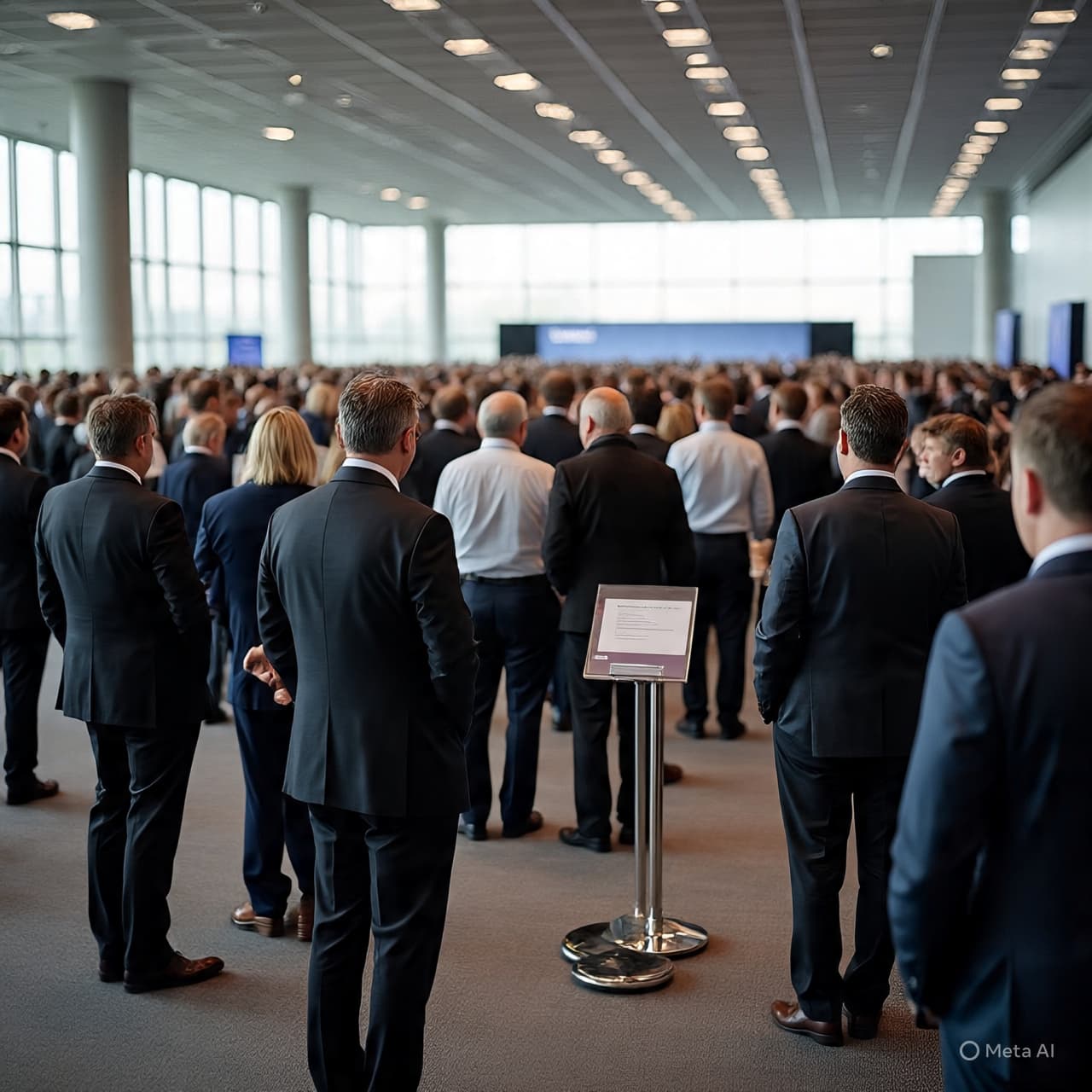
On the lawns and corridors of the sprawling Bharat Mandapam complex, the air buzzed with anticipation as delegates, founders, policymakers, and journalists converged. Yet, as the sun climbed that first morning, long lines stretched like hesitant rivers, snaking around security checkpoints and exhibition halls. Rather than ushering participants swiftly into a future framed by machine learning and data centers, organizers found themselves contending with questions over access protocols, overcrowded queues, and unclear signage that left even seasoned tech leaders searching for answers.
Within this swirl of activity, stories from the ground reflected a human pattern more familiar than futuristic — people waiting, conversing, laughing nervously, and exchanging notes on where to go next. Exhibitors who had invested time and resources in showcasing their innovations sometimes found themselves unable to reach their own booths. A few hours passed with crowded spaces and moments of uncertainty that seemed oddly at odds with the summit’s grand technological themes.
By afternoon, the trickle of criticism reached broader channels. Social media lit up with images of frustrated attendees and long queues, even as the summit’s corporate announcements continued. Despite the organizational haze, the event drew attention from global tech leaders and governments alike, underscoring India’s ambition to be seen as a rising node in the network of AI development. Investments were pledged, partnerships mentioned, and the conversations on governance and innovation echoed across panel rooms.
India’s Prime Minister, addressing delegates and world leaders, talked about the nation’s inclusive approach to AI — emphasizing accessible solutions, scalable digital infrastructure, and the importance of harnessing technology for broader human progress. Voices from multinationals and local startups alike echoed in affirmation, reflecting a shared belief in the potential of such gatherings to catalyze long-term innovation and collaboration.
Even as the summit progressed, the duality of triumph and turbulence remained apparent. Apologies from officials over early logistical missteps acknowledged that the execution did not always align with the narrative of seamless progress. Yet, amid these humble admissions emerged a larger, quieter truth: large ambitions often require not just vision, but painstaking refinement of detail and human coordination.
In this mix of aspiration and adjustment, the summit offered a vivid, if imperfect, portrait of a nation eager to shape its technological destiny. Far from being simply a scheduling error or a shortfall in preparation, the confusion at the AI Impact Summit became in itself a reflection of the complex path that lies between big ideas and their realization.
By the closing days, more orderly flows replaced the earlier crowds, and many who had felt the opening day’s frictions observed the deliberate work unfolding in sessions, negotiations, and discussions across the venue. In these quieter moments, the summit’s core — the convergence of minds and the exchange of ideas — regained center stage.
AI Image Disclaimer Images in this article are AI-generated illustrations, meant for concept only.
Sources Reuters, Associated Press, CNBC, Yahoo News, Gulf Business.
نُشر بواسطة Banx Network. هذا المقال جزء من برنامج الوسائط اللامركزية من Banx، مدعومًا برمز BXE على شبكة XRP Ledger.