There are moments in international affairs when announcements and airstrikes seem to exist in the same breath, neither fully interrupting the other, both unfolding as part of a single, uneasy rhythm. In those moments, diplomacy does not replace conflict so much as walk alongside it—carefully, unevenly, as if trying not to disturb something still in motion.
Across the eastern Mediterranean and deeper into regional corridors of tension, developments tied to the widening Iran-related conflict continue to shape an unstable present. In this landscape, Israel has reportedly signaled openness to renewed talks with Lebanon, even as military activity along the border persists. The duality is not unusual in this conflict space, but its simultaneity has become increasingly visible: negotiation and escalation sharing the same narrow frame of time.
At the center of this overlapping dynamic is Hezbollah, whose role in southern Lebanon continues to shape both the security calculus and the diplomatic horizon. Exchanges across the Israel–Lebanon frontier have remained intermittent but persistent, forming a pattern of strikes and responses that rarely settle into silence long enough to be called stable. In this context, the idea of talks is less a conclusion than another layer added to an already complex structure.
Reports from diplomatic channels suggest that while exploratory discussions involving ceasefire frameworks and border stabilization measures are being considered, Israeli operations targeting Hezbollah-linked positions have not fully paused. This simultaneity—talking while striking, negotiating while maintaining pressure—reflects a broader regional pattern where military and diplomatic tracks run in parallel rather than in sequence.
Observers describe this condition as one of managed tension rather than transition. In such a state, escalation is not necessarily a rupture from diplomacy but part of its background environment. Each side interprets the continuation of force differently: as leverage, deterrence, or necessity, depending on strategic framing. Meanwhile, the diplomatic track attempts to carve out a narrower space where temporary restraint might hold long enough to become something more durable.
The wider regional context, often described under the umbrella of Iran-related tensions involving Iran, adds another layer of interconnected pressure. Conflicts in this sphere rarely remain contained within bilateral lines; instead, they extend through alliances, proxy networks, and overlapping security concerns. As a result, developments between Israel and Lebanon are frequently read not only in local terms, but also as signals within a broader strategic system.
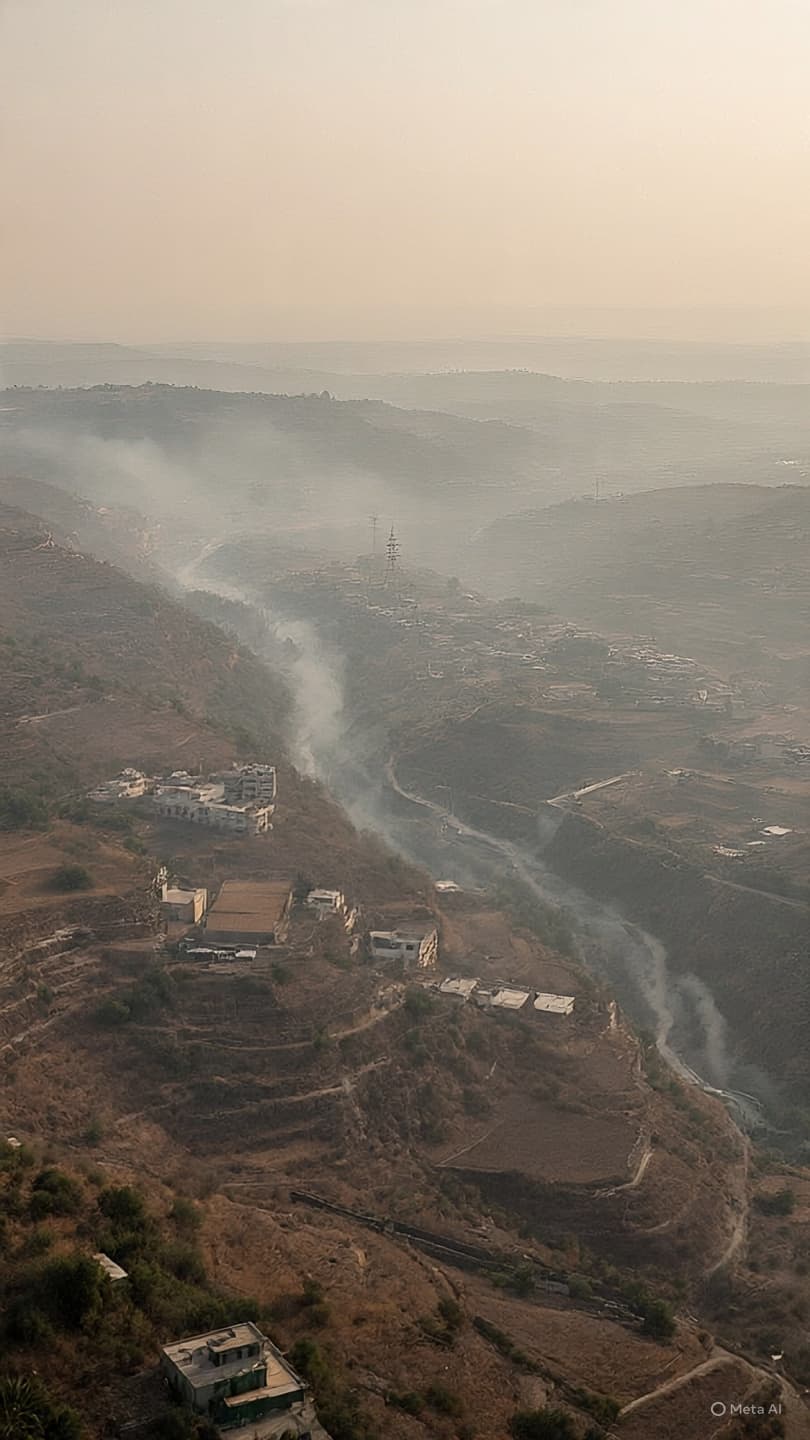
On the ground, the continuity of strikes has tangible consequences. Communities in southern Lebanon experience cycles of disruption that interrupt daily routines without fully displacing them, creating a sense of suspended normalcy. Infrastructure, emergency services, and civilian movement operate under conditions where uncertainty is not episodic but ongoing. In Israel’s northern regions, similar patterns of alert and precaution shape everyday life, reinforcing a shared if uneven experience of instability.
Despite this, diplomatic engagement has not ceased. Rather, it appears to be evolving in form—less about immediate resolution and more about containment, boundary-setting, and risk management. The willingness to engage in talks, even amid continued strikes, suggests an attempt to prevent escalation from reaching thresholds that could expand the conflict further.
Still, the gap between diplomatic language and military action remains significant. Ceasefire discussions require a shared understanding of timing and conditions, while ongoing strikes indicate that such alignment has not yet been achieved. It is within this gap that the current moment sits—neither fully escalating into broader war nor settling into meaningful calm.
As developments continue to unfold, the situation remains marked by parallel motions: negotiation unfolding in rooms of discussion, and military operations continuing along contested borders. Between these two tracks, the region moves through a phase defined less by resolution than by endurance.
And so the present moment holds its shape not through clarity, but through overlap—where talks begin without fully pausing the fighting, and fighting continues without fully closing the door on talks. In that layered uncertainty, the possibility of change remains present, but not yet defined.
AI Image Disclaimer Visuals are AI-generated and serve as conceptual representations.
Sources : Reuters, Associated Press, BBC News, Al Jazeera, The Guardian
Published by Banx Network. This article is part of the Banx decentralized media programme, powered by the BXE token on the XRP Ledger.