There are rhythms beneath the Earth that earthbound eyes rarely see until nature decides to show them. Some occur in quiet persistence — rivers carving valleys, winds shaping dunes — while others lie hidden deep under rock until sudden motion reveals them. In Yellowstone National Park’s famed Norris Geyser Basin, one such hidden rhythm has recently stirred back into view after years of quiet: the world’s largest acidic geyser, known as Echinus Geyser, has begun erupting again after a long period of dormancy.
Yellowstone is a place of remarkable contrasts. Bordered by rolling forests and geyser‑sprinkled valleys, it sits atop a vast volcanic system whose heat fuels bubbling mud pots, steaming fumaroles, and dramatic eruptions like Old Faithful’s. Among these, Echinus has long held a special place: its waters are naturally acidic, driven by a mixture of acidic gas and neutral ground water — a combination rare enough that many geysers around the world never develop it. Yet its acidity is mild — perhaps similar to orange juice or vinegar — and not strong enough to dissolve the rock that shapes its internal plumbing. This chemical balancing act has allowed Echinus to endure where other acidic features cannot.
But endurance does not always mean constant activity. For most of the early 21st century, Echinus’s eruptions became increasingly sporadic. After shows of steam and water early in the 2000s, activity dwindled to a trickle, and by December 2020 it had quieted almost completely, leaving visitors and researchers to watch in silence.
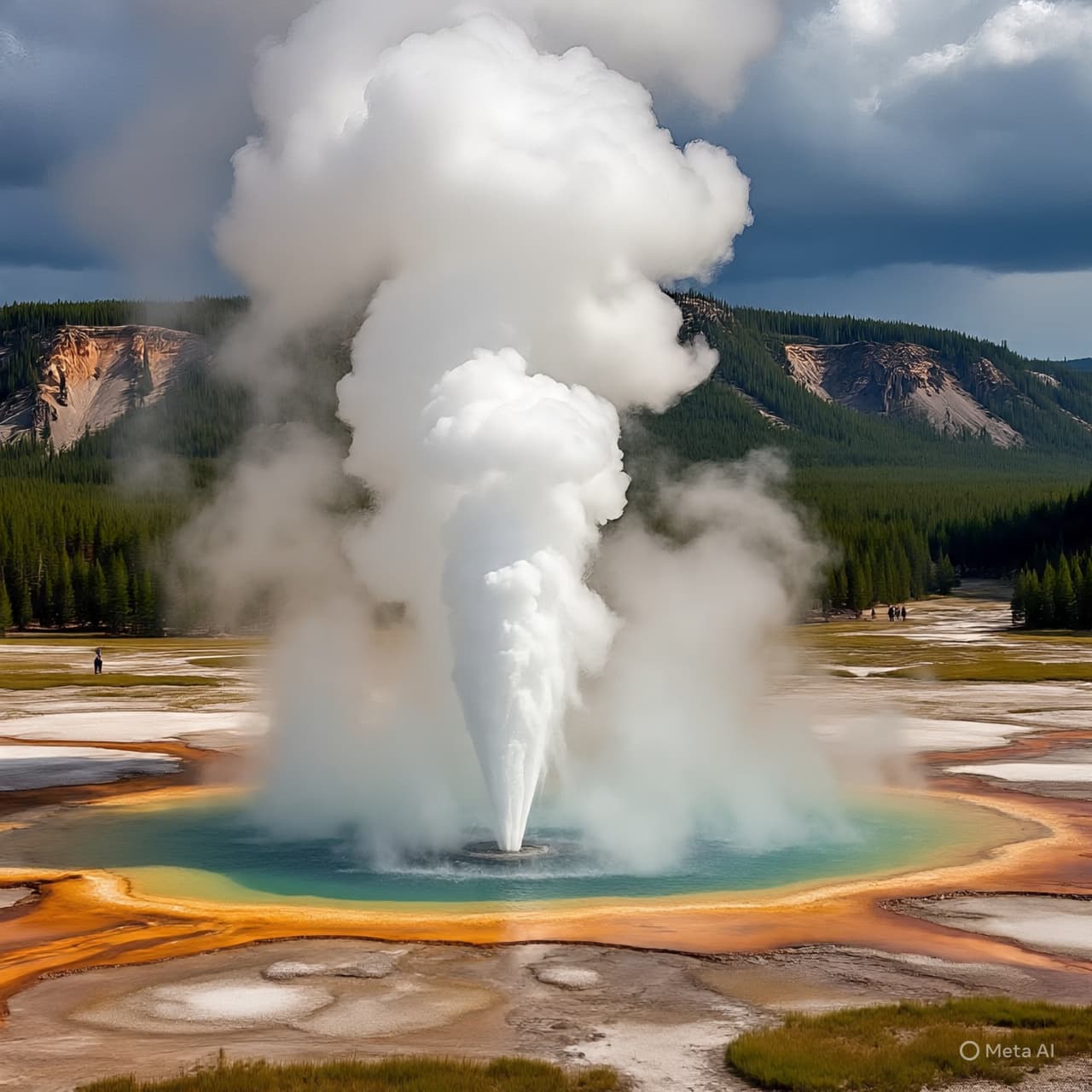
Then, in early February 2026, the geyser gave a hint of resurgence. On Feb. 7, the first apparent eruption in years was observed, and in the following days the pattern shifted toward regular bursts of activity. By Feb. 16, the geyser was erupting every two to five hours, each event lasting two to three minutes and sending jets of steaming water sometimes 20 to 30 feet (6–10 meters) into the air.
For scientists at the Yellowstone Volcano Observatory, these renewed bursts offer a rare chance to watch dynamic geothermal processes up close. The Norris Basin where Echinus resides is known for its “hot and dynamic” subsurface environment, shaped by shifting heat flows and underground gas movements that can influence geyser behavior. Echinus’s comeback — even if temporary — reminds researchers that such systems are not static but respond to broader changes below ground.
Park visitors have been sharing images and accounts of the geyser’s energetic displays, a spectacle that contrasts with its prior years of quiet. Long‑time observers recall periods in the late 20th century when Echinus erupted with notable regularity, sometimes every hour or so, and occasional eruptions reaching even greater heights. While this new phase may not match that historic rhythm, it nonetheless underscores how unpredictable — and alive — geothermal landscapes can be.
Scientists caution that the geyser could quiet again as conditions change, just as it has before. Historically, similar bouts of activity at Echinus have lasted only a month or two before fading back into dormancy. Whether this current phase persists into the summer season — when the park sees its highest visitor numbers — remains uncertain.
For park‑goers and nature lovers alike, the sight of steam and water dancing against the Yellowstone sky after years of stillness is a vivid reminder of the deep energies that shape our world. In the interplay of heat, water, and geology beneath the surface, even a period of dormancy can be only a pause, not the end, of a geyser’s story.
In straightforward news terms: Yellowstone’s Echinus Geyser, the world’s largest known acidic geyser located in Norris Geyser Basin, has begun erupting again in early 2026 after nearly six years of near inactivity, with frequent bursts at intervals of a few hours as monitored by the U.S. Geological Survey.
AI Image Disclaimer Visuals are created with AI tools and are not real photographs.
Sources Reuters (compiled from Reuters, USGS reports, Gizmodo, Discover Magazine, Times of India)
Published by Banx Network. This article is part of the Banx decentralized media programme, powered by the BXE token on the XRP Ledger.