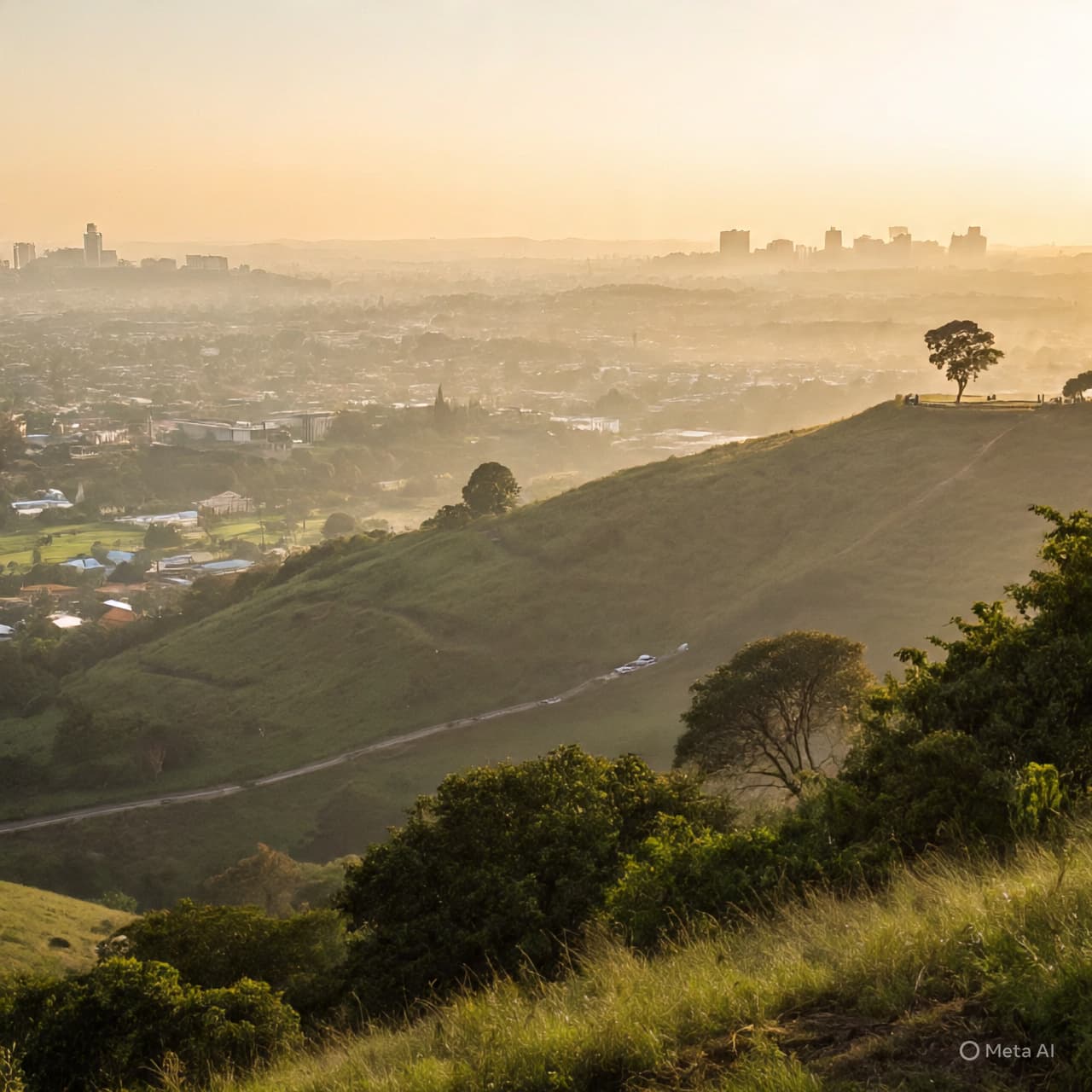
Morning comes softly to Kampala, with traffic beginning to hum and the air lifting from the hills that cradle the city. Lake Victoria lies not far away, its vast surface unchanged by politics or proclamations. Yet on land, time has taken a different shape. Uganda, a country where more than half the population was born after its current leader first took office, has entered another familiar chapter.
President Yoweri Museveni, now 81 years old, has secured a seventh term in power. His rule, which began in 1986 after a guerrilla war that promised renewal and stability, now stretches across four decades. For some, his continued leadership feels like a known road — worn, predictable, and guarded against sudden turns. For others, it carries the weight of years, pressing questions about succession, opportunity, and the meaning of political choice.
Museveni’s long tenure has been marked by contrasts. In earlier decades, Uganda experienced relative stability after years of turmoil, earning praise from international partners for economic reforms and regional security efforts. Roads were built, institutions reshaped, and growth, though uneven, became part of the national story. Over time, however, the language of liberation gradually gave way to the mechanics of permanence. Constitutional age limits were removed. Term limits dissolved. Power settled into routines that no longer spoke of transition.
The seventh term arrives at a moment when Uganda’s demographics pull in a different direction. The country is young, connected, and increasingly restless. Urban centers pulse with music, debate, and digital activism, while unemployment and rising living costs weigh heavily on daily life. For many younger Ugandans, Museveni is less a founding figure than a constant presence — a leader whose name has always been there, like a landmark inherited rather than chosen.
Opposition voices, including prominent challenger Bobi Wine, have described an environment constrained by security crackdowns, arrests, and restrictions on assembly. Elections, while held, have unfolded under conditions that critics say limit genuine competition. Supporters of the government, meanwhile, argue that continuity provides security in a volatile region, pointing to conflicts beyond Uganda’s borders as cautionary tales.
What this seventh term ultimately represents is not only the extension of one man’s rule, but a deeper question about political time. How long can stability substitute for renewal? At what point does experience become inertia? Uganda’s institutions now face the quiet test of whether they exist independently of the individual who has shaped them for so long.
In practical terms, Museveni’s new term means policy continuity: the same security-first approach to dissent, the same emphasis on infrastructure and regional influence, and the same unresolved question of succession. There is no named heir, no clear roadmap for leadership beyond him, only the steady accumulation of years.
As Uganda moves forward, life will continue in its ordinary rhythms — markets opening, music spilling into streets, children learning history that increasingly overlaps with the present. Over it all remains the steady presence of a leader whose seventh mandate reinforces a simple fact: Uganda’s future, once again, will be shaped by a past that has not yet loosened its grip.
AI Image Disclaimer Illustrations were created using AI tools and are not real photographs.
Sources (Media Names Only) Reuters Associated Press BBC News Al Jazeer
Published by Banx Network. This article is part of the Banx decentralized media programme, powered by the BXE token on the XRP Ledger.