The universe is rarely hurried. Planets take millions of years to gather their shape, circling their stars through ages of dust and gravity before settling into the calm orbits we recognize as planetary systems. Yet every so often, in the quiet architecture of the cosmos, something sudden happens.
A brief flash of light, a plume of dust, a change in the brightness of a distant star.
Recently, astronomers believe they may have witnessed such a moment—an event that unfolds only rarely in human observation: the collision of two planets.
The suspected impact occurred around the star ASASSN-21qj, located thousands of light-years from Earth. For years, telescopes monitoring the star saw nothing unusual. Then, almost unexpectedly, its light began to change.
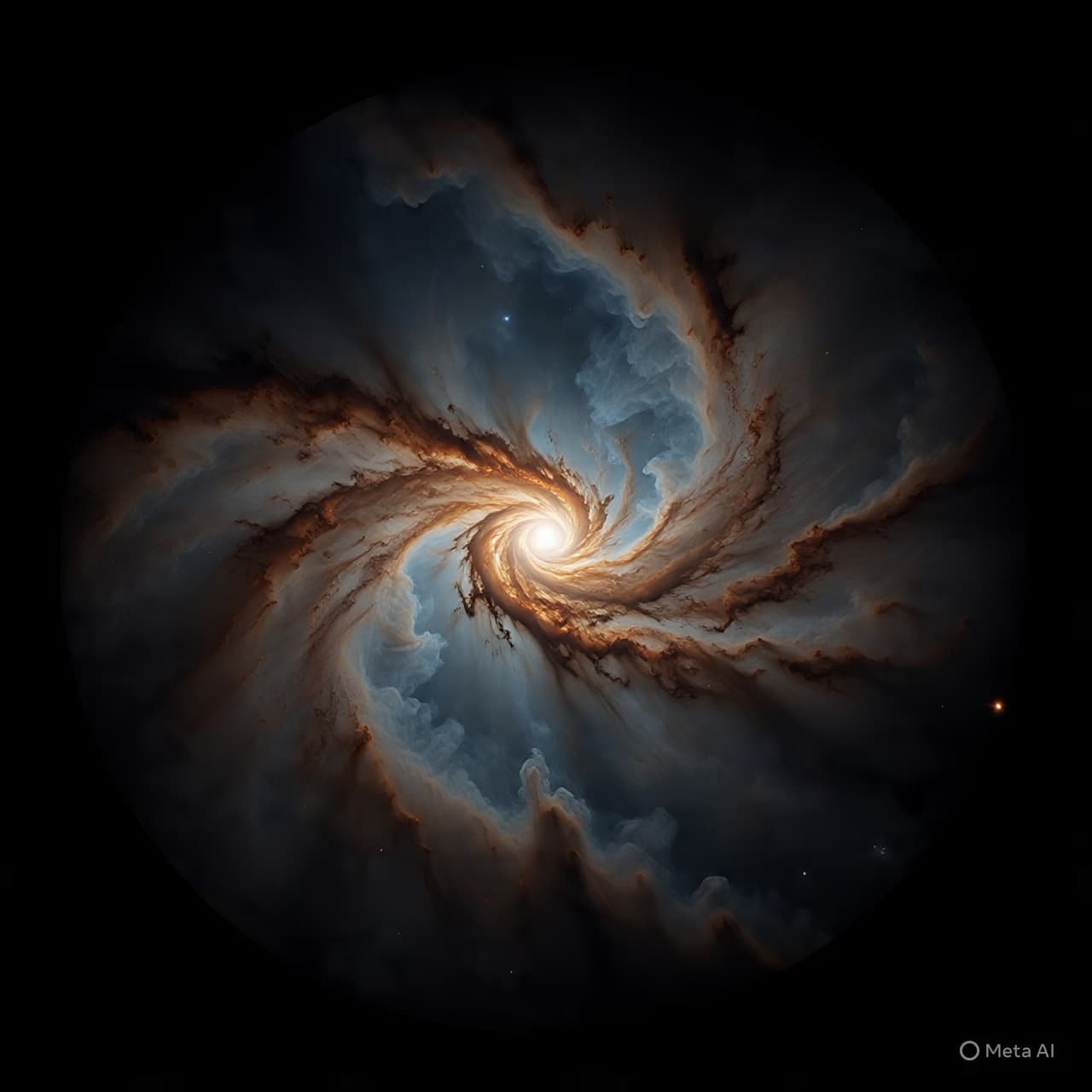
At first the signal appeared as a bright outburst—an abrupt increase in infrared and optical light. After the flare faded, astronomers noticed something more persistent: a cloud of dust lingering around the star, slowly expanding outward.
To scientists studying the early stages of planetary systems, such a pattern carries a familiar echo. When worlds collide, the violence of the impact vaporizes rock and metal, sending debris into space. The fragments cool and condense into a wide, dusty veil that reflects and absorbs starlight.
In this case, the evidence suggests that two rocky planets—each perhaps several times the mass of Mars—may have smashed together at extraordinary speeds. The energy released would have been immense, capable of melting large portions of the planets’ surfaces and launching vast quantities of debris into orbit around their star.
The resulting dust cloud is thought to be responsible for the lingering glow astronomers now observe.
Events like this are not purely destructive in the cosmic sense. In fact, many scientists believe that planetary collisions are a natural step in the formation of mature planetary systems. In the early history of our own Solar System, similar impacts likely occurred frequently.
One of the most famous examples may have shaped the Earth itself. A collision between the young Earth and a Mars-sized object, often called Theia, is thought to have produced the debris that eventually formed the Moon.
Observing a similar event elsewhere therefore offers astronomers a rare glimpse into processes that once sculpted our own planetary neighborhood.
In the case of the distant star ASASSN-21qj, the brightness pattern suggests that the initial flash may have occurred years before it was first detected. The expanding debris cloud then gradually became visible as it cooled and spread through space, scattering the star’s light in ways telescopes could measure.
Such collisions are difficult to catch in real time. Planetary systems span enormous distances, and the signals produced by impacts fade quickly compared with the long lifetimes of stars. Detecting one requires both patience and the steady watch of survey telescopes scanning the sky night after night.
Yet these rare observations can illuminate the hidden history of planetary systems.
Astronomers say the expanding debris cloud and unusual light patterns around ASASSN-21qj are consistent with a massive planetary impact, though further observations will be needed to confirm the exact cause. If confirmed, the event would represent one of the clearest examples yet of a planet-scale collision observed beyond our solar system.
AI Image Disclaimer
Illustrations were created using AI tools and are not real photographs.
Source Check
Credible coverage and/or reporting exist from: Space.com Live Science Nature Phys.org The Guardian
Published by Banx Network. This article is part of the Banx decentralized media programme, powered by the BXE token on the XRP Ledger.