
Key Highlights
- Indonesia's Ministry of Foreign Affairs condemned U.S. remarks on Israeli control.
- A coalition of Arab nations joined Indonesia in the response.
- The statement emphasizes adherence to international law and UN principles.
In recent diplomatic exchanges, words have proven to be powerful agents of change, capable of stirring emotions and responses across the globe. A recent statement made by the United States Ambassador to Israel regarding the acceptability of Israeli control over the West Bank has sparked significant concern, particularly in Indonesia. The Indonesian Ministry of Foreign Affairs, known for its measured approach to international relations, issued a strong condemnation of the remarks, which were seen as undermining established norms regarding territorial sovereignty.
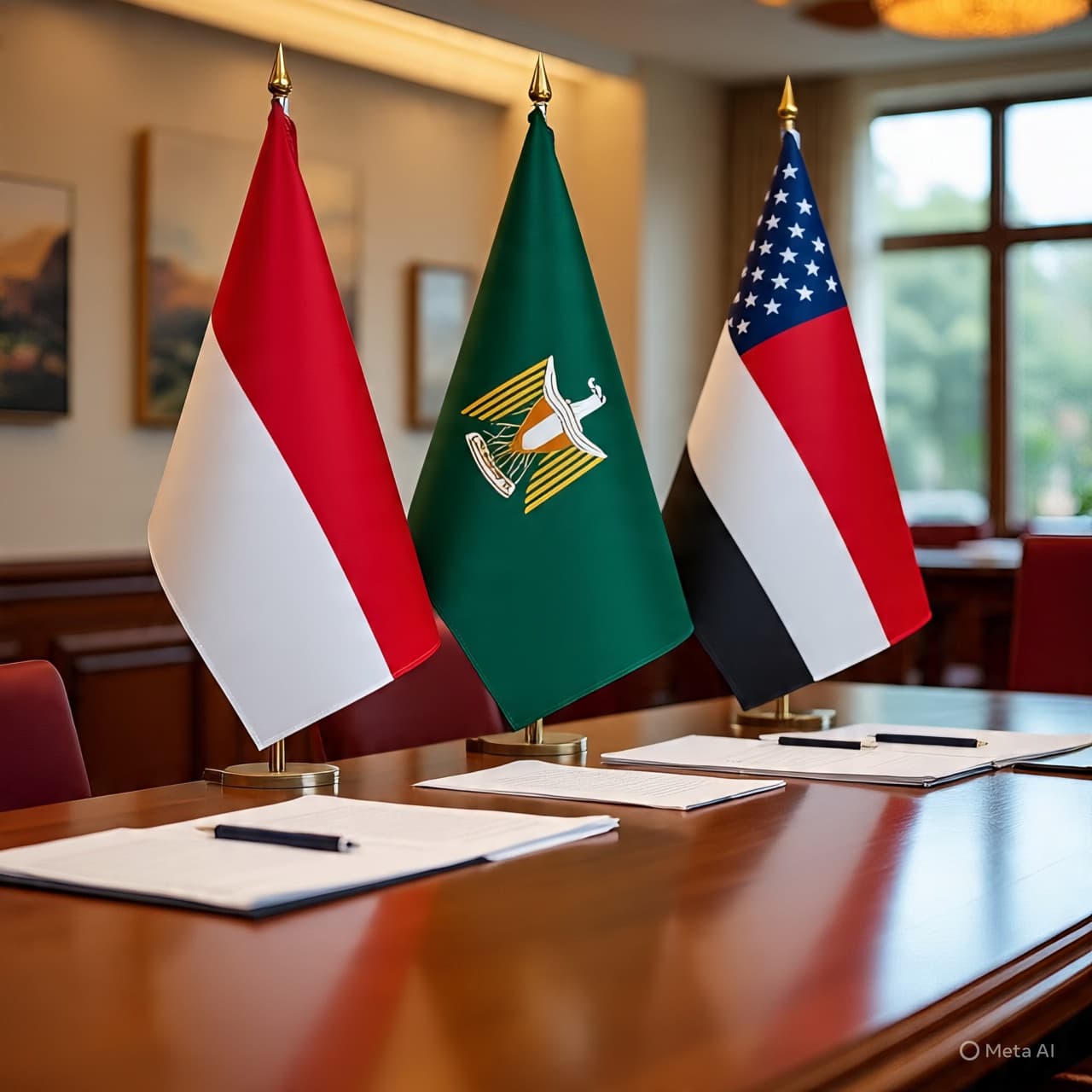
The joint statement from Indonesia, along with the foreign ministries of Egypt, Jordan, the United Arab Emirates, Pakistan, Turkey, Saudi Arabia, Qatar, Kuwait, Oman, Bahrain, Lebanon, Syria, and the State of Palestine, reflects a unified stance against the framing of territorial domination as acceptable. This coalition underscores the importance of international law and the principles outlined in the United Nations Charter, which many nations believe should guide conflict resolution efforts in the region.
The Indonesian response is particularly significant given the country's historical role in advocating for Palestinian rights and its commitment to upholding international law. The statement articulated that Israel does not possess sovereignty over the occupied territories, including the West Bank, and warned that any suggestion to the contrary could exacerbate existing tensions and jeopardize fragile peace processes.
This diplomatic response is not merely a reaction to a single statement but part of a broader regional unease regarding the implications of such remarks. The concerns raised by Indonesia and its allies reflect a deep-seated apprehension that the normalization of territorial claims could lead to further destabilization in an already volatile region. The delicate balance of diplomatic relations between global powers and Middle Eastern nations hangs in the balance, and the words exchanged in this context carry significant weight.
Despite the gravity of the situation, there remains a thread of hope woven through these diplomatic exchanges. The call for reasoned engagement rather than judgment suggests a desire for constructive dialogue. As nations articulate their principles through formal statements, the world watches closely, recognizing that the power of words can either bridge divides or deepen them.
In conclusion, the recent diplomatic developments highlight the intricate interplay between language and international relations. As Indonesia and its allies navigate these complex waters, the emphasis on adherence to international law and the pursuit of peace remains paramount. The journey of these words across borders serves as a reminder of the enduring impact of diplomacy in shaping global discourse.
Published by Banx Network. This article is part of the Banx decentralized media programme, powered by the BXE token on the XRP Ledger.



