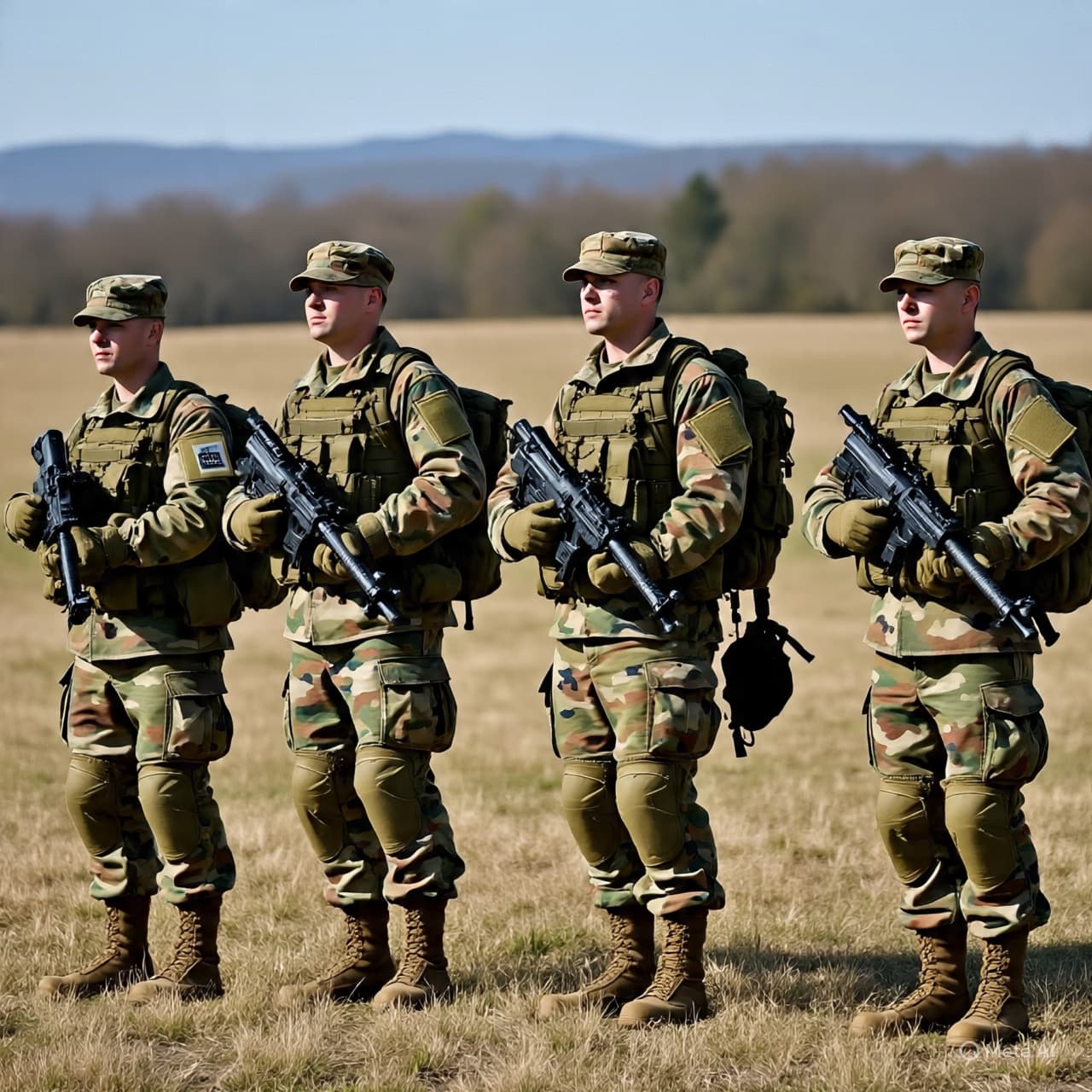
For much of the postwar era, Germany’s military posture has been defined less by what it might do than by what it deliberately chose not to do. History imposed caution, and caution hardened into doctrine. This week, that restraint was openly tested.
Friedrich Merz, Germany’s opposition leader and a likely future chancellor, said German troops could play a role in countering Russian attacks in Ukraine — a statement that stops short of a commitment but moves unmistakably beyond abstraction. In a conflict already reshaping Europe’s security architecture, the words landed heavily.
Merz framed the possibility within collective defense and deterrence, signaling alignment with NATO rather than unilateral action. His remarks suggested scenarios focused on air defense, protection of infrastructure, or preventing spillover beyond Ukraine’s borders. Still, the implication was clear: Germany may no longer see military distance as sustainable.
The statement reflects a broader shift underway in Berlin. Since Russia’s invasion of Ukraine, Germany has increased defense spending, sent weapons once considered politically unthinkable, and reassessed long-standing assumptions about deterrence. What remains unresolved is where support ends and direct involvement begins.
That boundary has defined European caution for nearly three years. Western governments have supplied arms, intelligence, and training while carefully avoiding actions that could be interpreted as direct confrontation with Moscow. Merz’s comments do not cross that line — but they bring it closer into view.
Reactions within Germany have been measured but divided. Supporters argue that deterrence loses credibility if Europe rules out options in advance. Critics warn that even hypothetical discussions of troop involvement risk escalation and public unease in a country still deeply shaped by military memory.
Across Europe, the remarks were noted less for their immediacy than for their symbolism. Germany remains the continent’s largest economy and a central political force. When Berlin speaks differently, the strategic weather changes. Allies listen not for policy, but for direction.
Russia, for its part, has repeatedly warned that any Western troop presence in Ukraine would be seen as direct involvement in the war. Such warnings have long acted as a brake on European debate. Merz’s comments suggest that brake is no longer absolute.
No deployment is imminent. No decision has been taken. But in conflicts of this scale, language matters. What once would have been dismissed as impossible is now discussed conditionally, cautiously, but aloud.
Germany’s future role in Europe’s security remains unsettled. Yet the significance of this moment lies not in action, but in acknowledgment: that the limits of restraint are being reconsidered, and that Europe’s largest power is no longer certain that standing back is the safer choice.
Published by Banx Network. This article is part of the Banx decentralized media programme, powered by the BXE token on the XRP Ledger.