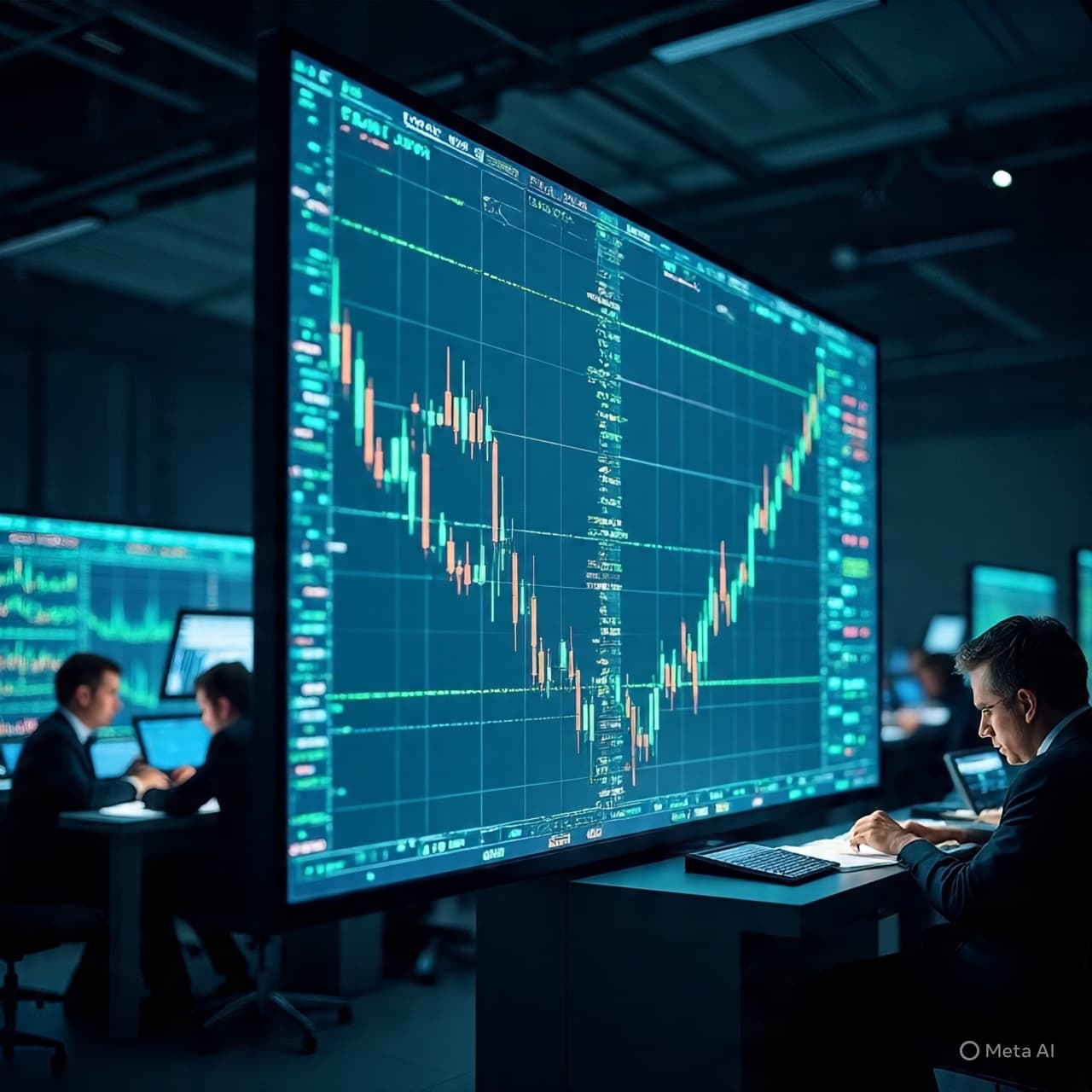
Markets tend to move before they speak. Screens flicker, numbers soften, and traders sense a shift long before it is fully explained. On this day, the unease arrived not from earnings or inflation data, but from far north—carried by a familiar voice and a distant place.
Global stocks slid after President Donald Trump threatened new tariffs linked to his dispute with NATO allies over Greenland. The connection, at first glance, seemed indirect. Greenland has no stock exchange to speak of, no daily bell. Yet the suggestion of fresh trade penalties was enough to tilt sentiment, reminding investors how quickly geopolitics can translate into volatility.
Trump’s comments revived concerns that economic tools could again be deployed as instruments of strategic pressure. He has framed Greenland as vital to U.S. security interests and signaled frustration with allied resistance. The possibility that tariffs could follow—aimed at European partners rather than the Arctic itself—introduced a familiar uncertainty into markets already navigating fragile assumptions.
Equities fell across major indexes as investors recalibrated risk. Companies with exposure to transatlantic trade felt the pressure first, their valuations sensitive to even hypothetical disruptions. Currency markets reflected a cautious turn, while safe-haven assets drew renewed attention. None of this unfolded dramatically. It rarely does. Instead, it moved in increments, like weather changing.
What unsettled markets was not the scale of the proposed measures, which remained undefined, but the tone. Ambiguity, when repeated, becomes its own signal. Investors have learned that when policy edges blur, planning horizons shorten. The result is hesitation, expressed quietly through sell orders and defensive positioning.
The episode fits a broader pattern. During Trump’s presidency, markets grew accustomed to reacting to statements as much as statutes. Tariffs, once treated as technical instruments, became rhetorical ones—announced, delayed, reconsidered, yet always present as possibility. Each reappearance reopens an old calculus: growth weighed against friction.
Greenland’s role in this moment is symbolic rather than financial. Its strategic value lies in geography and future resources, not quarterly results. But markets trade on connections, not just fundamentals. When alliances strain, supply chains imagine stress. When diplomacy hardens, capital looks for shelter.
By the closing bell, losses had stabilized but not vanished. Analysts spoke carefully, emphasizing that no policy had yet been enacted. Still, the reaction lingered as a reminder of how sensitive markets remain to political temperature. Stability depends not only on outcomes, but on predictability.
In the end, the slide said less about Greenland than about confidence. Investors were not pricing ice or territory, but the possibility that economic relationships could again be reshaped abruptly. In finance, as in diplomacy, it is often the uncertainty—not the event itself—that moves things most.
AI Image Disclaimer
Visuals are AI-generated and serve as conceptual representations.
Sources (names only)
Reuters Bloomberg Associated Press Financial Times The Wall Street Journal
Published by Banx Network. This article is part of the Banx decentralized media programme, powered by the BXE token on the XRP Ledger.