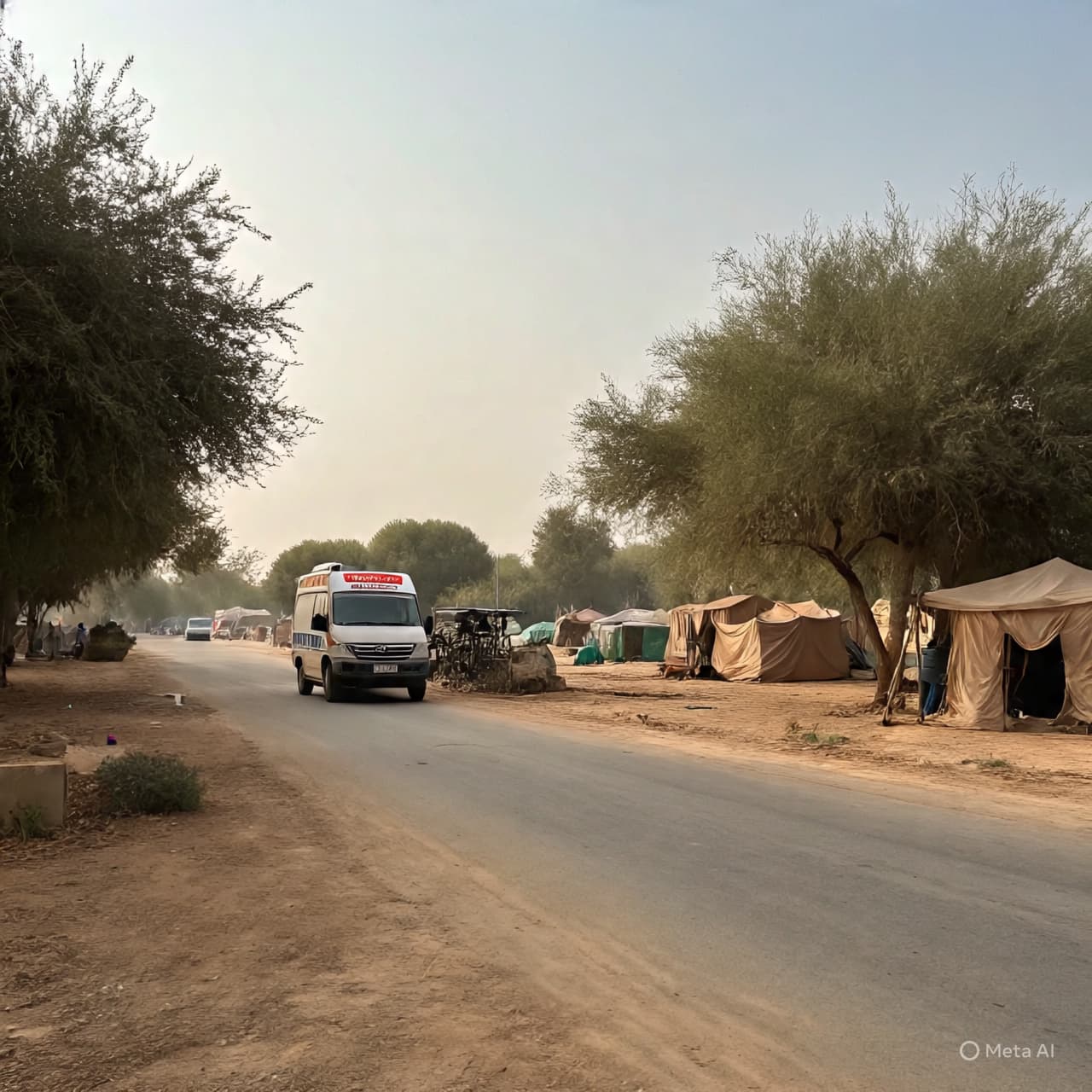
In the warm, dusty light that hovers over Gaza’s parched roads, a vehicle once bound for a camp of displaced families became the site of a sudden, jarring rupture. Three journalists, men with cameras and notebooks meant to record the lives of others, were killed when their car was struck during an Israeli military action amid a fragile ceasefire in the territory. Their deaths are more than statistics; they are vivid reminders of the peril inherent in telling stories where the story itself can be a target.
Among those lost was Abdul Raouf Shaat, a freelancer whose lens brought moments of humanity amid hardship into the frame for international audiences. Alongside him were Mohammed Salah Qeshta and Anas Ghneim, colleagues whose dedication to documenting events — from the rhythms of daily life to the movements of aid and displacement — was rooted in a fierce commitment to truth and presence. They were traveling near a site where aid had been distributed, the road ahead carrying both promise and peril.
The landscape of Gaza, long scarred by conflict and the ebb and flow of ceasefires, holds within it countless silent moments and unspoken griefs. In the pattern of daily life, reporters like Shaat and his companions chiseled out a space for visibility: recording the lives of families in tent encampments, the faces of children weaving through market dust, the moments of laughter or lament that outlast even the harshest strikes. To witness is to witness risk; in this conflict, that risk has been paid for time and again with lives rather than bylines.
Official statements from military authorities described the strike as targeting a perceived threat, framing it within the broader exigencies of security. Yet for colleagues, loved ones, and communities that recognized those journalists as bearers of narrative truth, the loss is not abstract. It is a silent absence in the newsroom, a missing set of footsteps on the long road into refugee camps, a quiet emptiness among cameras now still at roadside.
Conflict zones have long been places where headlines are measured in loss, where the faint hum of distant engines becomes the constant backdrop to life, and where those who choose to document are as vulnerable as the lives they chronicle. In Gaza, this cycle has exacted an especially heavy toll on journalists, local and international alike, underscoring a stark reality: the closer one is to witnessing truth, the more tenuous one’s own grip on life can become.
As the world mourns and reflects on these deaths, the silence that follows is not empty. It carries the echoes of cameras that no longer click, of voices that no longer speak, and of stories that pause, waiting to be told again by those who still walk the roads of risk. In memory and in mourning, we bear witness to the fragility of reporting in places where humanity and conflict intersect so painfully and so persistently.
AI Image Disclaimer
Visuals are AI-generated and serve as conceptual representations.
Sources
The Washington Post Reuters Associated Press Committee to Protect Journalists
Published by Banx Network. This article is part of the Banx decentralized media programme, powered by the BXE token on the XRP Ledger.