
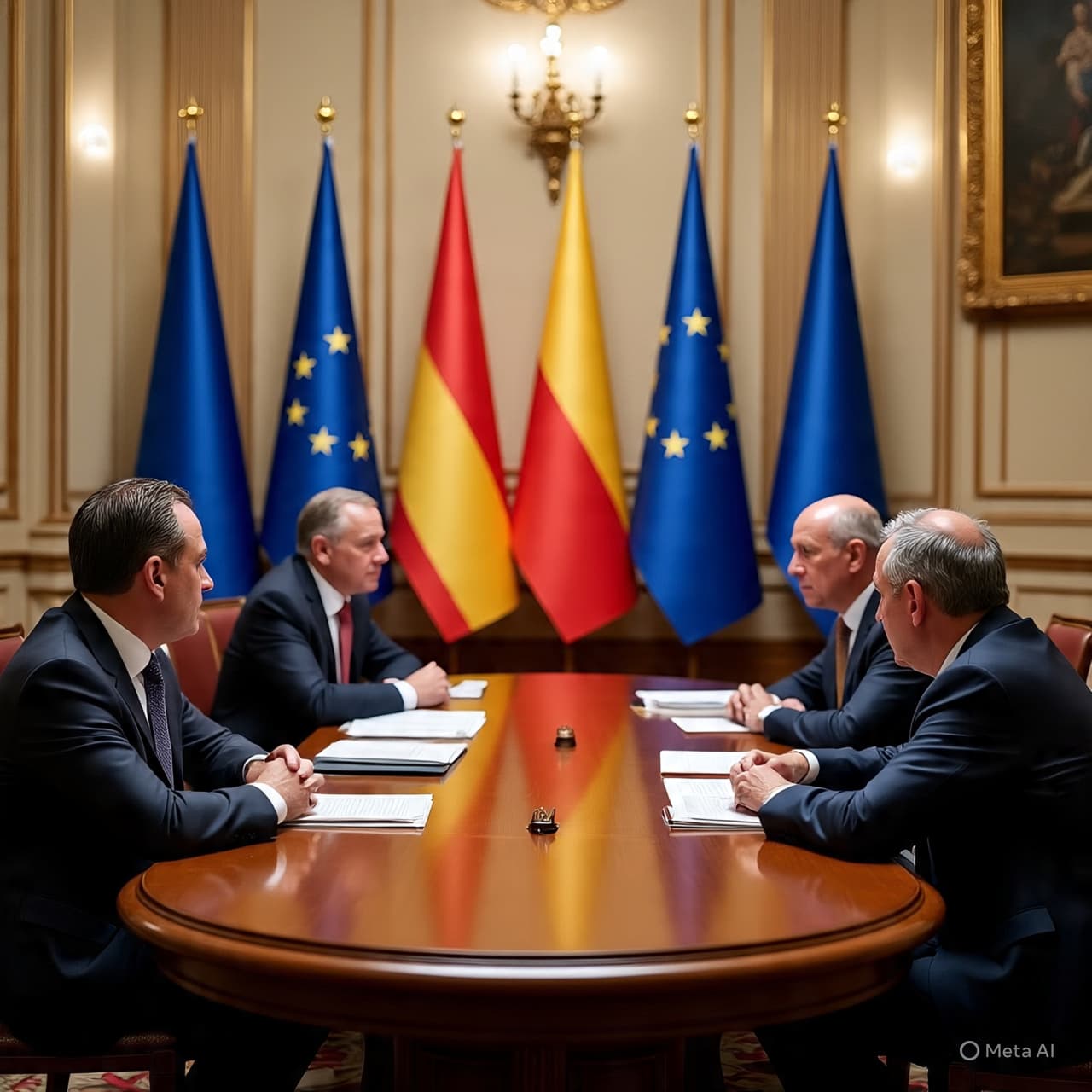
Key Highlights
- Hungary's veto blocks a €90 billion EU aid package for Ukraine.
- The veto raises concerns over military and civilian support amid ongoing conflict.
- EU leaders express disappointment while commemorating the war's anniversary in Kyiv.
On a quiet morning that marked four years since the onset of war in Ukraine, the anticipated harmony within Europe was overshadowed by hesitation. Leaders gathered to honor endurance and perseverance, yet one voice in the union chose a different rhythm, placing a long-anticipated aid package into a moment of pause. This unexpected twist on such a symbolic anniversary prompted reflection on the nature of unity and the intricate complexities that bind nations together.
The European Union had prepared a substantial aid program aimed at bolstering Ukraine’s finances and defense as the war enters its fifth year. After months of negotiation and political effort, a €90 billion loan and a new set of sanctions against Russia were poised for approval—gestures intended to reflect a collective response to hardship. However, Hungary exercised its veto power, citing concerns related to energy flows and disruptions in the Soviet-era Druzhba oil pipeline, which carries crude through Ukrainian territory to Central Europe. This technical dispute, stirred by damage attributed to Russian strikes, became the delicate hinge upon which broader policy now turns.
Throughout the day, other EU leaders expressed disappointment and confusion over Hungary's decision. Some described the hold as a breach of cooperative spirit, while others framed it as a momentary falter in an otherwise steady chorus of support. Even as legislative mechanisms prepared for partial movement—allowing technical work toward disbursement to continue—the absence of a unanimous nod revealed the challenge of achieving consensus within a bloc of diverse interests.
For Kyiv, the pause carries significant weight. Ukrainian authorities have warned that budget shortfalls and the loss of planned aid could strain both military capacity and civilian needs. Concurrently, presidents and prime ministers from other European countries gathered in Kyiv to commemorate the anniversary with messages of solidarity, underscoring that an enduring relationship remains even amid disagreement.
In the tapestry of international relations, threads occasionally tug in opposing directions. What began as a collective march toward mutual support encountered a moment of divergence, not in rhetoric but in policy practice. For many observers, the scene served as a reminder: even unity must be woven with patience, negotiation, and a willingness to revisit shared commitments when tested by national priorities and complex geopolitical realities.
Published by Banx Network. This article is part of the Banx decentralized media programme, powered by the BXE token on the XRP Ledger.



