In the delicate choreography of South Asian diplomacy, defence cooperation often waltzes alongside economic and political concerns, carrying with it echoes of history, strategy, and shared ambition. This week, Islamabad and Dhaka found themselves engaged in such a dance — not with drumbeats, but with the roar of jet engines on the horizon of possibility. As Pakistan and Bangladesh opened discussions on a potential defence pact that could include the sale of JF‑17 Thunder fighter jets, the two nations revealed not only a mutual interest in enhancing military ties, but also a deeper negotiation of regional rhythms shaped by shifting alliances and emerging priorities.
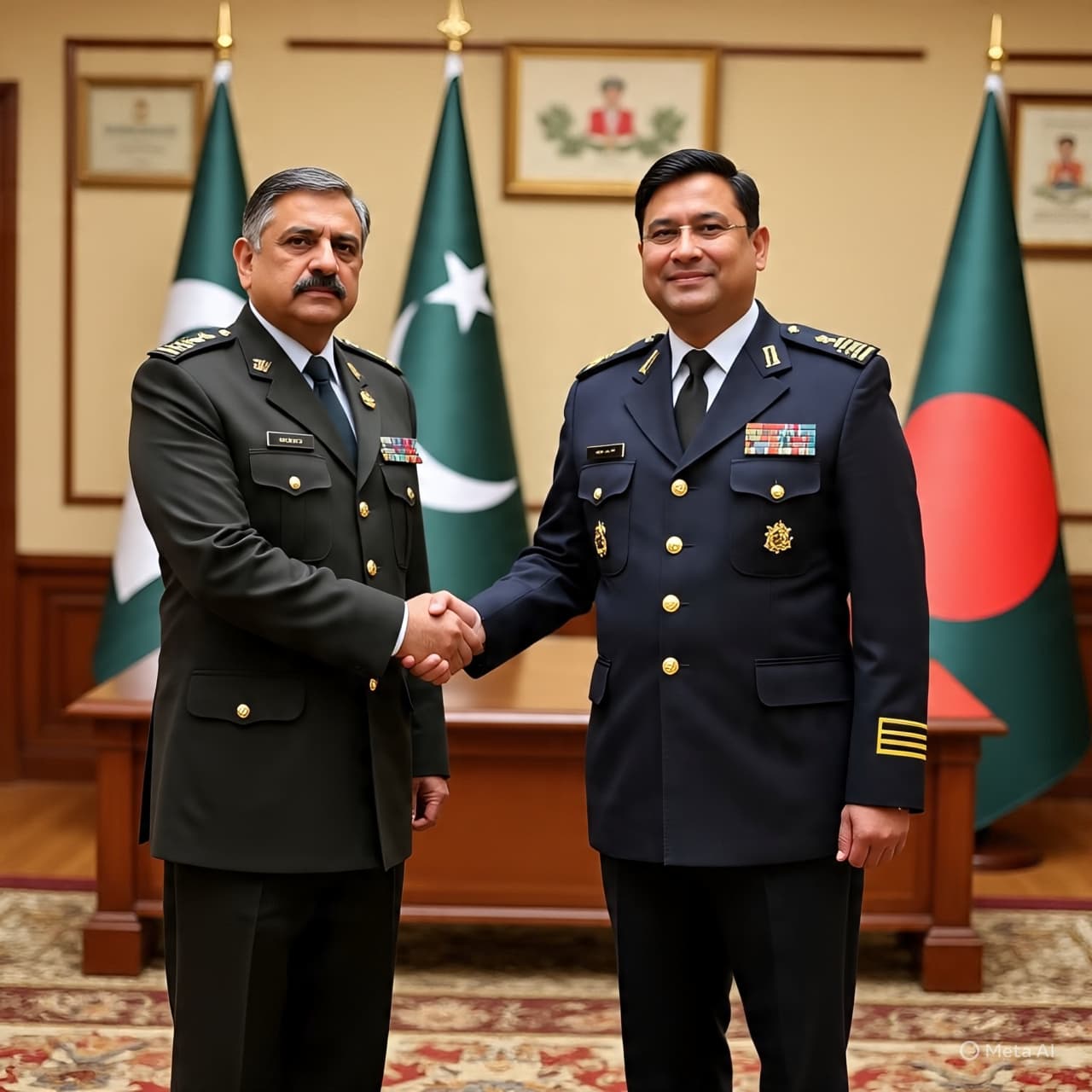
Senior air force leaders of Pakistan and Bangladesh met in Islamabad — Air Chief Marshal Zaheer Ahmed Baber Sidhu hosting his counterpart Hasan Mahmood Khan — to explore avenues of cooperation that could extend beyond ceremonial salutes to tangible defence collaboration. Central to these talks was the potential sale of JF‑17 Thunder multi‑role combat aircraft to Dhaka, a move that would signify a notable extension of Pakistan’s defence exports and a strengthening of strategic relations between the armed forces of both countries.
The JF‑17 Thunder — developed jointly by Pakistan Aeronautical Complex and China’s Chengdu Aircraft Corporation — has emerged as a popular contender in global defence markets thanks to its versatility and relative affordability. Bangladesh’s interest in modernising its air fleet has prompted discussions not only about acquiring these fighter jets but also about enhancing pilot training, operational cooperation, and long‑term maintenance support as part of any prospective agreement.
Pakistani officials also offered assurances of expedited delivery of Super Mushshak trainer aircraft and comprehensive support infrastructures for Bangladesh’s air force — a gesture aimed at building confidence and illustrating not just an arms sale but a broader partnership in military capability development.
Beyond aircraft procurement, the dialogue underscored a warming period in bilateral ties. Relations between Islamabad and Dhaka had been complex for decades, shaped by historical tension and shifting geopolitical landscapes. Recent political changes in Bangladesh, paired with renewed diplomatic engagement, have created an opening for deeper ties that traverse defense, trade, and strategic cooperation.
Observers note that should a defence pact materialise, it would mark a significant chapter in South Asian military diplomacy — one in which aircraft manufacturers and air force chiefs might play as pivotal a role as foreign ministries and political leaders. For Pakistan, expanding its arms export footprint may also offer broader economic benefits, while for Bangladesh, diversifying defence procurement could help modernise its air capabilities within the constraints of regional strategic balance.
In a region where airpower projects both deterrence and prestige, the potential JF‑17 deal represents more than a purchase; it embodies an unfolding relationship between two neighbours once divided by history and now exploring new avenues of cooperation.
AI Image Disclaimer “Visuals are created with AI tools and are not real photographs.”
Sources Reuters – Pakistan eyes defence pact with Bangladesh, sale of JF‑17 jets APA News – Pakistan and Bangladesh talk defence cooperation TrtWorld – Defence pact discussions between Pakistan and Bangladesh The Financial Express – Pakistan defence pact and JF‑17 jets context Army Recognition – Detailed discussion on Bangladesh considering JF‑17 acquisition
Published by Banx Network. This article is part of the Banx decentralized media programme, powered by the BXE token on the XRP Ledger.