

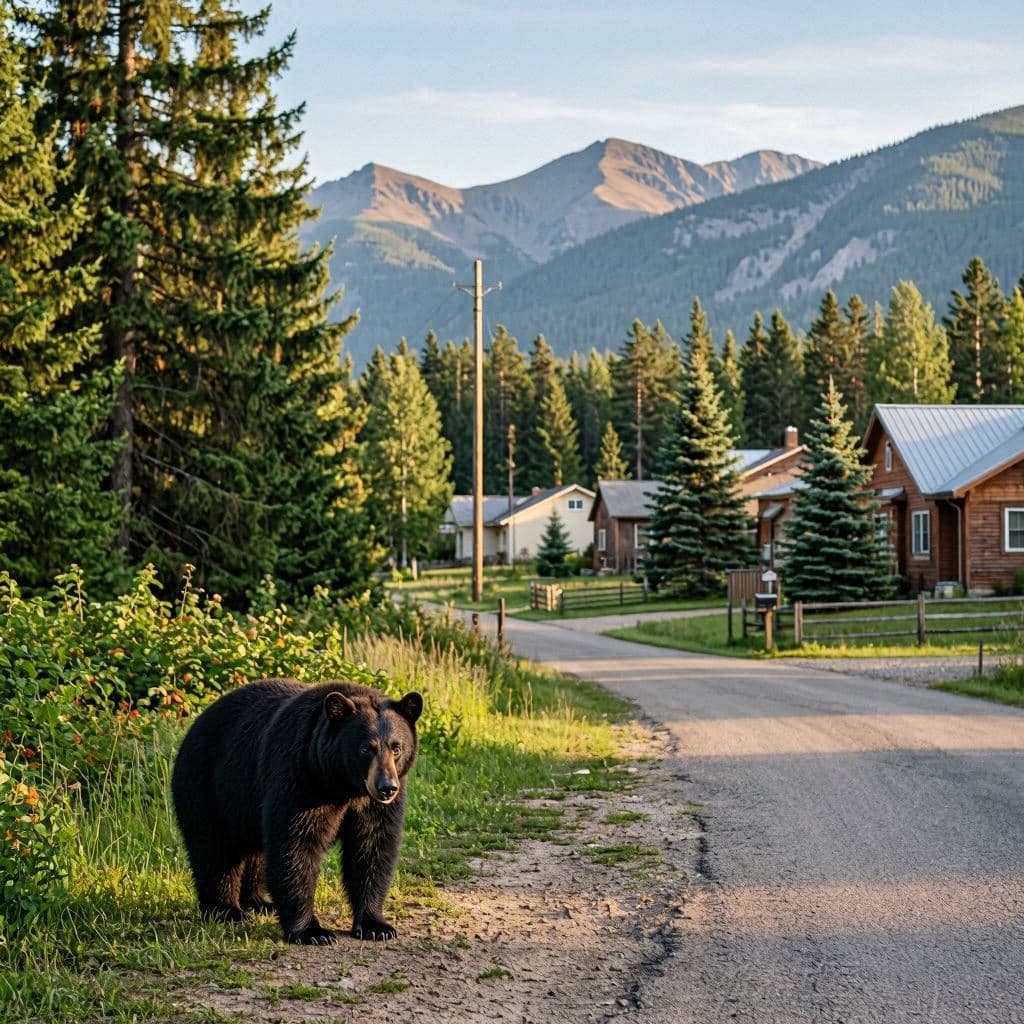
Key Highlights
- Incident:A black bear was euthanized in Swan Valley, Idaho, after entering a home.
- Management Response:Idaho Department of Fish and Game made the decision to ensure public safety.
- Community Impact:The event highlights ongoing challenges of living near wildlife habitats.
In the quiet landscapes where forests meet human neighborhoods, encounters between people and wildlife can become moments that test the delicate balance between coexistence and safety. In Idaho’s Swan Valley, a recent incident involving a black bear has led wildlife officials to make a difficult management decision, underscoring the challenges that arise when wild animals venture closer to human spaces.
The Idaho Department of Fish and Game (IDFG) euthanized a black bear after the animal entered a residence in Swan Valley. This decision was made following the incident as part of wildlife management procedures designed to address situations where animals are considered a potential risk to public safety. Such actions, while necessary, often evoke strong emotions from the community and raise questions about the best approaches to wildlife management.
Black bears are naturally adaptable creatures that can traverse large territories in search of food, shelter, and seasonal resources. As human development expands into areas adjacent to forests and wilderness, encounters between bears and residents can occur more frequently, particularly when attractants such as unsecured food sources are available. This incident serves as a stark reminder of the need for communities to be vigilant in securing garbage containers and properly storing food to minimize the risk of attracting wildlife.
Wildlife agencies typically work to prevent conflicts through education, monitoring, and response efforts. In some cases, bears that repeatedly enter residential areas or display dangerous behavior may require removal to protect both people and the animal population. The Swan Valley incident reflects a broader challenge faced by communities located near wildlife habitats, where the balance between human safety and wildlife conservation is often precarious.
For wildlife officials, decisions involving the removal of an animal are not taken lightly. Agencies consider various factors, including the circumstances of the encounter, the animal’s behavior, and the safety concerns involved before determining the appropriate response. The management of black bears requires careful attention because these animals play an important role in forest ecosystems. They contribute to natural processes such as seed dispersal and help maintain the balance of their habitats, while also necessitating responsible management when conflicts arise.
The situation in Swan Valley serves as a reminder that living alongside wildlife requires awareness from both humans and conservation professionals. Prevention, preparation, and maintaining a respectful distance remain crucial tools for reducing conflicts between communities and the animals that share the landscape. As communities continue to grow near wilderness areas, these encounters will remain part of the ongoing conversation about conservation and safety.
The goal of wildlife management is to protect people while preserving healthy animal populations whenever possible. The challenge lies in finding effective strategies that allow for coexistence without compromising safety, a task that requires collaboration between residents, wildlife officials, and conservationists.
As the dialogue around wildlife management evolves, it is essential for communities to engage in proactive measures that foster a harmonious relationship with the natural world. By understanding the behaviors of wildlife and implementing effective management practices, residents can help ensure a safer environment for both themselves and the animals that inhabit their surroundings.
Published by Banx Network. This article is part of the Banx decentralized media programme, powered by the BXE token on the XRP Ledger.




