
Key Highlights
- Recent violence against public transport drivers in Tegucigalpa has raised safety concerns.
- Two drivers were injured in separate incidents, highlighting ongoing issues of extortion.
- The transport community is experiencing heightened anxiety and a temporary halt in operations.
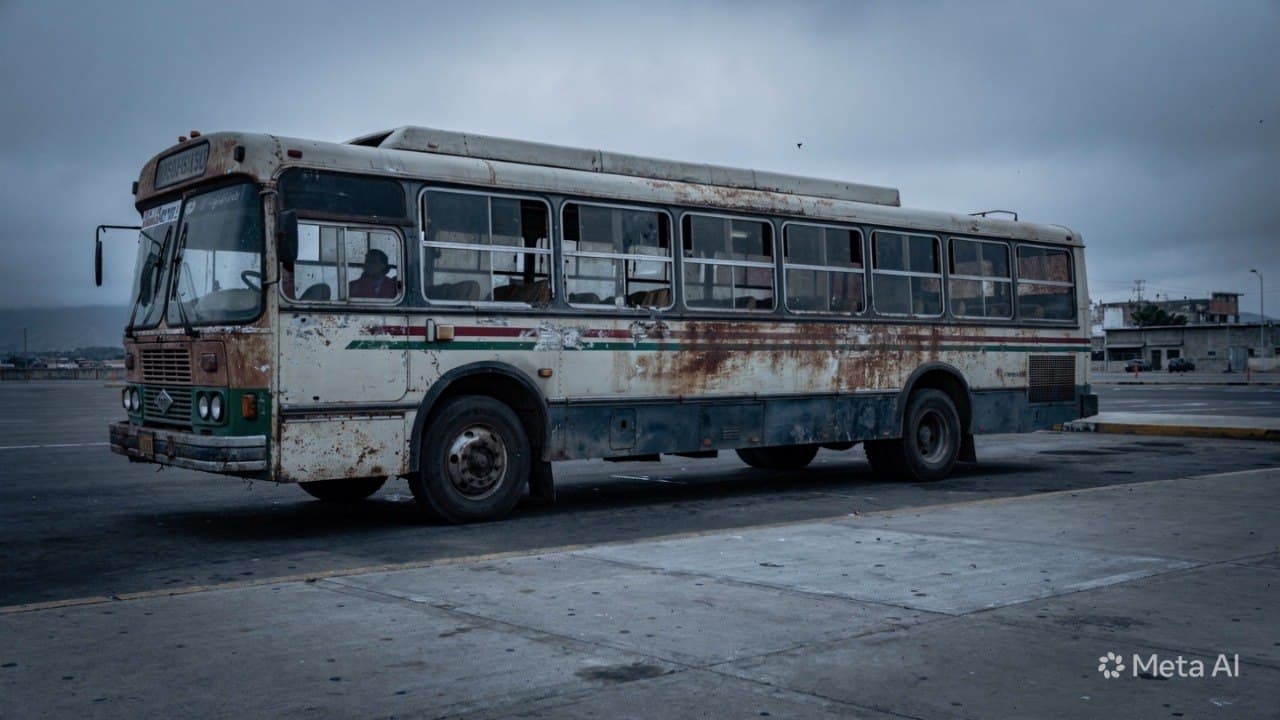
The morning light climbs slowly over the uneven ridges of Tegucigalpa, painting the capital’s sprawling valleys in hues of pale amber and slate. Below, the city wakes to a familiar, rhythmic mechanical chorus—the coughing acceleration of vintage school buses and the low hum of microbuses tracing their well-worn patterns through the steep, labyrinthine streets. For decades, these vehicles have served as the vital, beating arteries of urban life, carrying the quiet ambitions of laborers, students, and vendors from peripheral hillside settlements into the bustling commercial core. Yet, beneath the operational noise of this essential daily transit, an invisible, constricting net has long been tightening around those who sit behind the wheel.
To drive a public transport vehicle through the capital is to navigate a landscape where geography is secondary to unseen boundaries. The asphalt ribbon is not merely a path from one neighborhood to another; it is a space partitioned by unspoken demands and the persistent weight of extortion. For those who operate these routes, each morning departure carries an implicit negotiation with survival, an awareness that the modest fare collected from passengers must somehow satisfy external forces operating from the shadows. The quiet tension is etched into the faces of the operators, manifest in the quick glance at the rearview mirror and the lingering hesitation at isolated intersections.
This fragile equilibrium fractured once more in the early hours of the week, when the quiet of the urban transport network was pierced by direct physical violence. In separate incidents that unfolded along the city’s complex transit corridors, two drivers became the physical casualties of a dispute that has long remained simmering beneath the surface. The assaults were not random outbursts of anger, but deliberate, calculated expressions of enforcement, leaving two more workers wounded and a community of drivers retreating into a protective, anxious stillness. The physical damage to the vehicles and the injuries sustained by the operators serve as a stark reminder of the terms governing daily transit.
The mechanics of this intimidation operate with a cold, systematic predictability that mimics the administrative precision of a legitimate enterprise. Transport cooperatives are routinely presented with demands that exceed their financial capacities, forcing a difficult balancing act between maintaining service and ensuring personal safety. When these unwritten transactions falter, the retaliation is swift and visual, designed to send ripples of caution through every terminal and rest stop in the city. The recent physical interventions underscore a reality where the simple act of providing public transportation carries a risk that cannot be mitigated by caution alone.
Inside the crowded terminals, an uneasy quiet has descended over the drivers who gather between shifts to share coffee and muted conversation. The camaraderie that typically defines these spaces has been replaced by a collective calculation of vulnerability, with many questioning how long they can continue to navigate paths that feel increasingly compromised. The empty seats of buses parked prematurely along the curbs speak to a quiet, temporary strike of necessity, a collective holding of breath as the transport community assesses the immediate dangers of the road. For the millions who depend on these wheels to access their livelihoods, the stillness at the terminals creates an immediate, anxious ripple across the entire metropolitan economic fabric.
The problem extends far beyond the immediate trauma of the individuals involved, reflecting an enduring structural challenge that has resisted numerous enforcement strategies over the years. Specialized security units and targeted patrols have historically been deployed across the most volatile sectors, yet the underlying networks driving the extortion continue to adapt, shifting their focus or altering their methods to evade oversight. The resilience of these illicit structures creates a sense of cyclical inevitability, where brief periods of calm are viewed not as permanent resolutions, but as mere interludes before the next inevitable confrontation on the asphalt.
As the afternoon heat settles into the dust of the capital’s central avenues, the broader implications for Tegucigalpa’s urban development become increasingly apparent. A transport system operating under the constant threat of violence not only endangers drivers but also jeopardizes the economic stability of the city, as residents face increasing challenges in accessing work and essential services. The ongoing struggle for safety in public transport reflects a deeper societal issue that demands urgent attention from local authorities and community leaders alike.
Published by Banx Network. This article is part of the Banx decentralized media programme, powered by the BXE token on the XRP Ledger.



